Hurricane Ridge

One of the Hubster’s and mine favorite places to visit is Hurricane Ridge in the Olympic National Park.

Hurricane Ridge

We have been visitors here since our children were wee ones, and now they have families of their own.

*Clicking on a photo will give you a closer look!
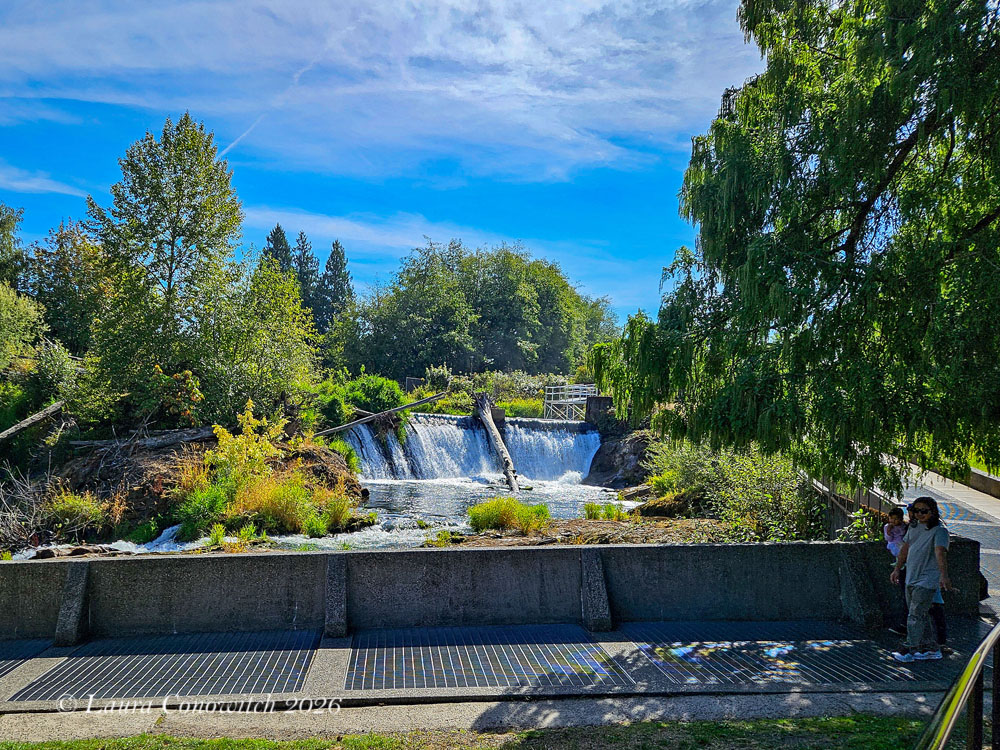
Hurricane Ridge_Olympic Mountains

It seems fitting that this would be our last stop before heading home on our vacation.

Hurricane Ridge

Hurricane Ridge

On this 3rd of May, 2026, some of the trails still have plenty of snow on them.

Hurricane Ridge

Hurricane Ridge

Hurricane Ridge_Glacier Lily-Yellow Avalanche Lily

Spring brings the cheerful Glacier Lily (also known as the Yellow Avalanche Lily) out!

Hurricane Ridge_Glacier Lily-Yellow Avalanche Lily

Hurricane Ridge_Yellow Bellied Marmot-Rock Chuck

Lots of friendly spring-loving hikers were out enjoying a beautiful day with gorgeous views of the Olympic Mountain Range.

Hurricane Ridge

By clicking here, and scrolling to the bottom of the post, you can see in the very short video how Hurricane Ridge got its name.

Hurricane Ridge_Olympic Mountains

See the world around you!

Previous Posts:

Fort Casey Historical State Park

No, this isn’t an early Halloween!

Fort Casey State Park

The Hubster and I stopped at Fort Casey Historical Park, about 9 miles, or 16 minutes, from Fort Ebey, and just a few feet to the Coupeville Ferry Terminal where we will catch the ferry to Port Townsend, Washington.

The park is a great place for flying kites, and there is plenty of space for kids to be kids (999 acres (including surrounding protected reserve areas and the spit)!

There is camping, history, bird watching, fishing, crabbing, boating, beach walking, dog walking, picnicking and more…lots to do here!

Fort Casey State Park

*Clicking on a photo will give you a closer look!

Fort Casey State Park

Forts Casey and Ebey on Whidbey Island, Fort Flagler on Marrowstone Island, and Fort Worden at Port Townsend formed a defensive “Triangle of Death” for the strategic Admiralty Inlet and Puget Sound against invading ships.

These once formidable forts (built in the 1890s) are now all very peaceful and family friendly parks. I have been to all of them, except Fort Flagler, with my family, and they have all been fun to explore.

Fort Casey State Park

Fort Casey State Park

Fort Casey State Park

A disappearing gun, a gun mounted on a disappearing carriage, enabling a gun to be hidden from direct fire and observation. These guns were easier to reload and had a higher rate of repetitive fire. However, disappearing guns were vulnerable to aerial observation and attack, and needed camouflage.

Fort Casey State Park

Fort Casey State Park

Even the bunnies love it here!

Fort Casey State Park

Fort Casey State Park

Battery Henry Kingsbury was in service from 1908 – 1942. It had two disappearing guns.

Fort Casey State Park

You see that dock just beyond the battery in the photo below?

That’s the Coupeville Ferry Terminal. If you are early for your ferry, you could spend a very pleasant time stretching your legs at this park.

We did.

Fort Casey State Park

Fort Casey State Park

Battery John Trevor was in service from 1904 to 1933. This battery was armed with two 3-inch guns, like the photo above. These guns were light enough to be carried, had a shorter range, and could fire 30 rounds per minute.

The battery was named for 1st Lieutenant John Trevor (5th U.S. Cavalry), who died in 1864 at the Third Battle of Winchester, Virginia, during the Civil War.

Fort Casey State Park

Yes, you can go into the switchboard. You definitely need a flashlight or a headlamp for this one!

And there are bats; at least one. This is a very cool place to imagine yourself working in (not for the claustrophobic)! There are YouTube videos for the curious!

Fort Casey State Park

The primary observation bunkers:

Fort Casey State Park

Observers had powerful telescopes for surveillance and tracking. They took precise measurements of targets and sent them to the plotting room.

Fort Casey State Park

The view from the observation bunkers:

Fort Casey State Park

Fort Casey State Park

The plotting room where field observations were converted to coordinates for aiming and shooting artillery. Weather and tide conditions, distance and direction of targets had to be calculated as well.

Fort Casey State Park

Unfortunately, the lighthouse was closed at the time of our visit.

Fort Casey State Park

Fort Casey State Park

Fort Casey State Park

Time to catch our ferry ride.

What a great way to spend an afternoon!

Fort Casey State Park

See the world around you!

Previous Posts:

Fort Ebey State Park

Continuing on our way from Deception Pass through Whidbey Island, the Hubster and I drove on until we happened upon Fort Ebey State Park.

We stopped to check it out.

Established in 1942, Fort Ebey was the last Puget Sound coastal defense fort developed in WW II, and has a clear view westward through the Strait of Juan de Fuca to the open Pacific Ocean.

Fort Ebey State Park

*Clicking on a photo will give you a closer look!

Fort Ebey State Park

Fort Ebey State Park

The well camouflaged Battery 248 (an interpretive guide to the battery can be found at this link) was equipped with the best technology and radar available.

You will want a flashlight, or a headlamp, to explore the battery!

Fort Ebey State Park

Fort Ebey State Park

Fort Ebey State Park

In the right side of the following photo, the stairs to the camouflaged observation bunker are just visible.

Fort Ebey State Park

From here, telescopes were used to target enemy vessels and relay the information to the plotters in the battery.

Fort Ebey State Park

The park not only preserves a piece of World War II history, but also preserves about 651 acres for public use. It is a popular spot for paragliding, biking, hiking, bird watching, beach walking, fishing and camping and more. There is about 25 miles of trails. The bluff presents a fantastic view of Admiralty Inlet and sunsets.

Fort Ebey State Park

See the world around you!

Previous Posts: