Tag Archives: Appomattox Courthouse Village

Appomattox Courthouse Village Part 3

For my last post on the Appomattox Court House visit, I invite you to walk around the village with me.

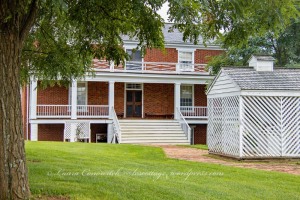
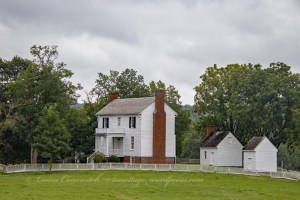
The historic Isbell House serves as the park headquarters and not open to the public. It was built in 1849 by the brothers Thomas S. and Henry F. Bocock. Thomas was a member of the United States Congress and Speaker of the Confederate House of Representatives. At the time, Henry was Clerk of the Court for Appomattox County.

During the Civil War the home was occupied by Lewis D. Isbell, who represented the county at the 1861 secession convention. Isbell also served as the Commonwealth Attorney for Appomattox County. 
Appomattox Courthouse Village

*Clicking on a photo will give you a closer look!
Appomattox Courthouse Village

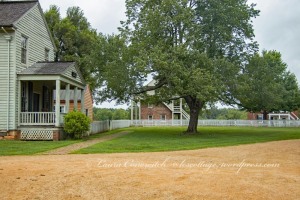
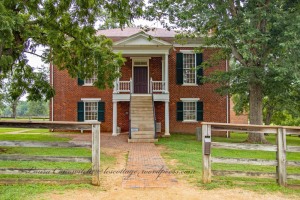
The original courthouse was constructed in 1846, one year after Appomattox County was established. The courthouse played no role in Lee’s surrender; it was closed on April 9th because it was Palm Sunday.

Appomattox Courthouse serves as the park visitor center and museum.
Appomattox Courthouse Village

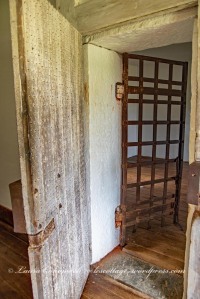
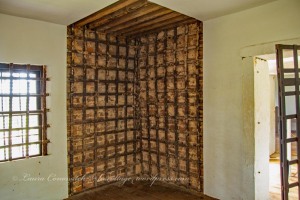
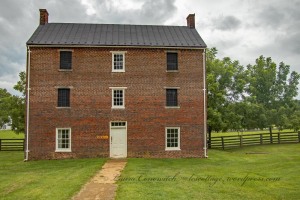
The New County Jail is directly across the Richmond-Lynchburg Stage Road from the site of the first county jail. Begun about 1860, but not completed until after the Civil War in 1870.
Appomattox Courthouse Village

Appomattox Courthouse Village

Appomattox Courthouse Village

Appomattox Courthouse Village

Appomattox Courthouse Village

Appomattox Courthouse Village

Appomattox Courthouse Village

Appomattox Courthouse Village

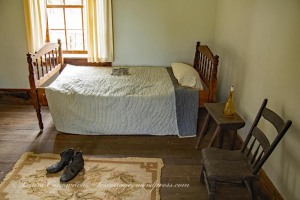
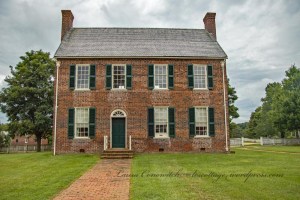
The Clover Hill Tavern was built by Alexander and Lilburne Patteson in 1819 as a stagecoach stop for travelers on the Richmond-Lynchburg Stage Road.

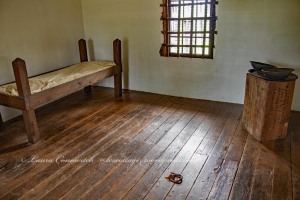
For several decades, it offered the village’s only restaurant, only overnight lodging, and only bar. The kitchen, guest quarters, and slave quarters were built behind the tavern. Its presence helped prompt the Virginia legislature to locate the Appomattox County seat here. The courthouse was built across the street.
Appomattox Courthouse Village

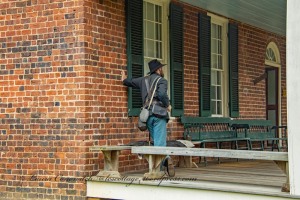
By 1865, the tavern had come on hard times – a “bare and cheerless place”, according to one Union general. It was one of only two buildings in town used by the Federal army during the surrender process.
Appomattox Courthouse Village

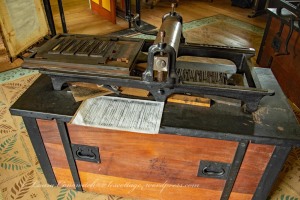
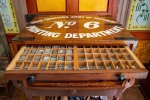
Here, on the evening of April 10, 1865, Union soldiers set up printing presses and started producing paroles for the surrendered Confederates. The Federals printed more than 30,000 parole documents in the span of about 30 hours here.
Appomattox Courthouse Village

Appomattox Courthouse Village

Appomattox Courthouse Village

Appomattox Courthouse Village

Appomattox Courthouse Village

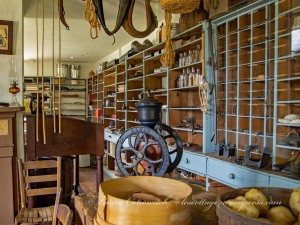
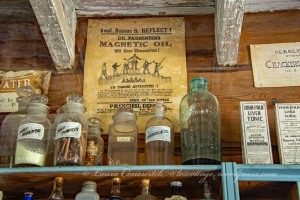
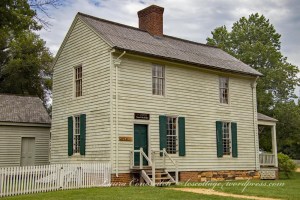
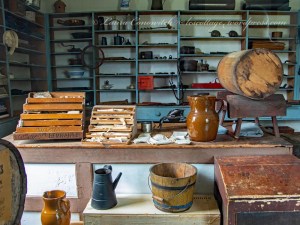
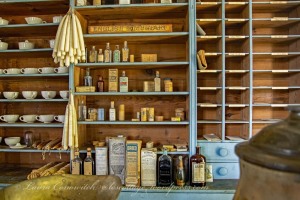
The Plunkett-Meeks Store (restored) was constructed in 1852 by John H. Plunkett and was purchased in the early 1860s by Francis Meeks, who served as the local postmaster and druggist. It was later the home of a Presbyterian minister who presented it to his church for use as a clergy residence.
Appomattox Courthouse Village

The first floor interior is a single room furnished and interpreted as a general store and post office.
Appomattox Courthouse Village

Appomattox Courthouse Village

Appomattox Courthouse Village

Appomattox Courthouse Village

See the world around you!
Appomattox Courthouse Village Part 2

I gave an overview of Appomattox Court House and the importance of General Robert E. Lee’s surrender of the Confederate Army of Virginia to General Ulysses S. Grant, on April 9, 1865, in my previous post.

Appomattox Courthouse Village

*Clicking on a photo will give you a closer look!

This post features Wilmer McLean’s reconstructed home. The original home was built in 1848. After the terms of surrender were signed in the best home in Appomattox Court House, much of what the McLean’s owned was taken as souvenirs. The McLean family moved and, in 1893, it was dismantled to be put on display in Washington, D.C. (that never happened).

Appomattox Courthouse Village

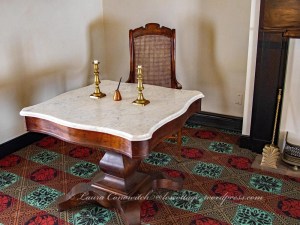
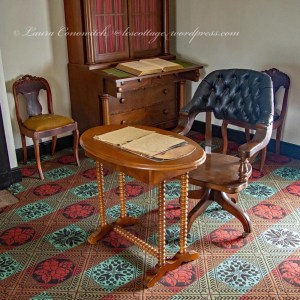
The table where Robert E. Lee sat.

Appomattox Courthouse Village

The table where Ulysses S. Grant sat.

Appomattox Courthouse Village

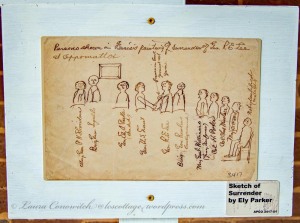
Ely S. Parker was a Seneca Indian born in 1828 on the Tonawanda Indian Reservation in western New York. The Senecas were one of the tribes of the great Iroquois Confederation called the Six Nations.

He was present at the surrender of the Army of Northern Virginia where he helped draft the surrender documents and render them in his own hand. At the time of the surrender, General Robert E. Lee is said to have mistaken Parker for a black man, but apologized saying, “I am glad to see one real American here,” to which Parker responded, “We are all Americans, sir.”

Parker was brevetted a brigadier general of volunteers on April 9, 1865 and continued to serve as Grant’s secretary until the general’s retirement from the army in 1869. Grant created a sensation in 1871 when he appointed Parker the nation’s first Native American Commissioner of Indian Affairs.

Appomattox Courthouse Village

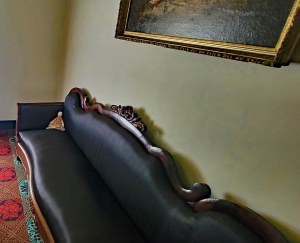
Union officers tossed little 7-year old Lula McLean’s rag doll to one another. She was called the ‘Silent Witness’ by Colonel Horace Porter, an officer of Lieutenant General Grant’s staff.

The doll was carried to New York by Captain Thomas W. C. Moore of Major General Sheridan’s staff. The Moore family treasured the doll for 128 years.

The ‘Silent Witness’ is on display at the visitor’s center. She is not the doll on this parlor horsehair sofa at the McLean house (this is a representation)…she is under lock and key in a glass case.

Appomattox Courthouse Village

Appomattox Courthouse Village

Appomattox Courthouse Village

Appomattox Courthouse Village

Appomattox Courthouse Village

Appomattox Courthouse Village

Appomattox Courthouse Village

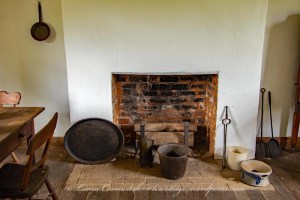
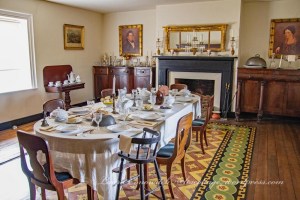
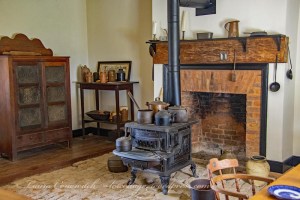
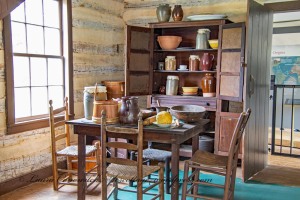
The McLean house kitchen.

Appomattox Courthouse Village

Appomattox Courthouse Village

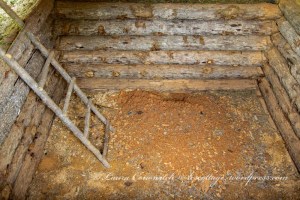
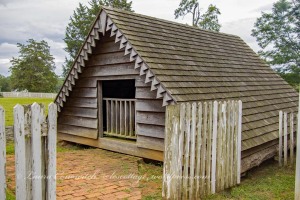
The ice house.

Appomattox Courthouse Village

Appomattox Courthouse Village

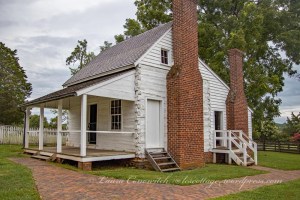
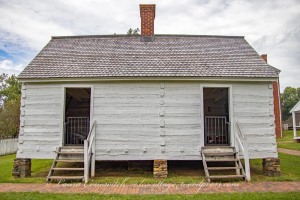
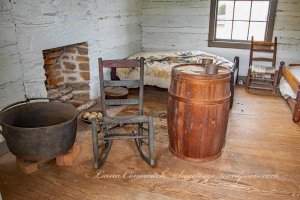
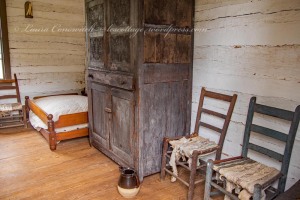
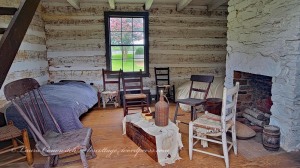
Slave quarters.

Appomattox Courthouse Village

Appomattox Courthouse Village

Appomattox Courthouse Village

Appomattox Courthouse Village

Appomattox Courthouse Village

See the world around you!
Appomattox Courthouse Village Part 1

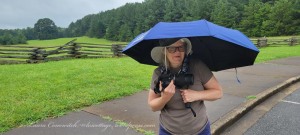
I dislike my photo taken, and I rarely show one, but I just wanted to show the other Laura (she knows who she is) that, yes, it did rain on this road trip. The rain, however, was never a big deal.

Appomattox Courthouse Village

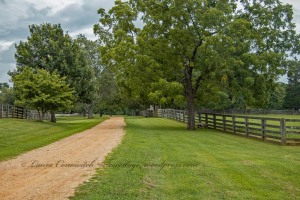
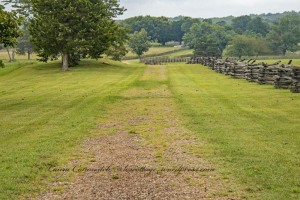
Appomattox Court House and the surrounding countryside is beautiful and peaceful; a bucolic place that anyone would want to live in.

Appomattox Courthouse Village

*Clicking on a photo will give you a closer look!

The antebellum village began as Clover Hill. The village was a stop along the Richmond-Lynchburg stagecoach road. It was also the site of organizational meetings, so when Appomattox County was established by an Act on February 8, 1845, Clover Hill village became the county seat. 

Appomattox Courthouse Village

In early April 1865, Confederate States Army forces commanded by General Robert E. Lee were being pursued by Union Army troops commanded by Lieutenant General Ulysses S. Grant. 

Appomattox Courthouse Village

The Richmond-Lynchburg Road was important to Lee’s retreat from Grant. However, the Federals blocked this route, and in spite of Lee’s attacks, his army was surrounded, forcing him to surrender.

“Then there is nothing left for me to do but to go and see General Grant, and I would rather die a thousand deaths.”

Lee formally surrendered to Grant on April 9, 1865 at the Wilmer McLean house in Appomattox. (After the Battle of Bull Run, McLean had moved here to escape the war.)

On April 12, a formal ceremony of parade and the stacking of arms led by Confederate Maj. Gen. John B. Gordon to Federal Brig. Gen. Joshua Chamberlain marked the disbandment of the Army of Northern Virginia.

Nearly 28,000 remaining officers and men were paroled, free to return home without their major weapons, but enabling men to take their horses and officers to retain their sidearms (swords and pistols), and effectively ending the war in Virginia.

Appomattox Courthouse Village

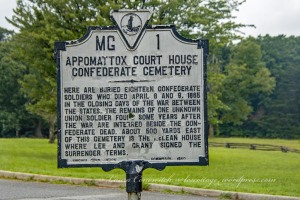
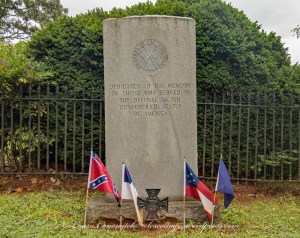
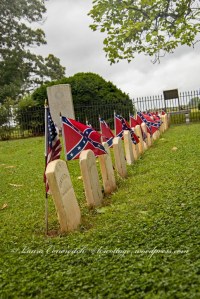
There were perhaps 100 soldiers killed here between April 8 and 9. 19 of those are buried here in Appomattox Court House Confederate Cemetery.

Appomattox Courthouse Village

Only 8 of these soldiers are known. Alabamian Private Jesse H. Hutchins enlisted only 5 days after Confederate troops fired upon Fort Sumter. He had survived 1,454 days of service, only to be killed a few yards from the Appomattox Courthouse in the evening of April 8, 1865, just hours before General Lee surrendered the Army of Northern Virginia to General Ulysses S. Grant.

Appomattox Courthouse Village

The unidentified Union soldier was found in a wooded lot after the Federal dead had been removed in 1866 and 1867.

Appomattox Courthouse Village

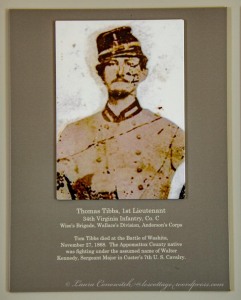
I discovered Thomas Tibbs in the Appomattox Courthouse museum. He stood out to me because he was an Appomattox County native and served in Custer’s U.S. 7th Cavalry. He did not die at the Battle of Little Bighorn, which I have visited twice, but at the Battle of Washita.

Appomattox Courthouse Village

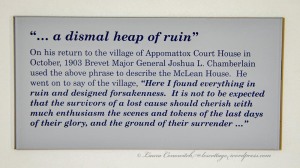
Since 1903, when General Joshua Chamberlain revisited Appomattox Court House, and described the McLean house as a heap of ruins, the house has been reconstructed. I will share that in the next post.

See the world around you!