Tag Archives: American history

Colonial Williamsburg Part 1

The big reason for this road trip was to see our daughter and her fam in North Carolina!
Colonial Williamsburg

The fam took the Hubster and I to Colonial Williamsburg, a living history museum in Williamsburg, Virginia, where we all had fun and I took a bajillion photos!

Colonial Williamsburg

*Clicking on a photo will give you a closer look!

Colonial Williamsburg

Colonial Williamsburg

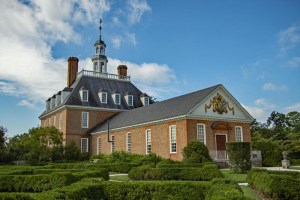
The Governor’s Palace was the home of five Royal Lieutenant-Governors, two Royal Governors, and the first two Governors of the Commonwealth of Virginia, Patrick Henry and Thomas Jefferson.

Colonial Williamsburg

An act by Virginia’s General Assembly in 1706 authorized the construction of a residence in Williamsburg for the Governor. The Palace, completed in 1722, was destroyed by a fire in 1781 while it was being used as a hospital for Americans wounded at the battle of Yorktown.

Colonial Williamsburg

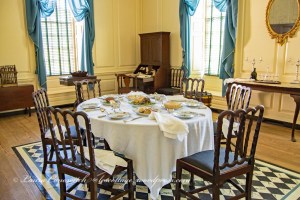
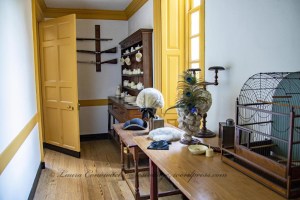
The Palace was reconstructed on its original foundations and is furnished to represent the home of the last British Royal Governor of Virginia, John Murray, the fourth Earl of Dunmore, and his family.

Colonial Williamsburg

Colonial Williamsburg

Colonial Williamsburg

Colonial Williamsburg

Colonial Williamsburg

Colonial Williamsburg

Colonial Williamsburg

Colonial Williamsburg

Colonial Williamsburg

Colonial Williamsburg

Colonial Williamsburg

Colonial Williamsburg

Colonial Williamsburg

Colonial Williamsburg

Colonial Williamsburg

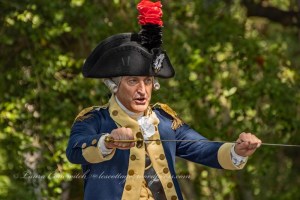
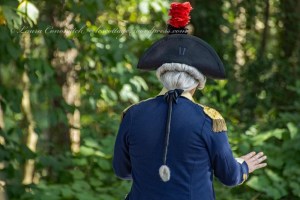
This fantastic storyteller plays the Marquis De Lafayette, Washington’s trusted French officer, whose tactical skill and help securing French support helped clinch victory at Yorktown.

He had entire families spellbound at his feet while he shared history in a very animated way!

Colonial Williamsburg

Lafayette came to Williamsburg during preparations for the Virginia Campaign of 1781. At Yorktown, Lafayette helped to corner Britain’s Lord Cornwallis, whose surrender after several days of siege was a fatal blow that ensured the American victory.

Colonial Williamsburg

See the world around you!

Bennett Place North Carolina

I am going to show my ignorance here, by stating that I did not realize that the surrender of the Northern Army of Virginia by General Robert E. Lee to General Ulysses S. Grant at Appomattox Courthouse did not end the American Civil War.

On our road trip, the Hubster and I discovered Bennett Place, where I learned the rest of the story.

Bennett Place North Carolina

*Clicking on a photo will give you a closer look!

Bennett Place North Carolina

General Joseph E. Johnston was the highest-ranking United States officer to resign his commission and fight for the Confederacy. William T. Sherman left his position as superintendent at Louisiana Seminary and Military Institute to fight for the Union.


The two met in battle in 1861 at First Manassas (Bull Run) where Johnston’s Confederate army forced Union troops, including a brigade led by Colonel Sherman, into a full retreat.


After recovering from wounds sustained in 1862, Johnston was sent to the Western Theater of Operations.


Within two years, the men confronted each other at Vicksburg and again in the Atlanta Campaign.
They faced off for the fourth time, in 1865, in the Carolinas Campaign, and ultimately jointly orchestrated the war’s final chapter at Bennett Place.

Bennett Place North Carolina

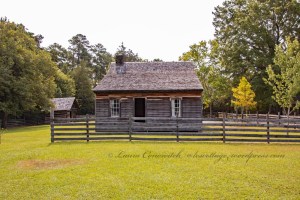
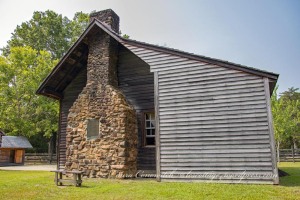
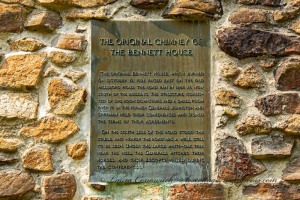
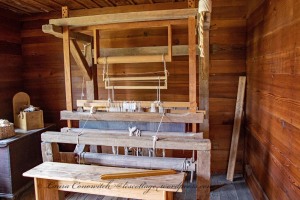
In 1846, James and Nancy (Leigh Pierson) Bennett purchased the property here. They supplemented their farm income by tailoring clothes, selling liquor, providing transportation with their wagon, and renting space in their home to travelers.

Bennett Place North Carolina

Bennett Place North Carolina

Bennett Place North Carolina

Bennett Place North Carolina

Bennett Place North Carolina

Bennett Place North Carolina

Bennett Place North Carolina

Bennett Place North Carolina

Bennett Place North Carolina

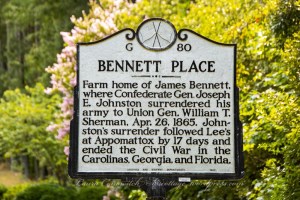
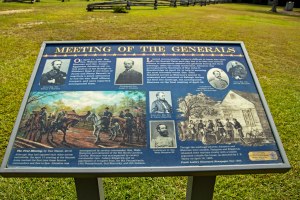
On April 17, 1865, Confederate General Joseph E. Johnston and Union General William T. Sherman, met under a flag of truce midway between their lines on Hillsborough Road, seven miles west of Durham Station, to discuss surrender terms.

Johnston suggested that they use this nearby farmhouse, the home of James and Nancy Bennett, for privacy.

Bennett Place North Carolina

Sherman offered terms similar to those that General Ulysses S. Grant had given to General Robert E. Lee at Appomattox Courthouse, Virginia on April 9, 1865.

After negotiations, on April 26, Sherman and Johnston met at Bennett Place, where Johnston accepted the terms and surrendered the armies under his command including those in the Carolinas, Georgia, and Florida, about 89,270 Confederates. It was the largest surrender of troops in the war.

Bennett Place North Carolina

There is a very nice visitor’s center and informative displays at Bennett Place. The employees are knowledgeable and helpful.

Bennett Place North Carolina

Bennett Place North Carolina

See the world around you!
Boone’s Lick State Historic Site

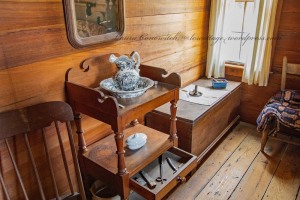
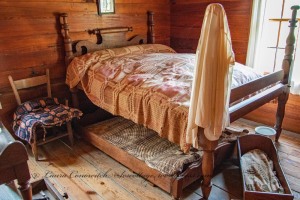
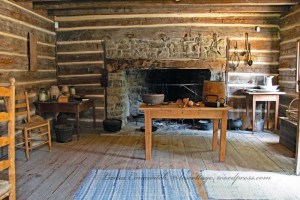
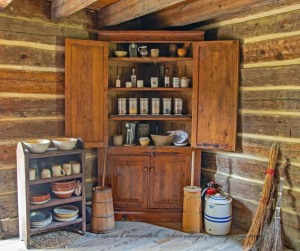
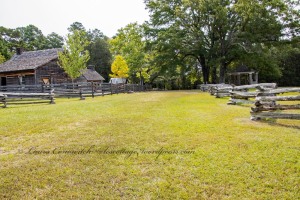
The Hubster and I were looking for a place to have a picnic lunch. Little did we know that we were stepping into such an important part of westward expansion.

Boone's Lick State Historic Site

Three families, the Mackays, the Boones, and the Morrisons, along with a few others, turned a saline lick into a commercial enterprise that helped shape the Louisiana/Missouri Territory.

The Boonslick Road originally ended in Howard County, Missouri, where the Boones’ salt works is now a Missouri State Historic Site. After this road was extended westward from Howard County, the old Boonslick Road would become the Santa Fe Trail. This ancient thoroughfare later became U.S. Highway 40 and finally modern Interstate 70.

*Clicking on a photo will give you a closer look!

Boone's Lick State Historic Site

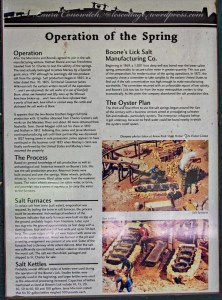
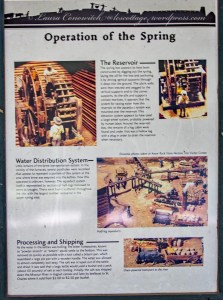
What is a salt lick? It is a briny spring where animals come to lick the ground. Approximately one -third of Missouri contains saline waters.

Salt was the main means of food preservation.

Boone's Lick State Historic Site

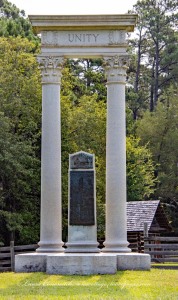
Boone’s Lick was not discovered by Daniel Boone as the following marker says. James Mackay was granted the land by the Spanish in 1797.

Boone's Lick State Historic Site

By 1804, Daniel Morgan and his brother, Nathan Boone were in partnership with Jesse and James Morrison.

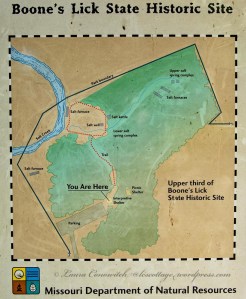
There are many sign boards here where one can read about the history of the area. They are very informative.

If this period in American history interests you, then on page 2 of the Boonslick Historical Society Periodical, there is an excellent map detailing the Morrison commercial empire.

The Hubster and I took a short hike to see what was left of the salt lick.

Boone's Lick State Historic Site

Boone's Lick State Historic Site

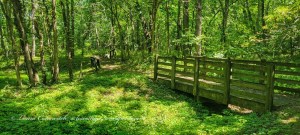
It is very overgrown and very pretty.

Boone's Lick State Historic Site

Boone's Lick State Historic Site

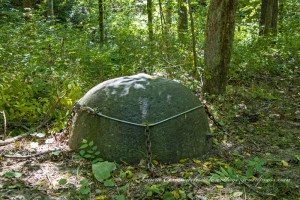
There is not much remaining, but one can see a large kettle used to boil the saltwater.

Boone's Lick State Historic Site

There is one grave marker here at Boones Lick.

It is the grave of Joseph L. Morrison, the son of Major James. Joseph somehow fell into a boiling kettle and was horribly scalded. It is said that he survived for a couple of days. He was 11 years old (16 years say some accounts).

Boone's Lick State Historic Site

Boone's Lick State Historic Site

See the world around you!