
Wyoming Territorial Prison – Part 4
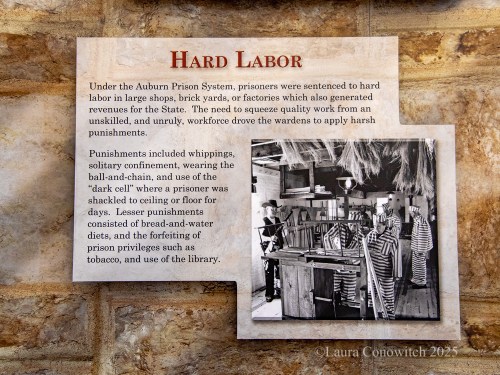
Prisoners worked in the brickyard, the stone quarry, tie hauling, gardening, cutting ice blocks from the Laramie River to store in the ice house for sale during the summer months and other outdoor work.
*Clicking on a photo will give you a closer look!
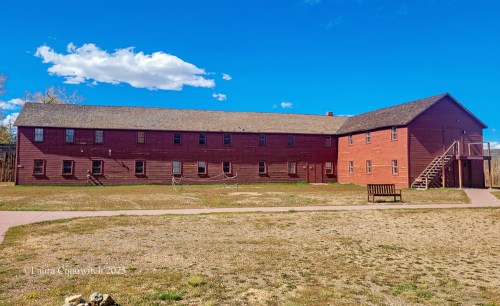
In order to supply indoor work, other than the kitchen, laundry, cigar and candle making, the Prison Industries Building at the Wyoming Territorial Prison was built to raise revenue, manage the prison population, and maintain a workshop year-round.
“The health of the convicts demands that some arrangement be made for their employment, particularly during the winter season when such expedients as outdoor drill & are not practicable. Under existing circumstances there is no available room suitable for shop uses: therefore, that such accommodation may be secured at small expense to the State I make the above proposition. The experience of the past year have shown conclusively that steady and moderate employment is absolutely essential to good health of the inmates of the Pen. It is therefore humane to furnish them a place and the means of occupation.” – James Marsh, former warden
Using mostly prisoner labor, the building cost $618.19 to build and was completed in about 1 month. The first floor was for manufacturing and the second floor was for storage. From 1895 to 1903 the factory operated under a lease agreement as the Laramie Broom Company.
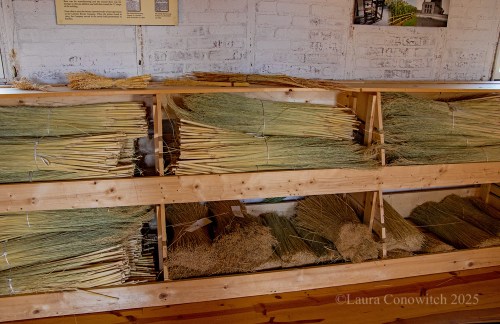
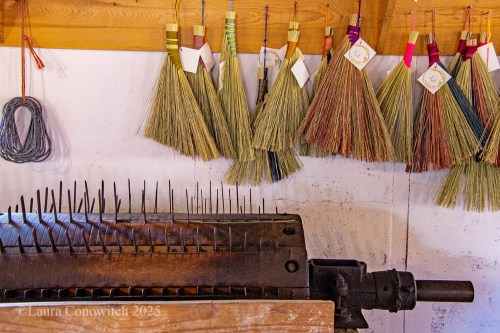
Broomcorn is related to the sorghums used for grain and syrup. The coarse, fibrous seed head has been used to make brooms and brushes for several hundred years.
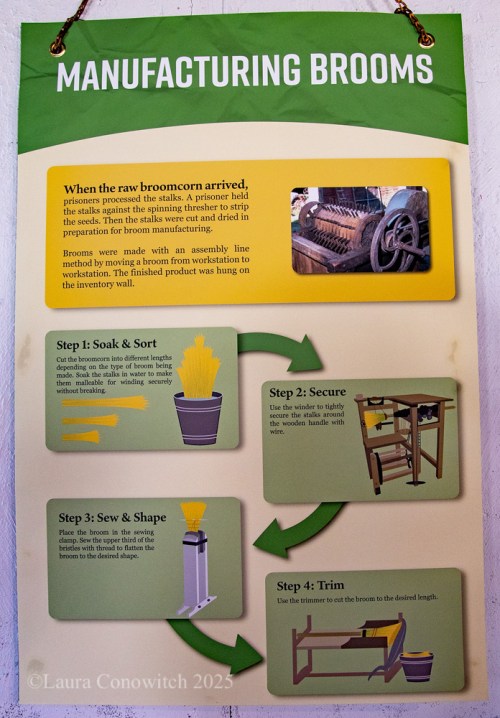
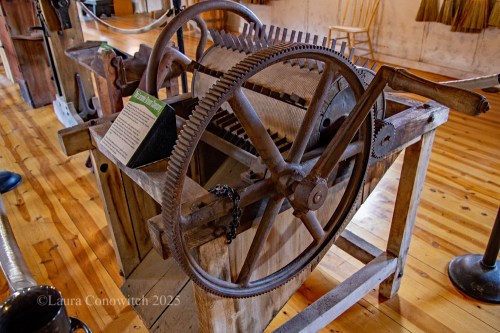
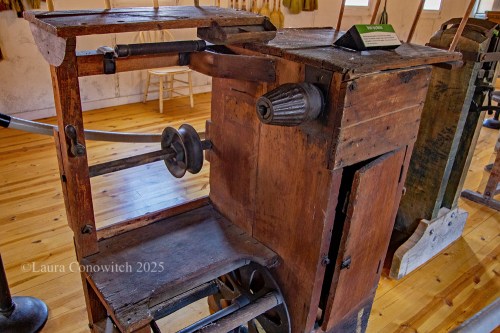
Spinning Thresher:
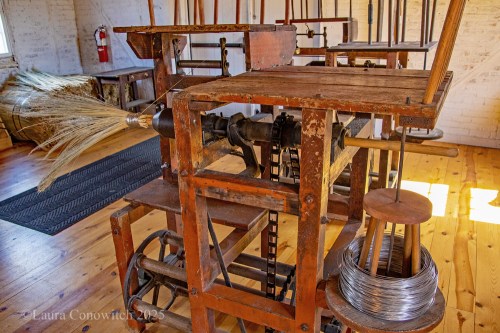
The Broom Tying Machine:
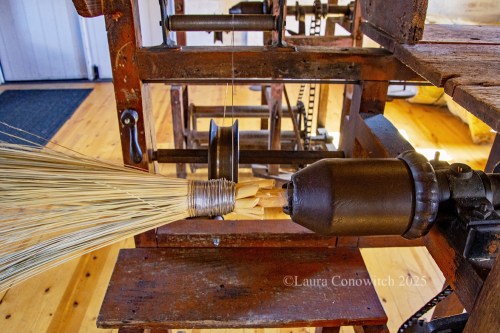
The Broom Sewing Clamp:
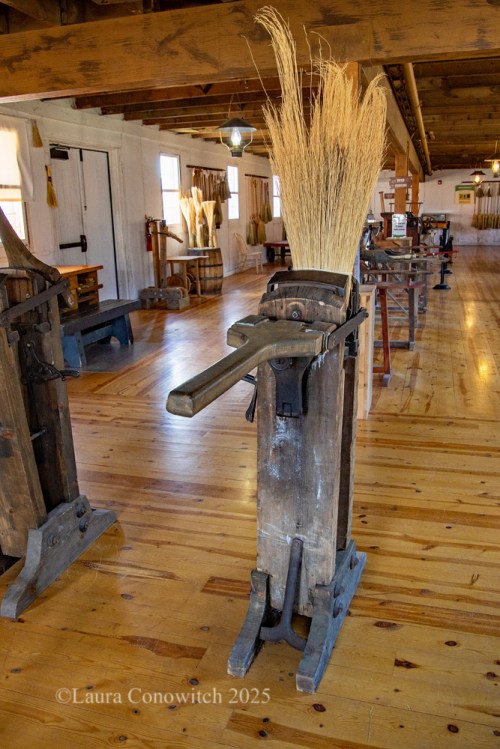
The Broom Trimming Table:
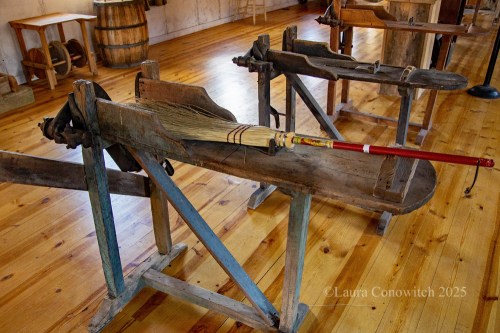
The equipment was purchased from the D. E. Morrison and Magee Company of Beatrice, Nebraska. Morrison and Magee were the broom factory managers.
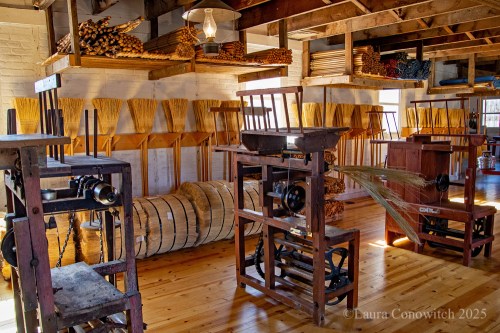
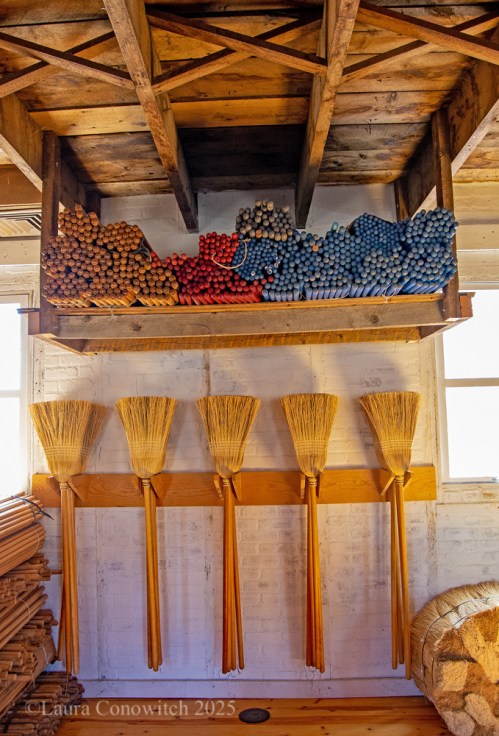
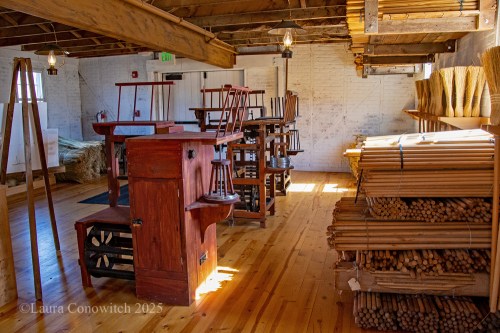
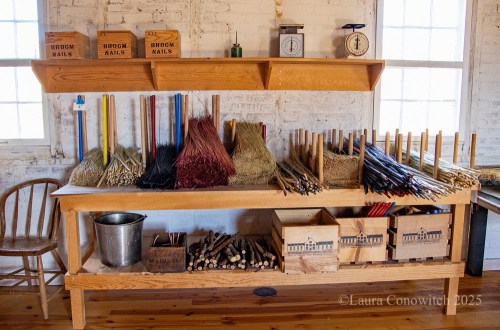
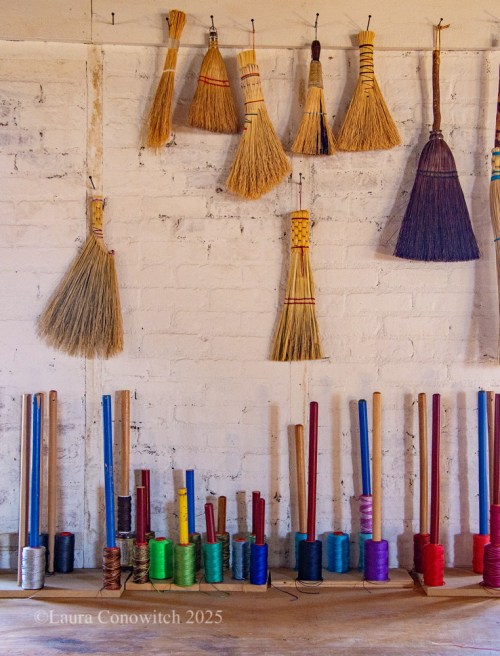
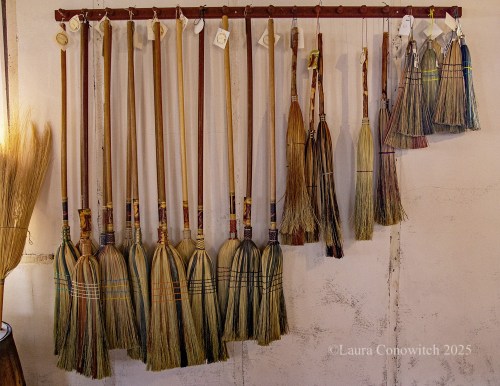
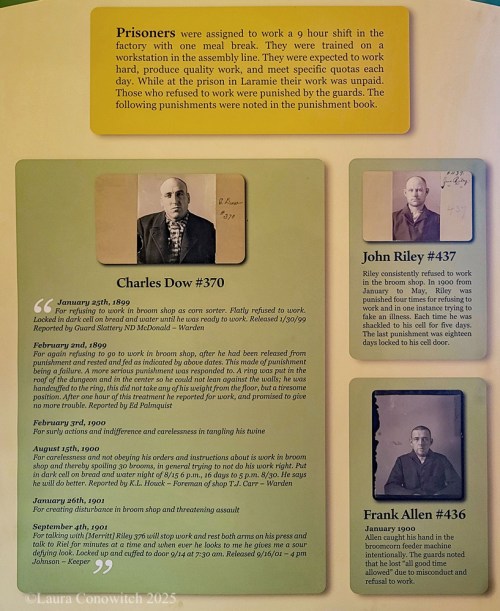
At the height of broom production there were eight tying machines, one trimmer, ten sewing clamps, a dozen broom knives and hatchets, and one dyeing tank. Prisoners made kitchen, whisk, and small or half size handle brooms. Prisoners manufactured about 3,100 items per month. Each broom sold between $.09 and $.23.
Typically two shifts of 25-30 prisoners made brooms.
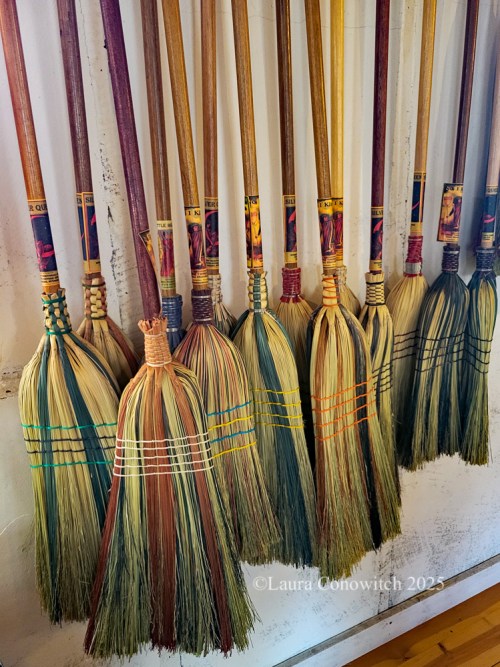
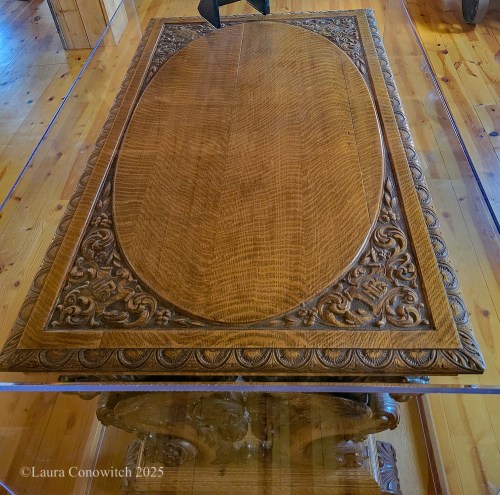
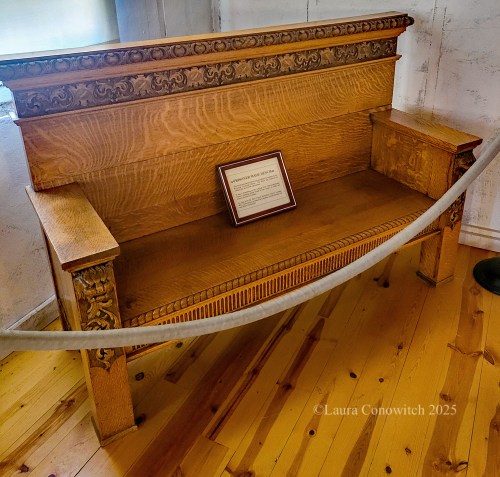
Furniture handcrafted and assembled by inmates at the Wyoming Territorial Prison.
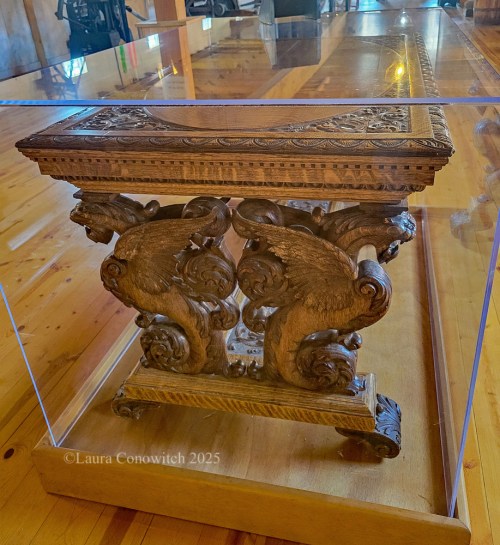
The finish on this gorgeous bench was achieved by rubbing the wood with mayonnaise.
This ends my Wyoming Territorial Prison at Laramie series. If the Wild West is your jam, I encourage you to visit if you ever have the opportunity!
See the world around you!
More Travel Posts:




 LC's Cottage
Very cool about the BroomCorn factory this corrections facility birthed and ran, employing inmates (and by association giving the inmates out-of-prison skills). This reminded me of a town about 10 miles from Boulder we as big kids (HS & College) made fun of back in the day: Broomfield, CO. They slangy term we called it was ‘Broombucket’. The story went fields of Broom Corn grew for acres and acres at the turn of the century – waving at nobody because nobody lived in town. I googled Broomfield for old times’ sake figuring there’d be more recent info documented over the years…this is what I found: https://www.cpr.org/2022/01/31/how-did-broomfield-colorado-get-its-name/ Very interesting, eh? Thought your bent for history would find it so as it relates to this very post! HA!
LikeLike
Thank you for that fun little side trip to Broomfield, Laura. From Wikipedia: “One of the early names for the area was Zang’s Spur, after the railroad spur serving Adolph Zang’s grain fields.” Broomfield looks like a beautiful place to live, but the cost of living is above my pay grade. 😁
LikeLike
Mayonnaise ? perhaps we should try that too 😜
LikeLike
I thought that was a cool tip, Sharon. Wonder if the mayo recipe back then is similar to a homemade mayo today. In any case, if all the eggs disappear from the refrigerator, I will head out to the shop to look for my husband first. 🤣
LikeLike
The wood items are really beautiful.
LikeLike
Those items were gorgeous, Donna! It is a shame that the prisoners who made that furniture didn’t put their fantastic talent to good use. Maybe their circumstances just didn’t support them. I dunno. 🙂
LikeLike