
Wyoming Territorial Prison – Part 1
Wyoming Territorial Prison was another place where the Hubster and I spent considerable time and took literally hundreds of photos. I got side-tracked with decluttering and other things, but I am back to all of the sorting and editing, and I am going to finish up this vacation!
Guided tours are offered until September, but the Hubster and I visited in October, so we did the self-guided thing.
*This will be a long post, but easy to read. I am sharing lots of photos.
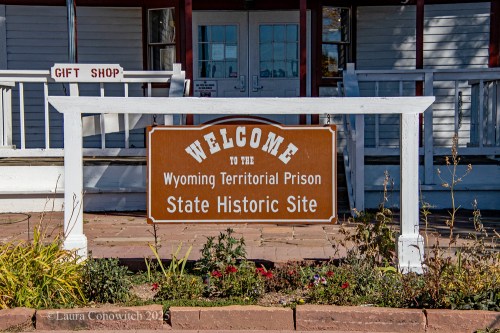
*Clicking on a photo will give you a closer look!
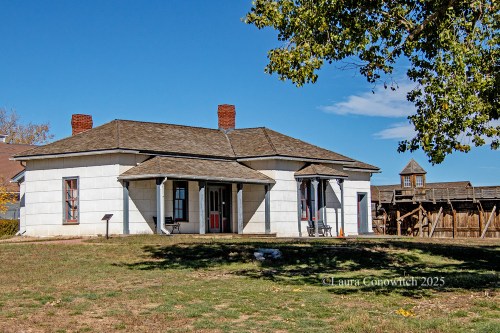
The Warden’s Residence
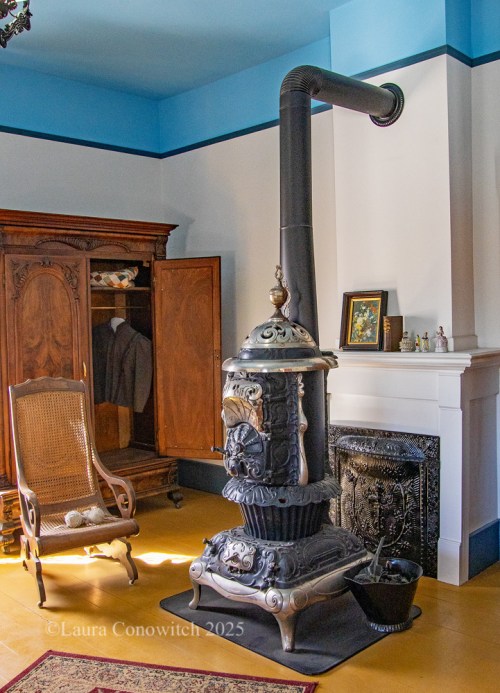
Wardens were responsible for overseeing the daily operation of the prison: hiring and managing guards, arranging for food, clothing, and medical care for the prisoners, supervising various convict labor contracts, pursuing escapees, accounting, public relations, mediating disputes, and more, all for $50 per month.
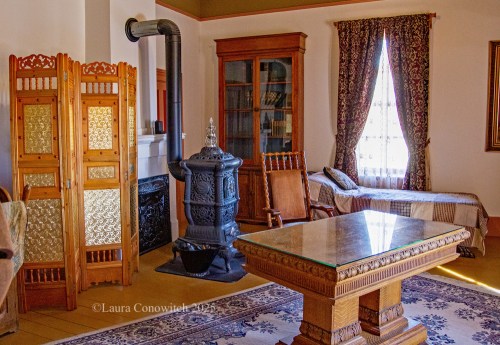
Wardens were appointed by the federal government and reported directly to the Attorney General of the United States. Administrative turnover, including guards, was high due to politics. In 1890 Wyoming became a state and wardens were appointed by the State Board of Charities and Reform.

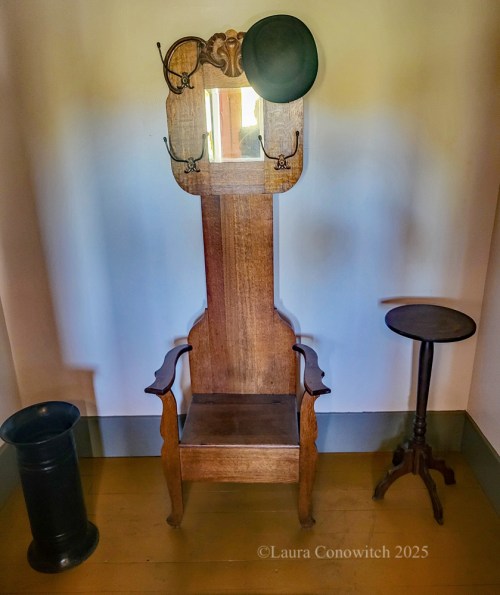
The commode:
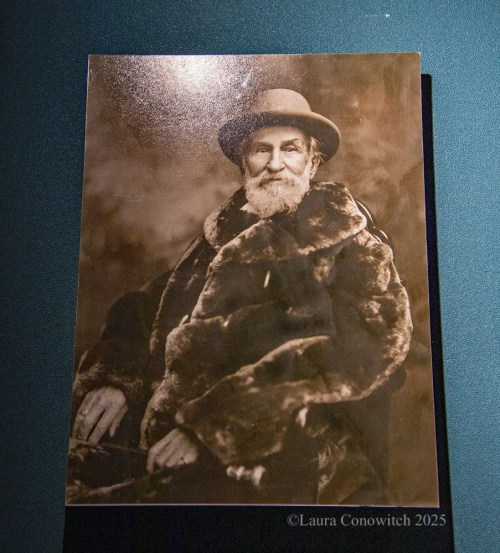
In 1872, the colorful Nathaniel Kimball Boswell, served as the first warden of the Wyoming Territorial Prison.
Among N.K. Boswell’s many occupations: freight hauler in gold mining camps, militia man, Indian fighter, Albany County’s first sheriff, deputy U.S. Marshal, chief detective for the Wyoming state’s Stock Growers Association, and scout.

“I like a man with guts…I like Boz.” – President Theodore Roosevelt
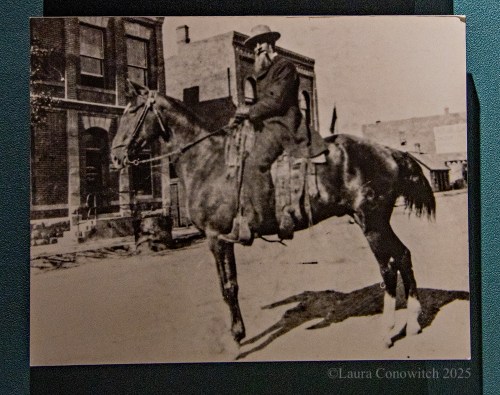
Boswell’s “life record reads like some tale of fiction, there are so many exciting experiences events therewith. As sheriff in the early days he was possessed of not a shadow of fear and on many occasions has faced famous gunmen, outlaws, bandits, horse, and cattle thieves.” – The Laramie-Republican, October 13, 1921
“As sheriff, he assembled the first women grand jury, the first women petit jury and appointed the first woman bailiff. Mr. Boswell officiated during the election of 1872, when ‘mother’ Swain cast the first vote by a woman at a political election in the world.” – The Laramie-Republican, October 13, 1921
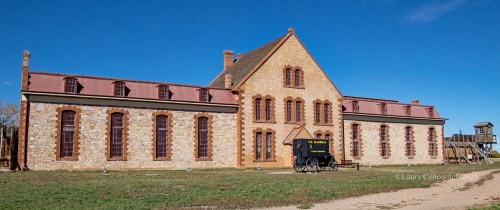
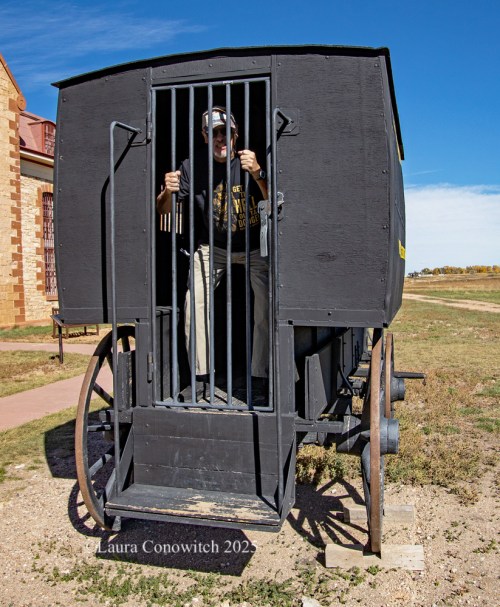
Hopefully, you aren’t entering the territorial prison like this poor guy!
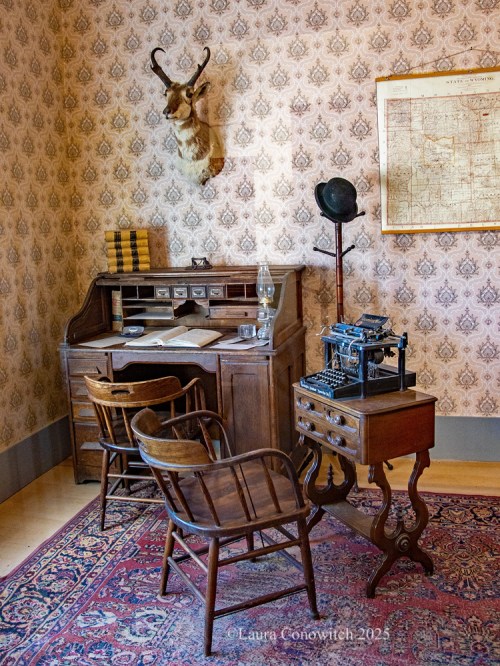
When you enter the prison doors, you will find the warden’s office to the left, and the prisoners processing room to the right.


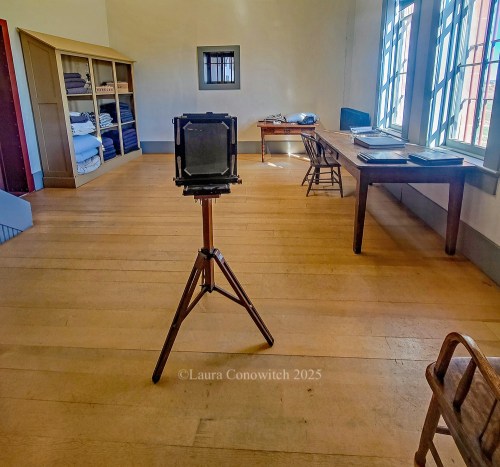
In the processing room, prisoners would be required to surrender their personal belongings that were then catalogued and held for them. Males had their heads and beards shaven. Prisoners were photographed and issued a prison uniform.
The rules regulating prisoners of the United States penitentiary at Laramie, Wyoming Territory were rules adapted on the Auburn System of penal discipline. Prisoners would be shown these rules in the processing room.
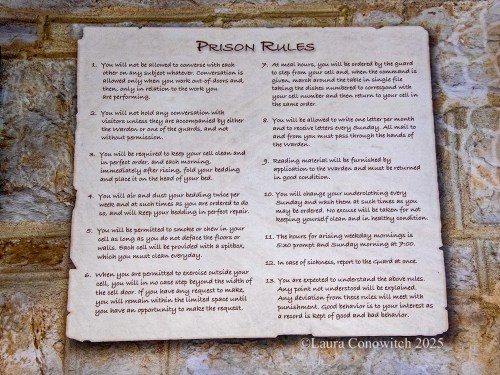
Most guards chose to live in town, especially those who were married. Prior to 1889, guards lived in part of the warden’s house. Most guards were hired from out of the area, some were in their 50’s, some were immigrants, and some were Civil War veterans.


Guards had to be alert. At least 2 were severely beaten and never recovered enough to work the remainder of their lives. To discourage outbreaks and maintain discipline, manacles, ball and chain, the dark cell, a bread and water diet, and silence were all used. Guards were equipped with a revolver and a rifle or a shotgun. They also had excellent views of the corridors at all times. Guards were known ‘to shoot to injure’ escaping prisoners.
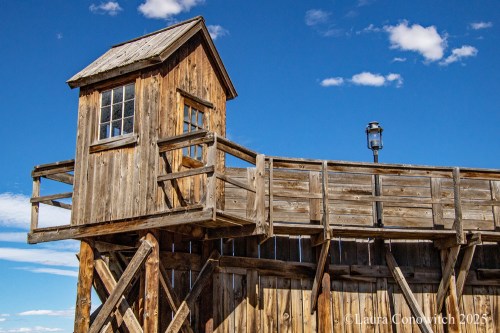
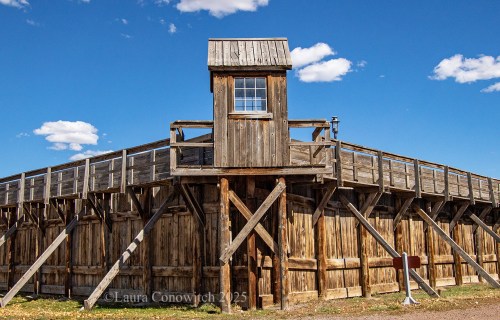
One of the guard’s overlooks:
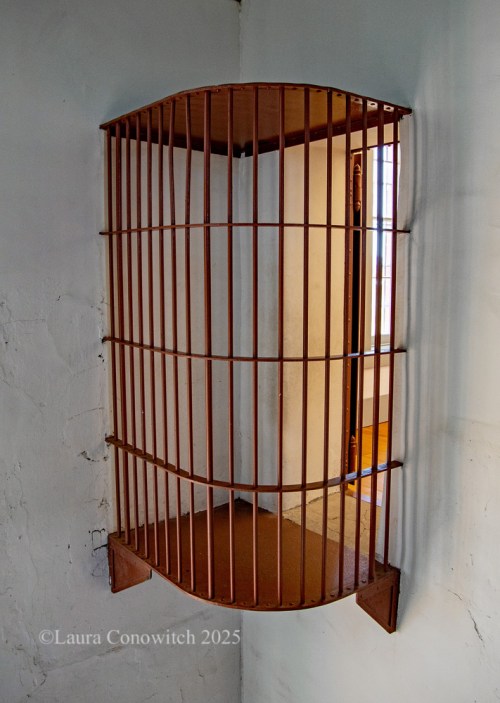


These cells were definitely built to keep you locked up!
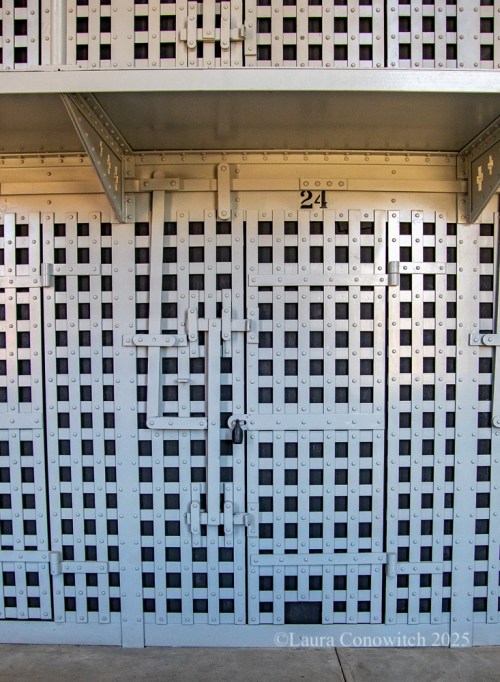
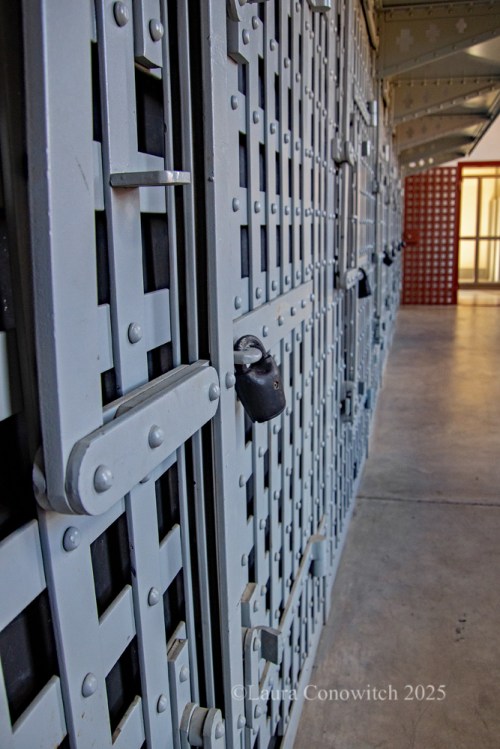
Another guard’s point of view.

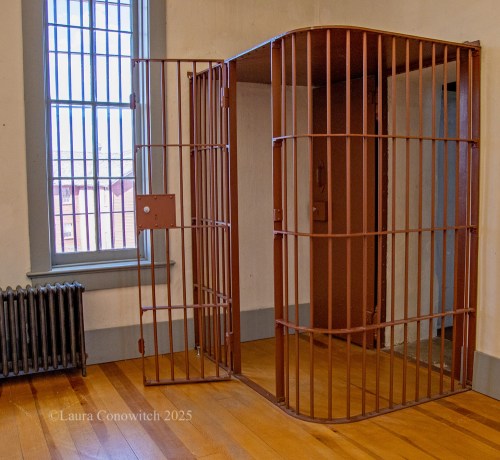
For sure, you do not want to be locked in the ‘dark cell’:
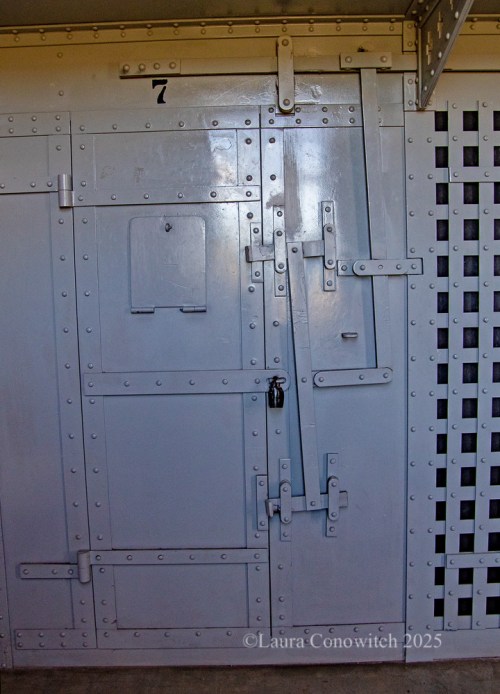
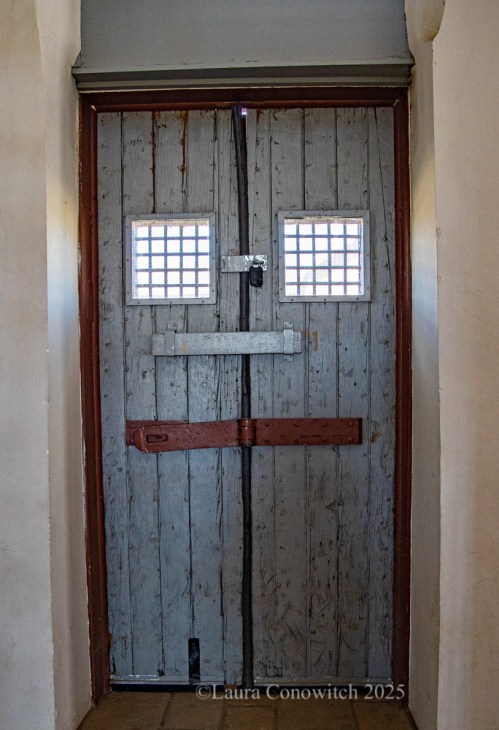
A way out of this depressing place if you can unlock it!
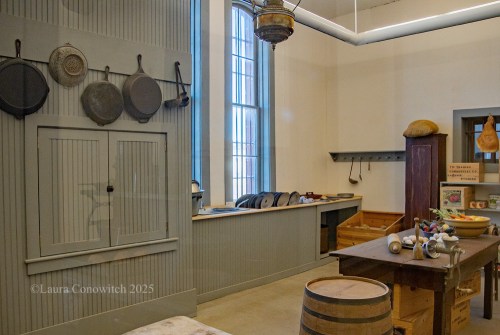
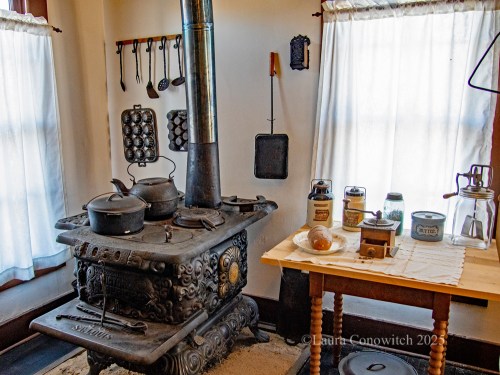
The prison kitchen:
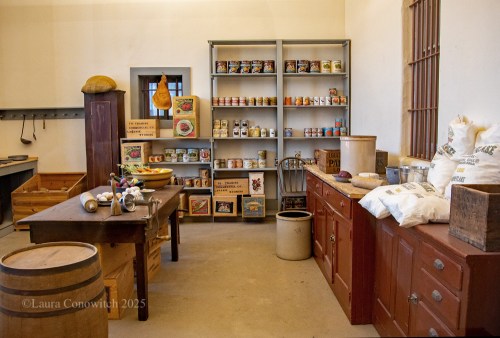

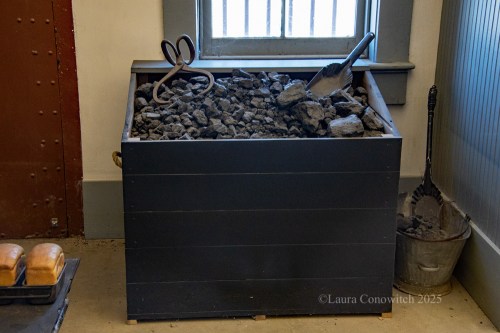
The kitchen has a dumbwaiter to carry food up to the dining hall on the second floor.
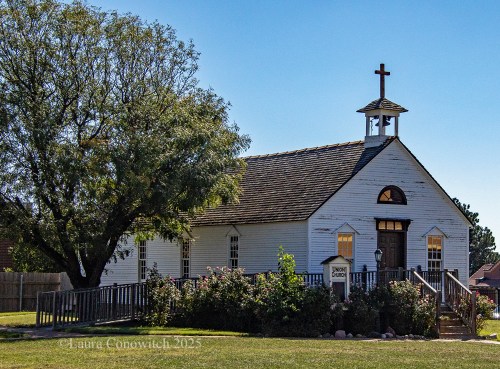
In addition to meals, the dining hall served as a place for church and entertainment opportunities. Most of the inmates time, including meals, was spent in confinement in their cells. Those with ‘model’ behavior were allowed meals in the dining hall for holiday events.
Work groups also used the dining hall for prison industries, such as candle making, to learn work skills and habits.
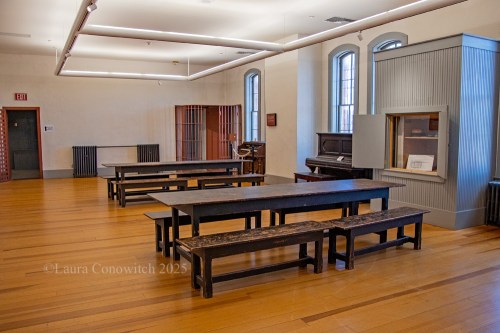
Silence at all of these events was strictly enforced.
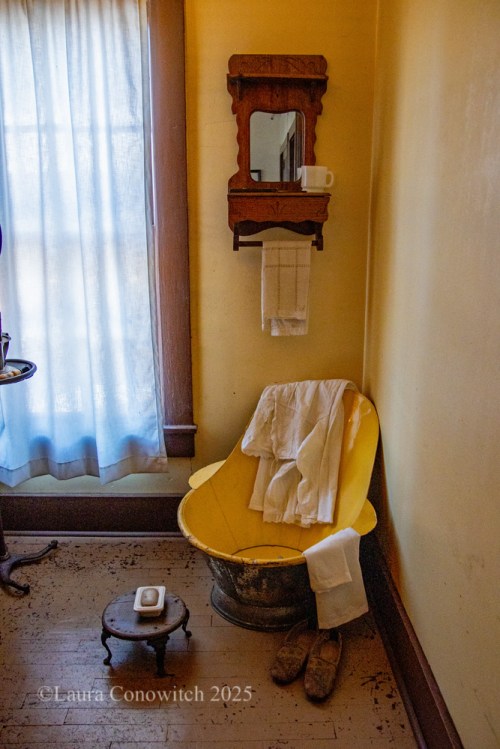
Women’s Bathing:
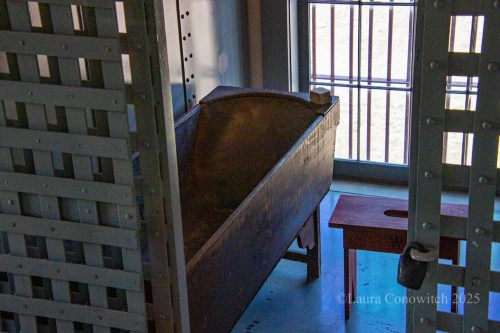
Men’s Bathing:

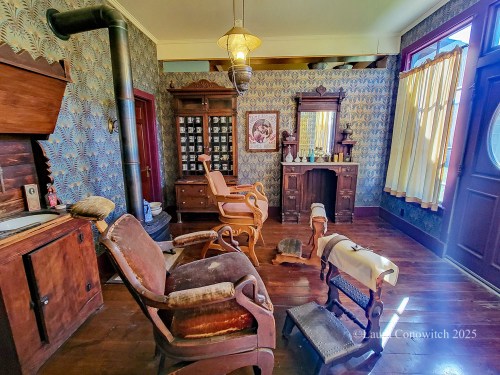
There were laundry facilities as well as the dentist:

And after seeing the dentist, you might need the infirmary!

Wyoming State Penitentiary c. 1895
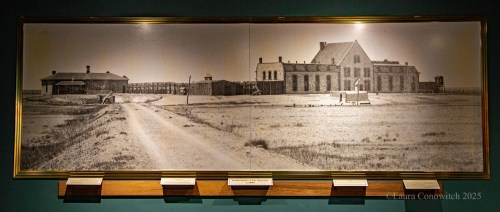
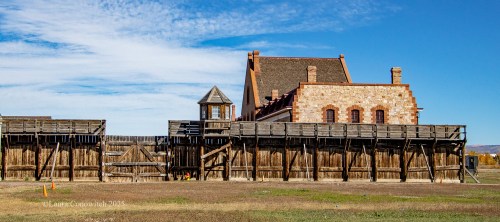
The basement of the Warden’s Residence housed the kitchen and dining room accessible only by the exterior stairs. The exterior entrance and retaining wall was later filled in with dirt and an interior stairway was added.
The dirt-roofed building next to the stockade was a barn where the prison animals were kept. The twelve-foot stockade was built by convict labor.
“I have built with convict labor an ice house and stored therein 300 tons of ice. 200 tons of this can be sold in the summer for $5 per ton.” – U.S. Marshal Frank Wolcott, May 2, 1874
The ‘buck and pole’ fence seen at the right of the above photo enclosed the rock and quarry and clay pit. The quarried stone was removed and sold for building purposes, while the red clay in this vicinity was utilized for making brick. Civilian contractors paid the government $.80 per day for each convict engaged in these enterprises. Despite guards, escapes were common.
“I have tried the ball and chain arrangement and while it certainly secures the prisoner against escape, it also renders him worthless as a brick yard hand. In a brickyard only the overseers have stationary work, the rest must run about, and the value of their labor depends entirely upon the rapidity of their movements. Under these circumstances of course a ball and chain is impracticable.” – U.S. Marshal Frank Wolcott, September 24, 1874
I shall introduce you to some of the prisoners in the next post.
See the world around you!
More Travel Posts:











 LC's Cottage