Tag Archives: wild west

Cross Country Vacation Sept./Oct. 2025-Post 27

Wyoming Territorial Prison – Part 2

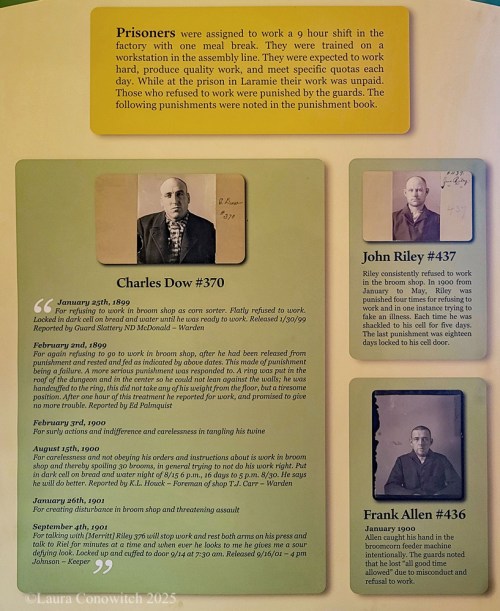
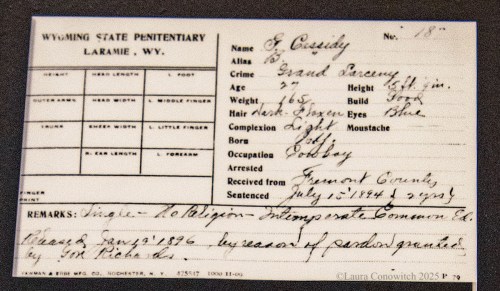
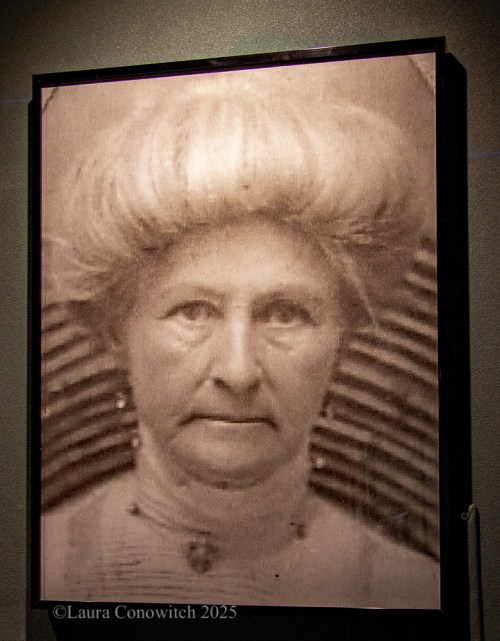
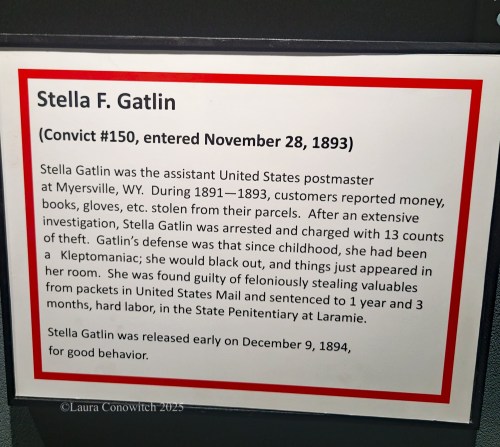
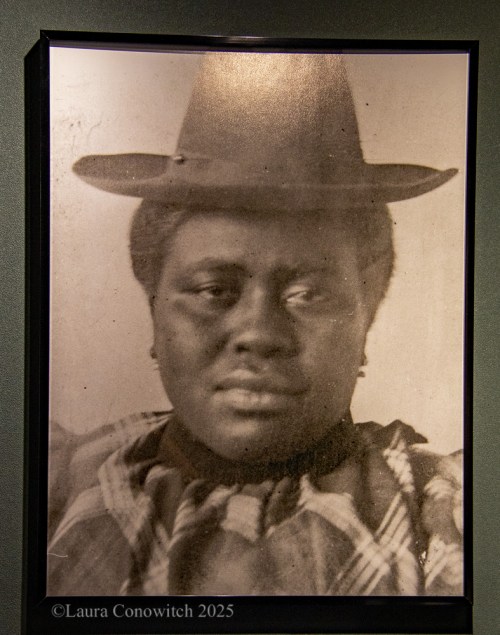
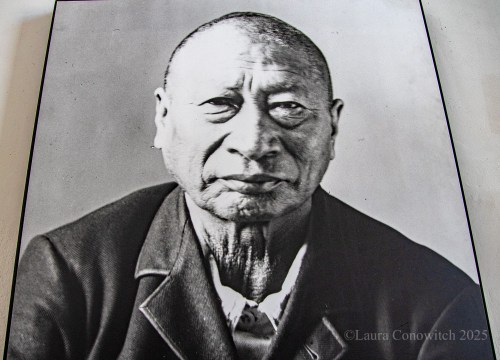
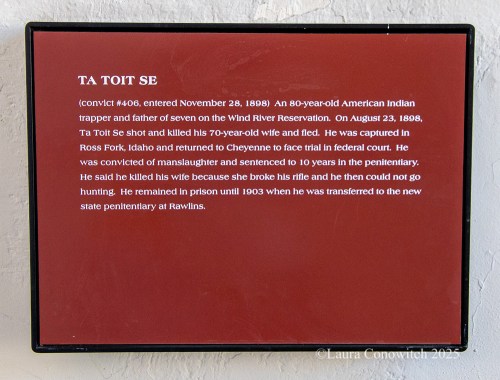
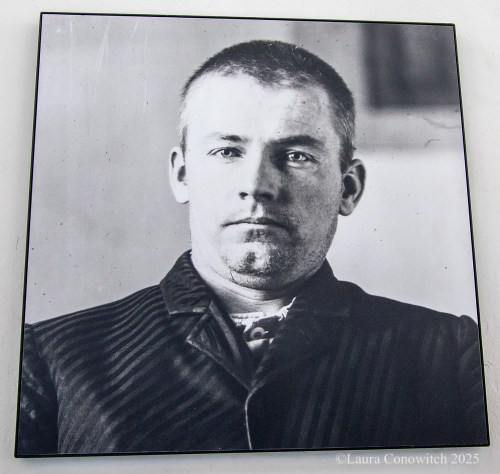
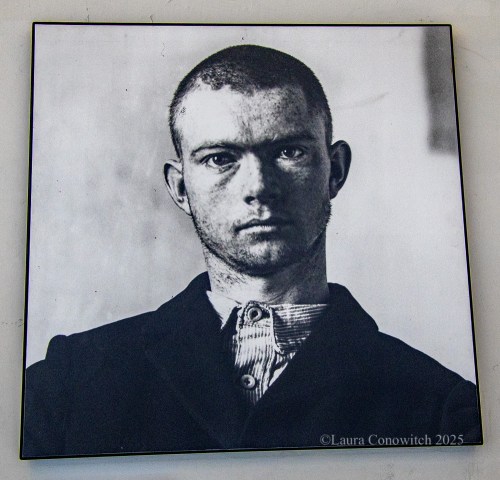
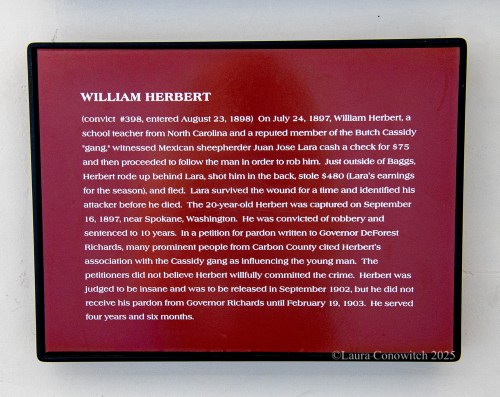
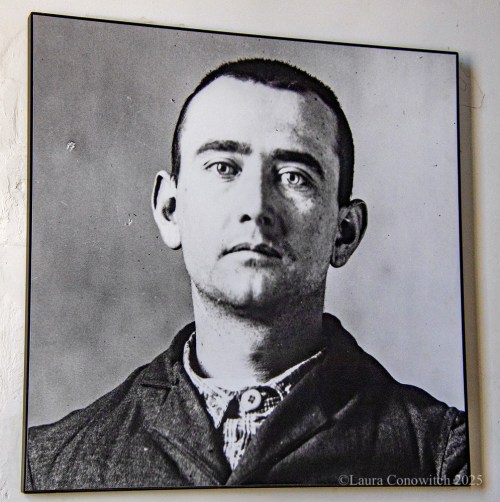
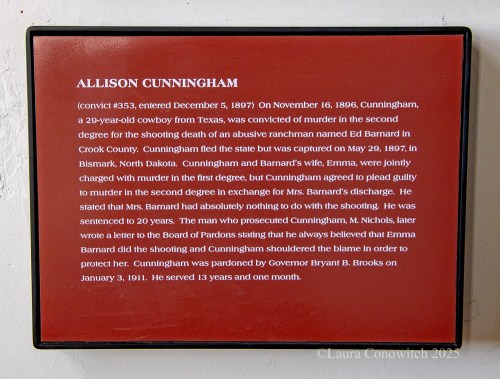
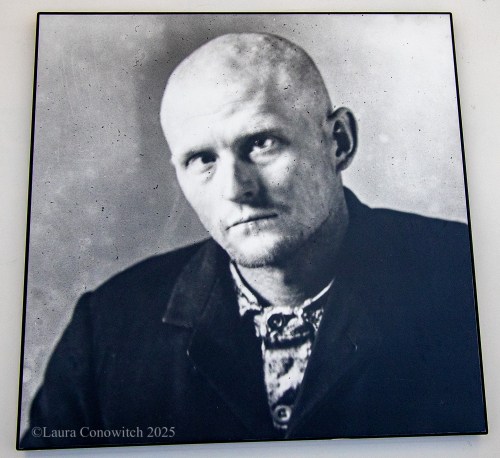
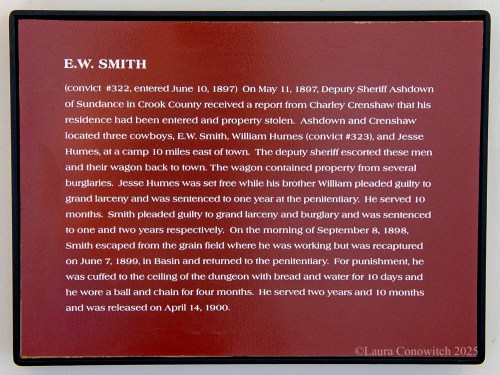
What makes visiting historical places so interesting is the people that lived during the times of these places. Wyoming Territorial State Prison Historical Site, also known as ‘the big house across the river’, does a great job of sharing their stories. I am sharing a few in this post, so if you want to stick around, you might want to get yourself a cup. The photographs of the convicts are taken from their actual mug shots and are on display all over the walls of the penitentiary (from the word penitent).

Dr. May Preston Slosson was a very accomplished and gifted woman. In 1880, she became the first female doctoral graduate from Cornell University, as well as the first woman in the U.S. to earn a PhD in philosophy. She was an author, an educator, a painter, world traveler, and a suffragette.

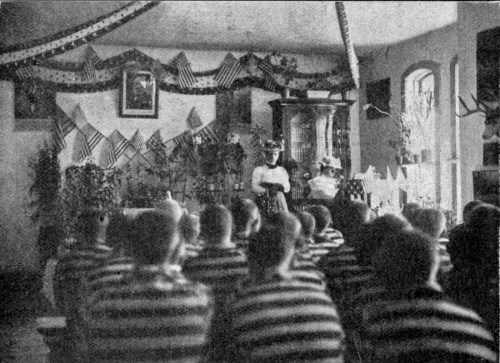
In 1898, Slosson was chair of the prison committee of the Woman’s Christian Temperance Union and she organized lectures for prisoners at the Wyoming State Penitentiary in Laramie. Prison Warden N. D. McDonald submitted her name, and Slosson was appointed Prison Chaplain on July 7, 1899, becoming the first female prison chaplain in the U.S.

Wyoming Territorial Prison State Historic Site


Dr. Slosson aimed to build up the prisoners’ sense of self-respect and provide education that she believed would assist in an orderly transition from prison life to life outside the walls. Beyond leading religious services, she continued the lecture series, provided study programs, counseled prisoners, provided church services, arranged social programs, and served as a librarian and record keeper. In prisons of silence chaplains often acted as the voice of the prisoners. Warden McDonald supported her work because under her guidance as Chaplain, the prison punishment rate dropped by fifty percent.

“I enjoyed the work . The place was tragic, that is true.” – May Preston Slosson

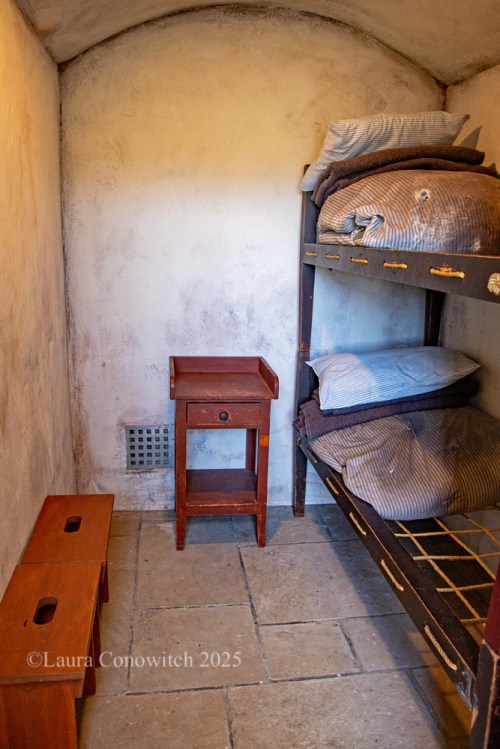
Let’s meet a few of the prisoners who occupied cells like this one:

Wyoming Territorial Prison State Historic Site

*Clicking on a photo will give you a closer look!

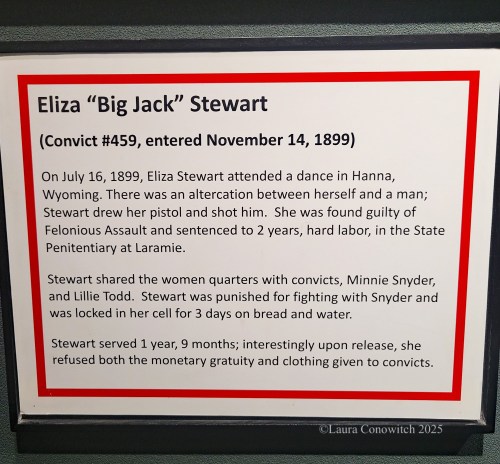
Out of 1063 prisoners at the penitentiary, there was a total of 13 women, with one of them serving time twice.

The women’s quarters offered no special amenities to the women. However, they did have relative privacy as their quarters were set well away from the male prisoner’s quarters. They had their own bathroom as well.

The women were not allowed out of the cellblock during their stay except to go to chapel. They did have use of the library. The wardens were determined to keep the women totally segregated from the men. They did not wear uniforms, nor did they have their heads shaved. Female convicts were perceived as a nuisance by male administrators throughout the West.

The women prisoners were not required to do heavy labor. They made and mended clothing for the male and female convicts.

Wyoming Territorial Prison State Historic Site

Wyoming Territorial Prison State Historic Site

Wyoming Territorial Prison State Historic Site

Wyoming Territorial Prison State Historic Site

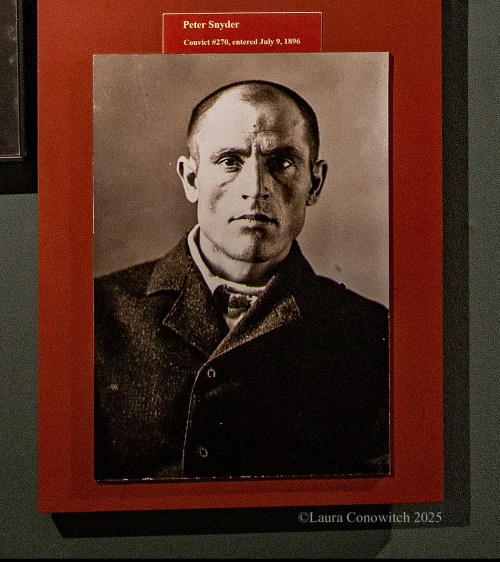
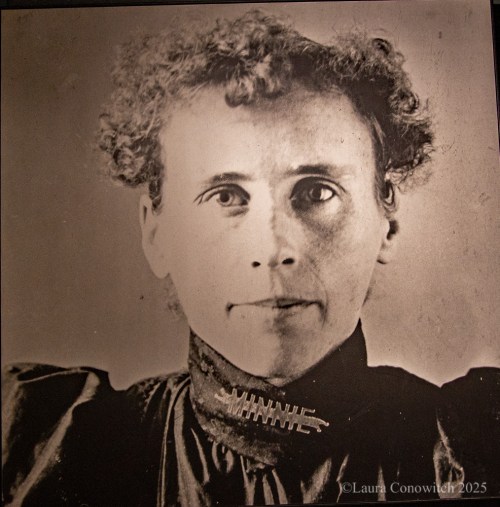
Minnie Hulett Snyder and her husband, Peter, ranched in the Big Horn Basin region of Wyoming. They were having troubles with S. W. Aldrich, a neighbor.

Wyoming Territorial Prison State Historic Site

An unknown person fired into Aldrich’s window one night and he claimed it was Minnie. Following horse tracks, April 3, 1898, led Aldrich and his men to the Snyders’ home. The Snyders and the Aldrich group set off to talk to Judge Benedict on Bull Creek. At the crossing of Belknaff Creek, near present day Cody, someone opened fire, and everyone took cover and pulled weapons. When the shooting was over, John Rooks, a friend of Aldrich, was dead and several believe Minnie fired the fatal shot with a Winchester.

Wyoming Territorial Prison State Historic Site

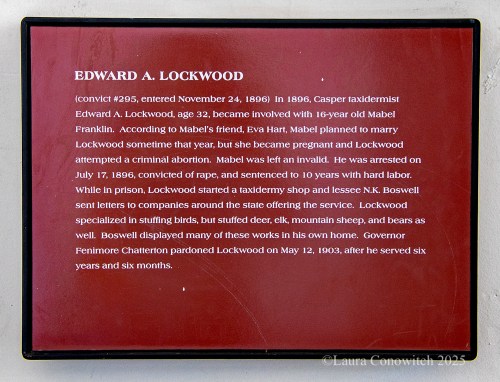
The Snyders called it an ambush. Aldrich and his men claimed Peter was cattle rustling. Minnie told the jury that Aldrich was making advances and she wanted him to stop. Aldrich had been known to make unwanted advances towards women. Some said Aldrich wanted the Snyder ranch. In the end, the Snyders were convicted of manslaughter and sentenced to terms in prison. Aldrich was never implicated in any wrongdoing.

Letters from friends requesting her pardon attest to Minnie’s innocence. Minnie kept houseplants and a pet canary; she couldn’t be a killer. Opponents called Minnie debased, lewd, and ‘having no womanly instincts’.

95-pound Minnie kept her silence and endured years behind bars. The whole time, she and Peter were never allowed to speak to each other. Aldrich got the Snyder ranch, but, in the end, the entire Marquette area where these events occurred went underwater with the construction of the Buffalo Bill Dam and Reservoir in 1910.

Wyoming Territorial Prison State Historic Site

Wyoming Territorial Prison State Historic Site

*Clicking on a photo will give you a closer look!

Wyoming Territorial Prison State Historic Site

Wyoming Territorial Prison State Historic Site

Wyoming Territorial Prison State Historic Site

Wyoming Territorial Prison State Historic Site

Wyoming Territorial Prison State Historic Site

Wyoming Territorial Prison State Historic Site

Wyoming Territorial Prison State Historic Site

Wyoming Territorial Prison State Historic Site

Wyoming Territorial Prison State Historic Site

See the world around you!

More Travel Posts:
Cross Country Vacation Sept./Oct. 2025-Post 26

Wyoming Territorial Prison – Part 1

Wyoming Territorial Prison was another place where the Hubster and I spent considerable time and took literally hundreds of photos. I got side-tracked with decluttering and other things, but I am back to all of the sorting and editing, and I am going to finish up this vacation!

Guided tours are offered until September, but the Hubster and I visited in October, so we did the self-guided thing.

*This will be a long post, but easy to read. I am sharing lots of photos.

Wyoming Territorial Prison State Historic Site

*Clicking on a photo will give you a closer look!

Wyoming Territorial Prison State Historic Site

The Warden’s Residence

Wyoming Territorial Prison State Historic Site

Wardens were responsible for overseeing the daily operation of the prison: hiring and managing guards, arranging for food, clothing, and medical care for the prisoners, supervising various convict labor contracts, pursuing escapees, accounting, public relations, mediating disputes, and more, all for $50 per month.

Wyoming Territorial Prison State Historic Site

Wardens were appointed by the federal government and reported directly to the Attorney General of the United States. Administrative turnover, including guards, was high due to politics. In 1890 Wyoming became a state and wardens were appointed by the State Board of Charities and Reform.

Wyoming Territorial Prison State Historic Site

The commode:

Wyoming Territorial Prison State Historic Site

Wyoming Territorial Prison State Historic Site

In 1872, the colorful Nathaniel Kimball Boswell, served as the first warden of the Wyoming Territorial Prison.

Among N.K. Boswell’s many occupations: freight hauler in gold mining camps, militia man, Indian fighter, Albany County’s first sheriff, deputy U.S. Marshal, chief detective for the Wyoming state’s Stock Growers Association, and scout.

Wyoming Territorial Prison State Historic Site

“I like a man with guts…I like Boz.” – President Theodore Roosevelt

Wyoming Territorial Prison State Historic Site

Boswell’s “life record reads like some tale of fiction, there are so many exciting experiences events therewith. As sheriff in the early days he was possessed of not a shadow of fear and on many occasions has faced famous gunmen, outlaws, bandits, horse, and cattle thieves.” – The Laramie-Republican, October 13, 1921


“As sheriff, he assembled the first women grand jury, the first women petit jury and appointed the first woman bailiff. Mr. Boswell officiated during the election of 1872, when ‘mother’ Swain cast the first vote by a woman at a political election in the world.” – The Laramie-Republican, October 13, 1921

Wyoming Territorial Prison State Historic Site

Wyoming Territorial Prison State Historic Site

Hopefully, you aren’t entering the territorial prison like this poor guy!

Wyoming Territorial Prison State Historic Site

When you enter the prison doors, you will find the warden’s office to the left, and the prisoners processing room to the right.

Wyoming Territorial Prison State Historic Site

Wyoming Territorial Prison State Historic Site

Wyoming Territorial Prison State Historic Site

In the processing room, prisoners would be required to surrender their personal belongings that were then catalogued and held for them. Males had their heads and beards shaven. Prisoners were photographed and issued a prison uniform.

Wyoming Territorial Prison State Historic Site

The rules regulating prisoners of the United States penitentiary at Laramie, Wyoming Territory were rules adapted on the Auburn System of penal discipline. Prisoners would be shown these rules in the processing room.

Wyoming Territorial Prison State Historic Site

Most guards chose to live in town, especially those who were married. Prior to 1889, guards lived in part of the warden’s house. Most guards were hired from out of the area, some were in their 50’s, some were immigrants, and some were Civil War veterans.

Wyoming Territorial Prison State Historic Site

Wyoming Territorial Prison State Historic Site


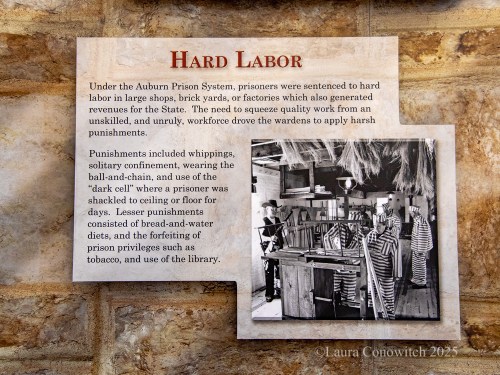
Guards had to be alert. At least 2 were severely beaten and never recovered enough to work the remainder of their lives. To discourage outbreaks and maintain discipline, manacles, ball and chain, the dark cell, a bread and water diet, and silence were all used. Guards were equipped with a revolver and a rifle or a shotgun. They also had excellent views of the corridors at all times. Guards were known ‘to shoot to injure’ escaping prisoners.

One of the guard’s overlooks:

Wyoming Territorial Prison State Historic Site

Wyoming Territorial Prison State Historic Site

Wyoming Territorial Prison State Historic Site

These cells were definitely built to keep you locked up!

Wyoming Territorial Prison State Historic Site

Wyoming Territorial Prison State Historic Site

Another guard’s point of view.

Wyoming Territorial Prison State Historic Site

For sure, you do not want to be locked in the ‘dark cell’:

Wyoming Territorial Prison State Historic Site

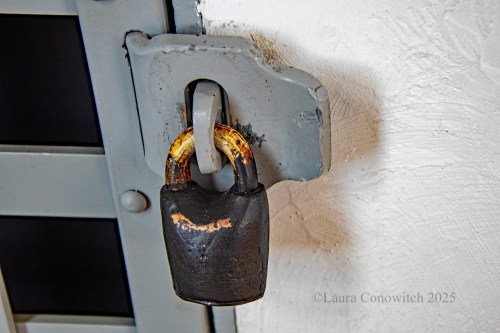
A way out of this depressing place if you can unlock it!

Wyoming Territorial Prison State Historic Site

The prison kitchen:

Wyoming Territorial Prison State Historic Site

Wyoming Territorial Prison State Historic Site

Wyoming Territorial Prison State Historic Site

The kitchen has a dumbwaiter to carry food up to the dining hall on the second floor.

Wyoming Territorial Prison State Historic Site

In addition to meals, the dining hall served as a place for church and entertainment opportunities. Most of the inmates time, including meals, was spent in confinement in their cells. Those with ‘model’ behavior were allowed meals in the dining hall for holiday events.

Work groups also used the dining hall for prison industries, such as candle making, to learn work skills and habits.

Wyoming Territorial Prison State Historic Site

Wyoming Territorial Prison State Historic Site

Silence at all of these events was strictly enforced.

Women’s Bathing:

Wyoming Territorial Prison State Historic Site

Men’s Bathing:

Wyoming Territorial Prison State Historic Site

There were laundry facilities as well as the dentist:

Wyoming Territorial Prison State Historic Site

And after seeing the dentist, you might need the infirmary!

Wyoming Territorial Prison State Historic Site

Wyoming Territorial Prison State Historic Site

Wyoming Territorial Prison State Historic Site

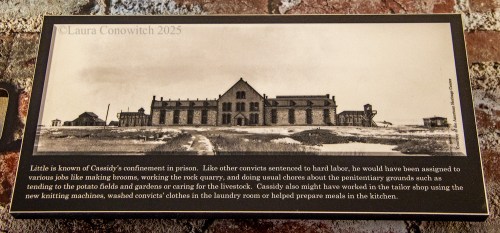
Wyoming State Penitentiary c. 1895

Wyoming Territorial Prison State Historic Site

The basement of the Warden’s Residence housed the kitchen and dining room accessible only by the exterior stairs. The exterior entrance and retaining wall was later filled in with dirt and an interior stairway was added.

The dirt-roofed building next to the stockade was a barn where the prison animals were kept. The twelve-foot stockade was built by convict labor.

“I have built with convict labor an ice house and stored therein 300 tons of ice. 200 tons of this can be sold in the summer for $5 per ton.” – U.S. Marshal Frank Wolcott, May 2, 1874

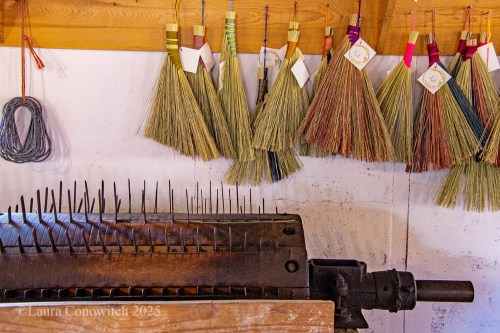
The ‘buck and pole’ fence seen at the right of the above photo enclosed the rock and quarry and clay pit. The quarried stone was removed and sold for building purposes, while the red clay in this vicinity was utilized for making brick. Civilian contractors paid the government $.80 per day for each convict engaged in these enterprises. Despite guards, escapes were common.

“I have tried the ball and chain arrangement and while it certainly secures the prisoner against escape, it also renders him worthless as a brick yard hand. In a brickyard only the overseers have stationary work, the rest must run about, and the value of their labor depends entirely upon the rapidity of their movements. Under these circumstances of course a ball and chain is impracticable.” – U.S. Marshal Frank Wolcott, September 24, 1874

I shall introduce you to some of the prisoners in the next post.

See the world around you!

More Travel Posts:
Cross Country Vacation Sept./Oct. 2025-Post 23

Front Street, Dodge City, Boot Hill Museum, Kansas-Part 4

During Dodge City’s first four months of existence in 1872, the town grew to a population of slightly less than 200, and there were at least 12 untimely deaths; 1873 would bring at least 24 more. Many did not take what law there was seriously. The Atchison Daily Champion wrote in 1876 that Dodge City, “was infested principally with gamblers, horse thieves, prostitutes, and murderers, who look upon the law as a huge joke. The arm of the law is palsied and hangs powerless by the side of Justice, who stands away in the background like a statue of a forlorn and helpless exile. Horse thieves, burglars, disturbers and even murderers go at large.”

Boot Hill Museum, Dodge City, Kansas

*Clicking on a photo will give you a closer look!

Continuing our stroll on Front Street, Dodge City, Kansas (from the previous post), we come upon a fun Gunsmoke display. The iconic television series centered on Dodge City, Kansas, in the 1870s, during the settlement of the American West. I grew up watching Gunsmoke. Maybe you did too.

Boot Hill Museum, Dodge City, Kansas

Boot Hill Museum, Dodge City, Kansas

Boot Hill Museum, Dodge City, Kansas

Buck Taylor, who played the character “Newly” on Gunsmoke, created this painting of the Long Branch Saloon:
Boot Hill Museum, Dodge City, Kansas

A quick visit to the Dry Goods store:

Boot Hill Museum, Dodge City, Kansas

The Tonsorial Parlour was where cowboys and buffalo hunters could get a haircut, shave, bath, and have their teeth pulled.

The straps in front of the chairs are called “strops” and have a rough surface for sharpening razors. Shaving mugs were personalized with names and occupations of regular customers and were stored until their next visit. A gauge of the success of a barber was the number of personalized shaving mugs on his shelves. Though the tools of the trade were standardized, many barbers were “jack-of-all-trades” with various skill levels. Many moonlighted at other jobs or offered hot baths in the back for a quarter to make ends meet. One of the proud professionals was Dodge City barber, George Dieter, who advertised himself as “the eminent tonsorial artist of the Arkansas Valley”.

Boot Hill Museum, Dodge City, Kansas

Boot Hill Museum, Dodge City, Kansas

Boot Hill Museum, Dodge City, Kansas

The print shop:

Boot Hill Museum, Dodge City, Kansas

Boot Hill Museum, Dodge City, Kansas

The Undertaker’s shop:

Boot Hill Museum, Dodge City, Kansas

*Remember, clicking on a photo, and then clicking on the i in the lower right, will give you a closer look and you will be able to read easier if you wish.

Boot Hill Museum, Dodge City, Kansas

Boot Hill Museum, Dodge City, Kansas

Following the Civil War, men arrived out west wearing low heeled stovepipe boots or military issue cavalry boots. Neither style suited the cowboys who spent 10 to 12 hours in the saddle. To satisfy the drovers needs, the boot was made to feature round toes, reinforced arches and higher heels that kept the boots from slipping through the stirrups. The new style became known as the Coffeyville boot because it originated in Coffeyville, Kansas. It also made the cowboy feel taller and gave him more swagger when he walked.

John Mueller immigrated to the United States in 1855 from Germany. He was wounded twice in the Civil War. Afterwards, he became an expert boot maker in St. Louis. He moved to Kansas and became friends with Buffalo Bill Cody and Wild Bill Hickok.

He opened his boot shop in Dodge City in 1874, and sold and repaired ready-made boots from $8 to $18.

In 1877, Mueller merged his business with another shoe craftsman, Walter Strater. They kept as many as six boot makers busy. Strater oversaw the shop while Mueller did the cutting and bookkeeping.

In 1881, Mueller sold out of the boot business and took up ranching.

John Mueller – “Gave perfect fits, performed excellent work and used nothing but the best material”.

Boot Hill Museum, Dodge City, Kansas

The photographer’s shop:

Boot Hill Museum, Dodge City, Kansas

Boot Hill Museum, Dodge City, Kansas

The U.S. Army built the first post office in 1851 at Fort Atkinson six miles west of Dodge City. In 1865, the Army established the county’s second at Fort Dodge. On September 3, 1872, this office was moved to Dodge City to become the city’s first post office.

The relocation is why the city is called “Dodge City” rather than “Buffalo City”. Another town in Kansas already had the name “Buffalo”.

The City Drug Store housed Dodge City’s first post office at Front Street. The first postmaster was Herman J. Fringer.

Boot Hill Museum, Dodge City, Kansas

The bank:

Boot Hill Museum, Dodge City, Kansas

Boot Hill Museum, Dodge City, Kansas

Just in case it is necessary to restrain you:

Boot Hill Museum, Dodge City, Kansas

Boot Hill Museum, Dodge City, Kansas

Boot Hill Museum, Dodge City, Kansas

Boot Hill Museum, Dodge City, Kansas

Boot Hill Museum, Dodge City, Kansas

Boot Hill Museum, Dodge City, Kansas

Boot Hill Museum, Dodge City, Kansas

Boot Hill Museum, Dodge City, Kansas

Boot Hill Museum, Dodge City, Kansas

Boot Hill Museum, Dodge City, Kansas

Reverend Ormond Wright arrived in Dodge City in early 1877. The very evening that he arrived, he performed the burial on Boot Hill of a saloon girl who had passed away.

Wright was instrumental in the building of Union Church, the first nondenominational place of worship in Dodge City. He convinced Wyatt Earp and Bat Masterson to be deacons. He welcomed people of all backgrounds, including the store owners and families, cowboys, gamblers, and dance hall girls.

On Monday mornings, he could be seen entering the saloons to cash in the gambling chips that had been left in the offering plate at Sunday services.

Wright was friends with Dora Hand, songstress of the Lady Gay Saloon, and invited her to sing at Saturday evening services. Her beautiful voice packed the house of worship.

Boot Hill Museum, Dodge City, Kansas

Boot Hill Museum, Dodge City, Kansas

See the world around you!

More Travel Posts: