
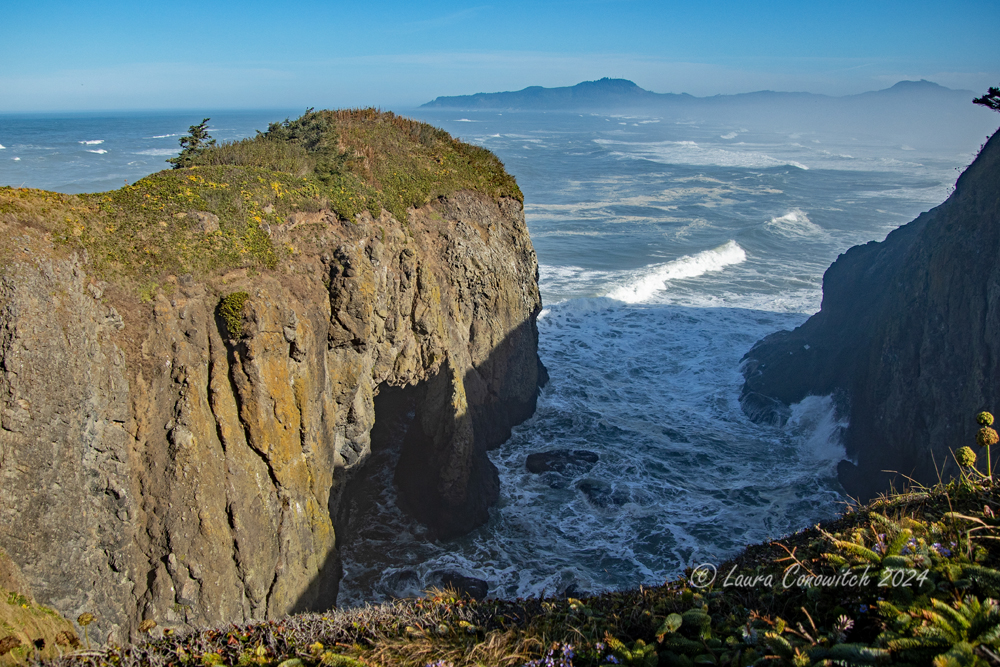
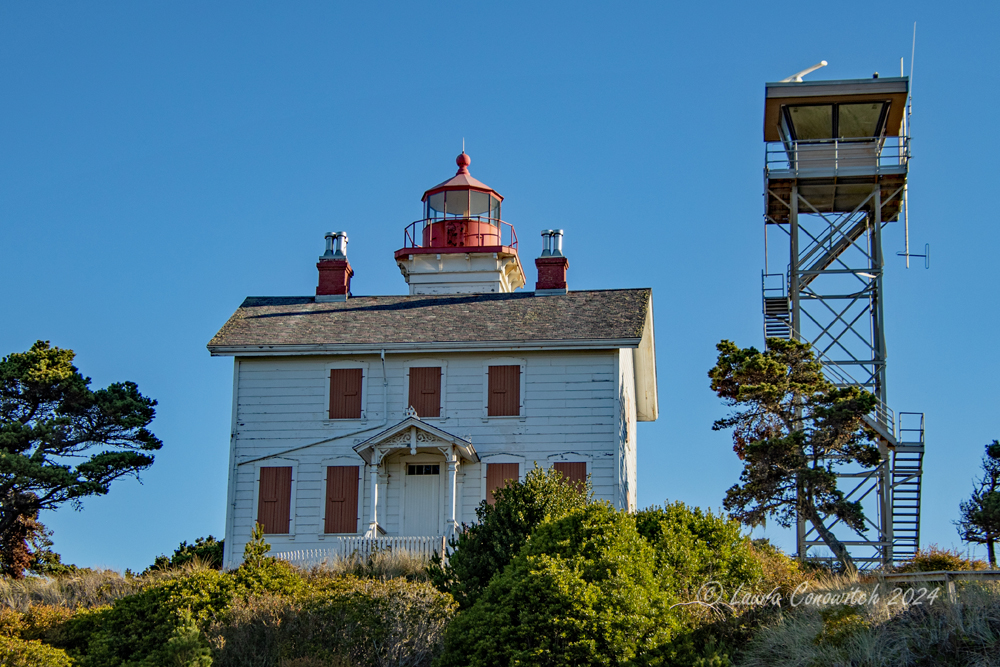
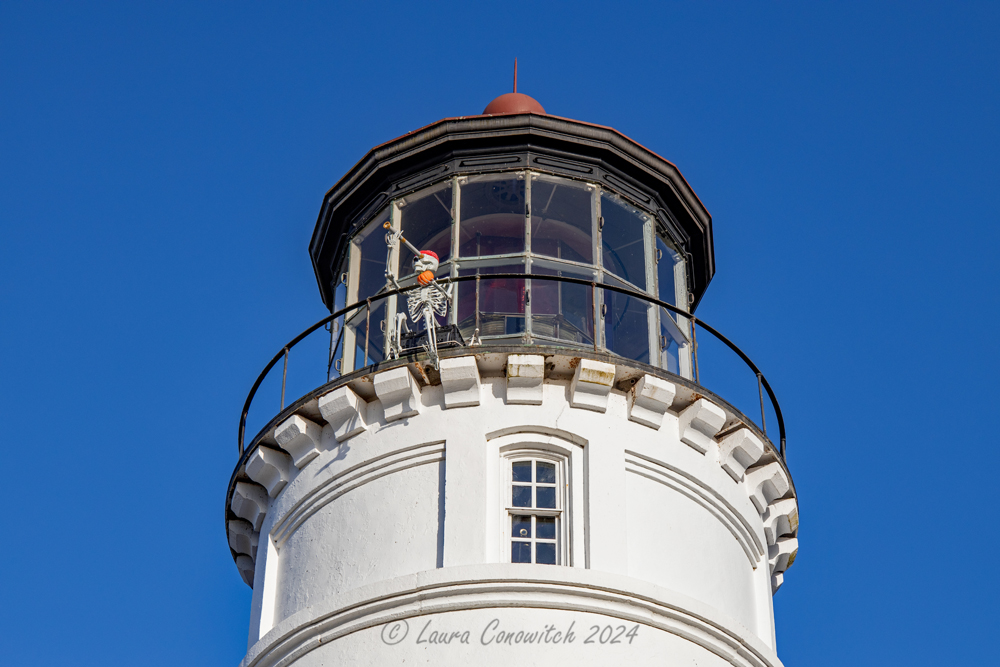
While traveling north on Highway 101 on the Oregon Coast, the Hubster and I stopped at the Yaquina Head Lighthouse. The day that we were there, the lighthouse was closed for restoration and tours not available.
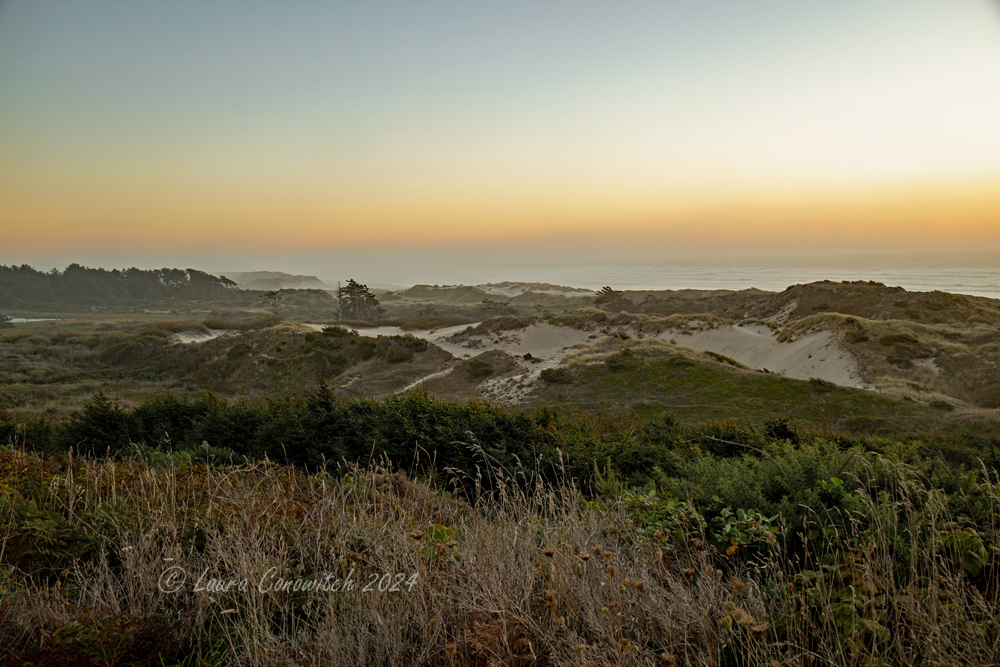
However, the very nice Yaquina Head Interpretive Center and the Yaquina Head Outstanding Natural Area Park were open.
*Clicking on a photo will give you a closer look!
“On the 6th at noon…we saw two seals and several whales; and at day-break the next morning the long looked for coast of New Albion was seen…” – Captain James Cook
Captain James Cook referred to the Oregon Coast as New Albion because of the exploration of Sir Francis Drake when he landed on the North American west coast in 1579. He claimed sovereignty for Queen Elizabeth I. New Albion was one of the earliest English territorial claims in the New World. These claims were followed by settlement of the Roanoke Colony in 1584, and Jamestown in 1607.
The extent of Drake’s New Albion was vague and the designated location differs among maps. Nova Albion was primarily a geographical designation, a distinctive name on the world map. Drake’s claim of land on the Pacific coast for England became a basis which influenced subsequent colonial charters issued by English monarchs that purported to grant lands from sea to sea, the area from the Atlantic where English colonies were first established all the way to the Pacific.
Even though Drake attempted no long-term presence and the English made no immediate follow-up to the claim, it constituted England’s first assertion of sovereignty on the North American Pacific coast.
The claim occupied a significant place in British geopolitical considerations for centuries and even strengthened Britain’s entitlement to the fur trade commerce along the Northwest Coast. Its final influential assertion came in negotiating the Oregon Treaty of 1846 which divided the Oregon Country between Canada and the United States, with the border being along the 49th parallel north to the Pacific.

The Yaquina Head Light, established in 1873, was also known as the Cape Foulweather Lighthouse. The tower stands 93 feet tall, and is the tallest lighthouse in Oregon.

Made in Paris in 1868 and shipped to Oregon, Yaquina Head Light was first lit August 20, 1873, and automated in 1966. It is still active with an identifying light characteristic of two seconds on, two seconds off, two seconds on, and 14 seconds off and is visible 19 miles out to sea.

During World War II, 17 servicemen were stationed at Yaquina Head to keep a lookout for enemy ships.
The lighthouse appeared in the film Hysterical (1983), The Nancy Drew Mysteries (1977) television episode “The Mystery of Pirate’s Cove”, and was used as the setting in the film The Ring (2002).

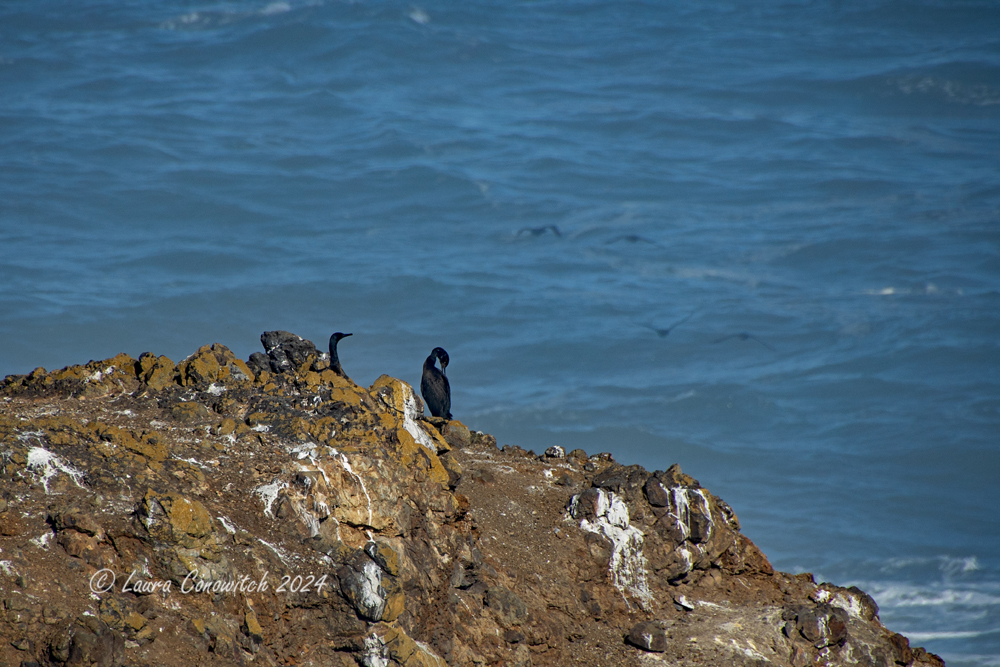
The 100 acre site was established by Congress as an Outstanding Natural Area in 1980 and is managed by the Bureau of Land Management. The lighthouse lantern is operated by the U.S. Coast Guard and the U.S. Fish and Wildlife Service monitors offshore bird rookeries and wildlife.

We continued on our way and crossed over the Columbia River by way of the Astoria–Megler Bridge into Washington state. Opened in 1966, it is the longest continuous truss bridge in North America.
I wish I had taken a photo of this cool crossing, but I get excited when we come to the river…there is no place like home! True, my home is on the other side of the state, but it does overlook the river, and I have spent many hours with the river.
If you click on the bridge link above, and then click on the first picture in that link, you can see several cool photos of the bridge!

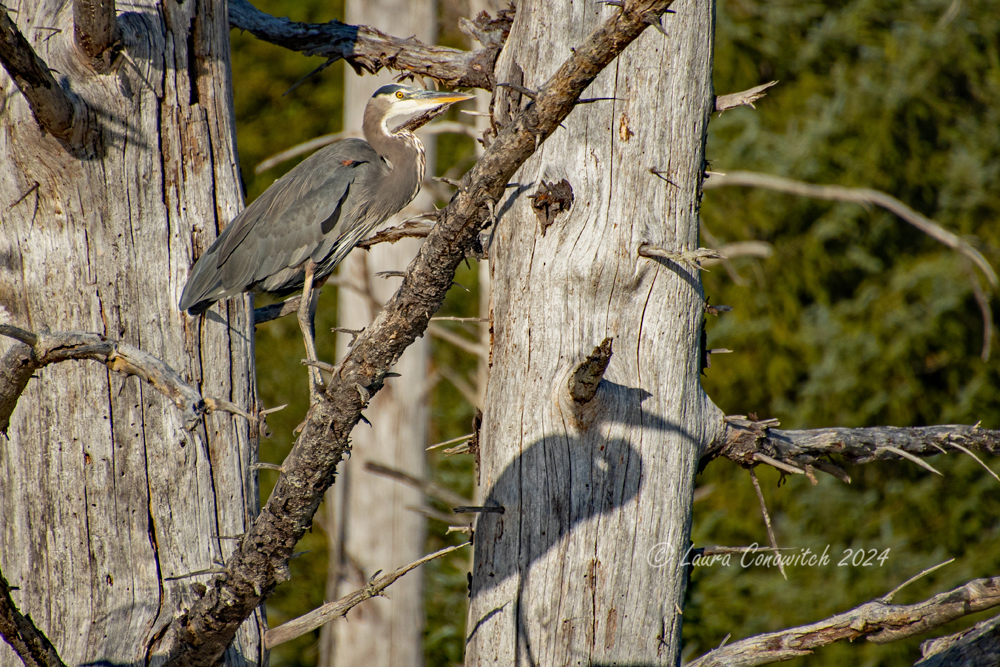
As we were driving towards our son’s home, I spotted this guy (gal?) from the car window. Great blue herons are one of my favorite birds!
Do you have a favorite bird?
See the world around you!







 LC's Cottage