Tag Archives: quilting

Orca Bay Mystery Quilt Part 1

I have joined an online mystery quilters group.  Like I needed another project, especially during holiday season.  I’m nuts!  But I’m having fun!  And the online group of quilters are fun to be with.  So what am I doing?  I dunno…it’s a mystery!  Here is what I can tell you:

It is my first mystery quilt.

I am generally a ‘controlled’ quilter.  I hope this mystery quilt helps me to be more random.  In other words, to loosen up and mix it up.

I am a fabric petter.  I buy it to gaze at it lovingly and stroke it gently.  Sheesh!  It is time to make good use of it!

Head on over to Bonnie Hunter’s Quiltville to join the Orca Bay mystery quilt.
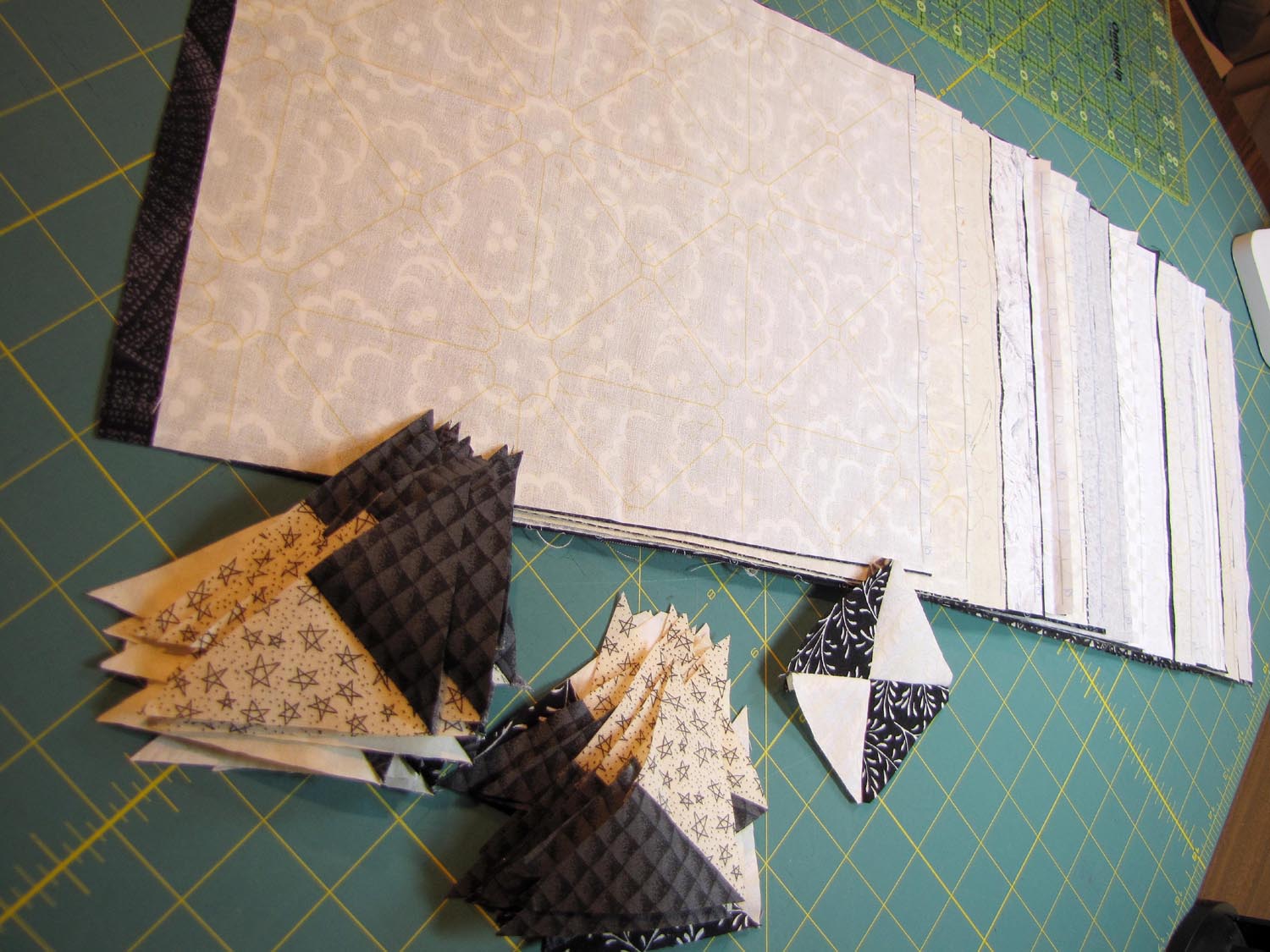
Part 1…make 448 triangle pairs for 224 hourglass (2″ finished) blocks.  What! 448!?  2 inches!? Now is the time to get comfortable with Inklingo!  Linda Franz makes this a breeze!  In the photo above, you are looking at light fabric squares layered (right sides together) with dark fabric.  These are all printed and ready to sew.  The photo below is a closeup of a light fabric printed with red ink.  For most of my lights, I chose to print with a yellow ink.
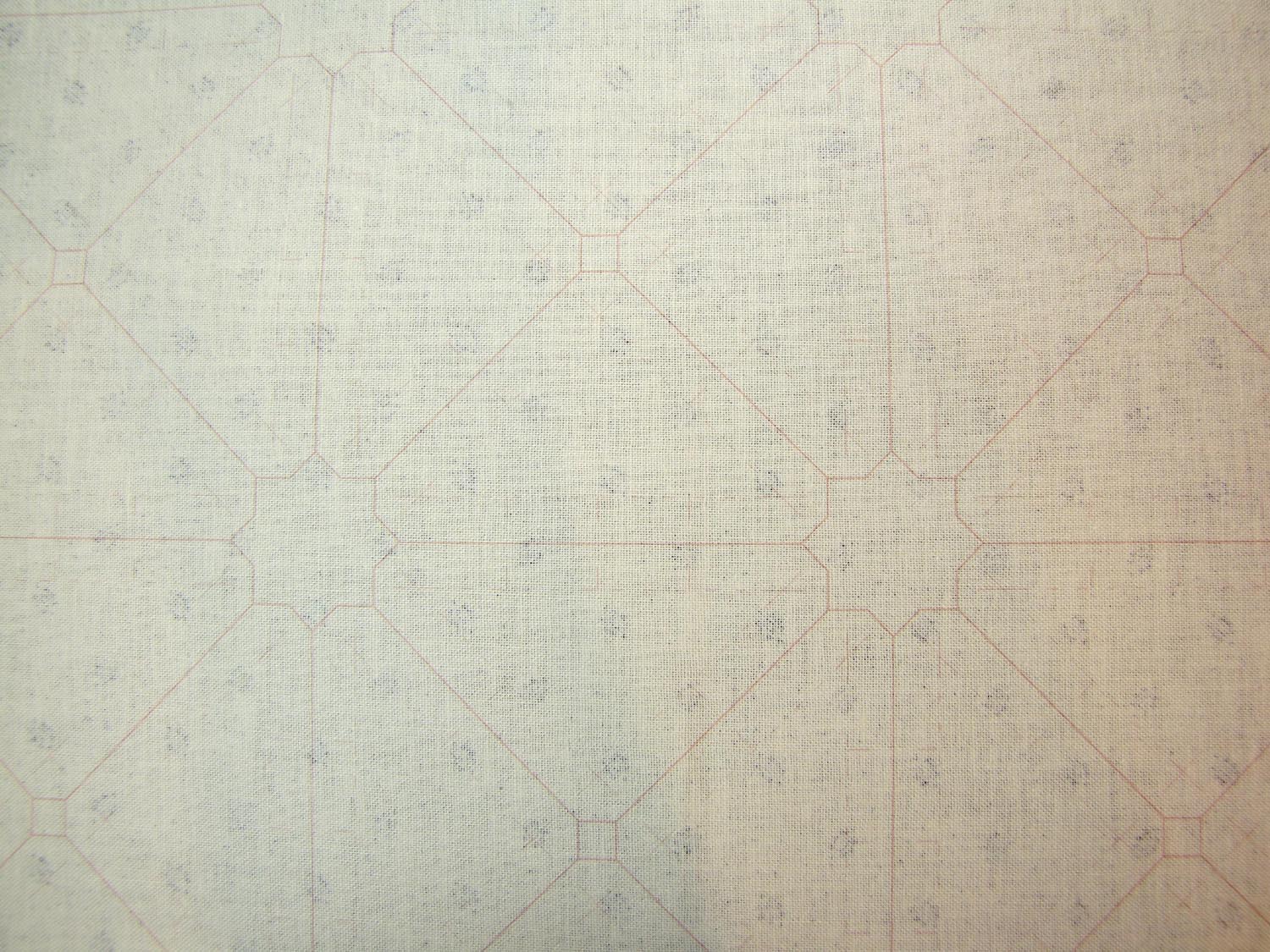
In general, the process involves choosing a shape (in this case quarter square triangles, also known as QST) and ink color.  Cut fabric, iron it to freezer paper, and print.  It is that easy.  No measuring folks!  The math is done for you!  Linda Franz has been more than generous in offering a ton of information, how-to and ideas on her blog and Inklingo website.  Anytime you need help, just ask her.  She’s pretty friendly.

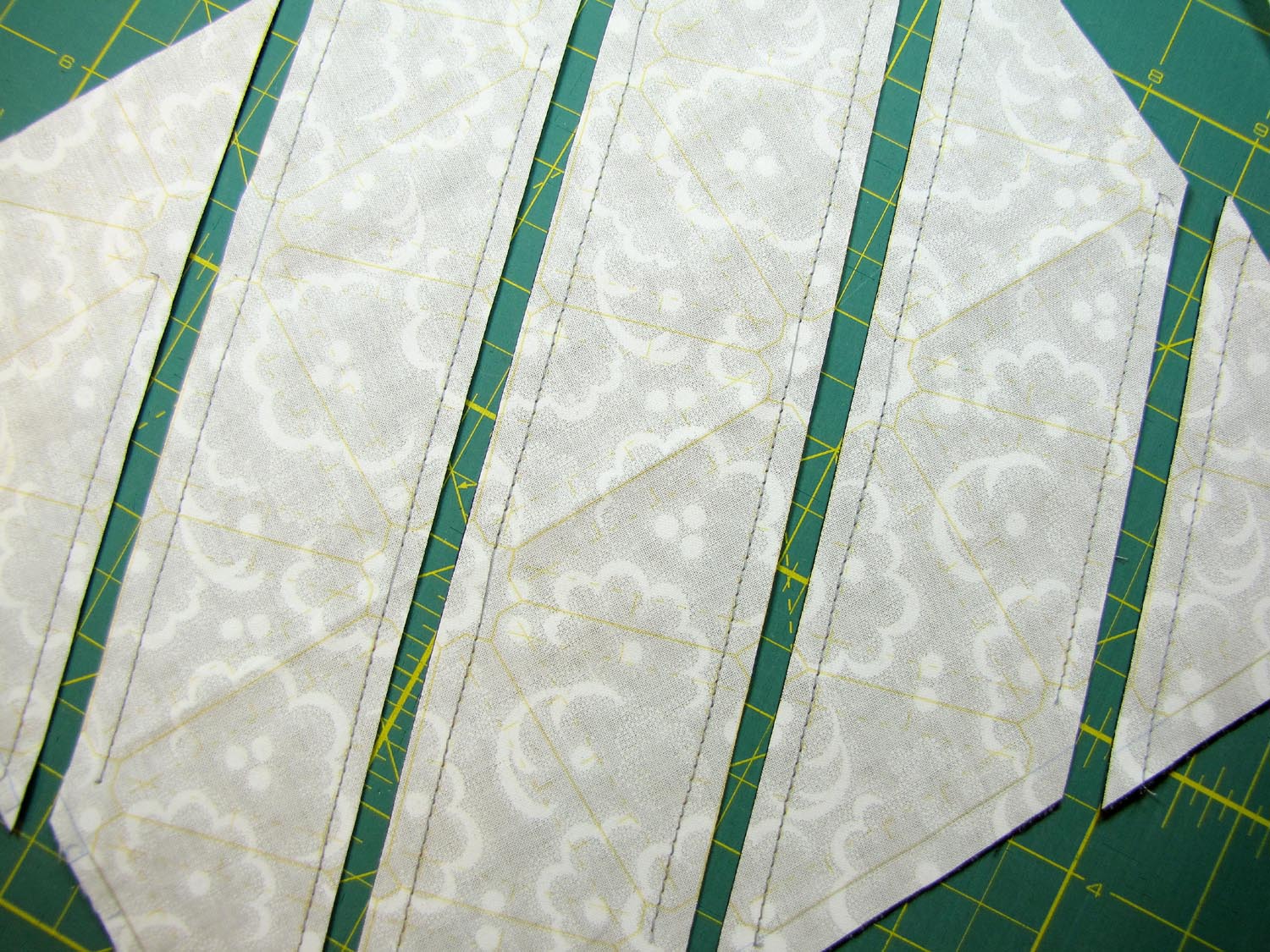
The above photo shows that the diagonal dash lines have been sewn.  How hard is that?  Just follow the lines!  The photo below shows some of the rotary cutting done.  Again, just follow the lines, only this time the lines are solid.
Inklingo is capable of custom sizes, so there is very little waste, if any.  However, I have a dinosaur printer that is incapable of custom sizes (but it prints well…I have no jamming issues).  No matter…I cut my fabric the same size as my copy paper (8-1/2 x 11) and printed anyway.  I had some waste, but it is worth it to me.  And I have extra QSTs.

Coming together.

I love these little guys!


Make It Work

I’m back from a terrific road trip with Hubby and ready to sew! 

Having said that, what should have been a pleasant hour on a rainy afternoon machine quilting a simple doll quilt, turned into a discouraging several hours of sewing and ripping.  My beloved Bernina (a 1530 acquired in 1997…for those who want to know these things) was skipping stitches like crazy.  I tried switching needles, switching threads, switching tensions all to know avail.  She has really had a meltdown and needs to make a trip to the hospital.

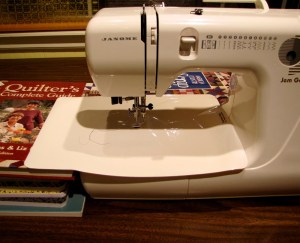
With Tim Gunn’s words in my head, “Make it work!”, I got out my lonely little Janome Gem Gold and got reacquainted.  With the help of some quilting books (they make a nice extension table) and the Supreme Slider, she did a great job! 

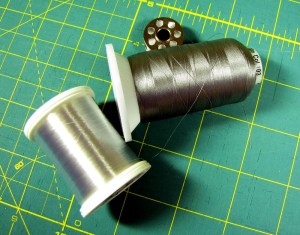
 I am quilting with Aurifil 40 wt. #4665 in the top and WonderFil Invisfil 100 wt. #103 in the bobbin (and they work together just fine).

Front side…No skipped stitches!

Back side…great tension!

I’m glad I started with the doll quilt because the baby quilt will be a real challenge with this tiny machine.  There is just not that much space to work with.

Teeny arm space…too teeny for machine quilting!

The doll quilt and baby quilt aren’t going to make it on the runway, but they have a higher calling and they will be ready.  

Make it work!

Machine Quilting

I am sneaking in some time (slacking off from garden and kp duties if you really want to know) to work on the baby and doll quilts.  I’ve pin basted, so it is on to machine quilting.

I am using my beloved machingers quilting gloves, denim sharp needles (in this case a 70/10 will do), and a Little Genie Magic Bobbin Washer.

Yes, I know I could use a new pair of gloves. But hey…you can see how well I like them by how worn they are!

Since I am going to begin by stitching in the ditch, I don’t need decorative thread.  I’ve chosen 100 wt. WonderFil Invisifil 103 for the bobbin and Sulky Premium monofilament for the top.  These are fine threads that won’t add weight to the quilt and will virtually disappear in ditch quilting.

I stitch in the ditch for two reasons.

  • I can remove safety pins while stitching, which in turn, removes some of the weight of the quilt, and removes obstacles when I get around to free-motion quilting.
  • Since I am quilting on a domestic machine, as opposed to a long-arm, I feel the need to stabilize my quilt sandwich for free-motion quilting.

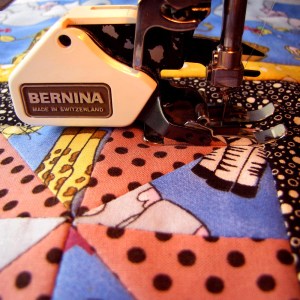
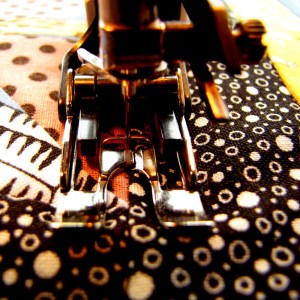
I am using a walking foot to evenly feed the layers as I stitch.

I like to begin by bringing up the tails.  This is habit from free-motion quilting, and it isn’t absolutely necessary for ditch quilting.  But it does make it convenient to cut off the tails later.  I lower the stitch length to zero and gradually increase it to the length that I prefer, about a 3 on my machine…you may prefer a different length.  There are no quilt police to say that I am wrong and you are right.  (Lucky for me!)

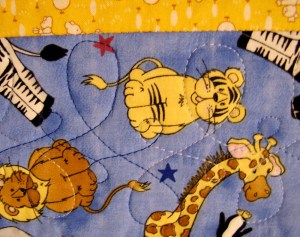
Here’s how the stitching looks on the front of the doll quilt:

And on the back of the doll quilt:

And then I realized how silly I was for using the monofilament at all (You never do silly things, do you?), so I switched to the WonderFil Invisifil for both the top and bobbin threads to work on the baby quilt.   And I was silly, just in case you were asking yourself this ever since I gave my thread choices, because the Invisifil thread is so fine that it is all that is needed.  Duh!

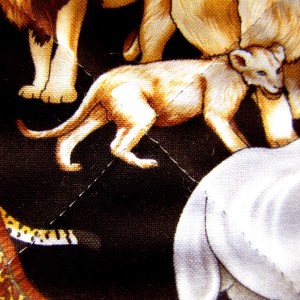
So here is how the baby quilt looks after stitching with Invisifil thread:

Oopsies…missed the ditch a little bit!

Had I had my thinking cap on (which is almost always missplaced these days), I would’ve switched to black Invisfil for the bobbin thread.  Why?  Because the backing on the baby quilt is black.  Lucky for me, it worked out anyway.