
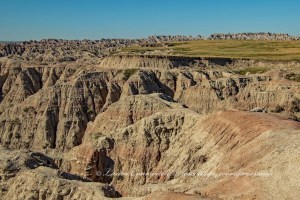
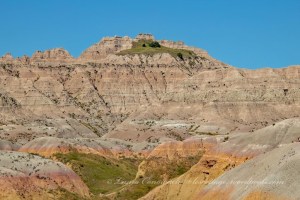
Badlands National Park in South Dakota consists of sharply eroded buttes, pinnacles, and spires blended with the largest, protected mixed grass prairie in the United States. You can learn about the geological formations (sandstones, siltstones, mudstones, claystones, limestones, volcanic ash, and shale) by visiting the U.S. Badlands National Park South Dakota site.
Temperatures can reach above 100 degrees in summer to below freezing in winter. It was too hot for me to hike any of the trails (I don’t do heat well…just ask the fam!) when the Hubster and I visited on our September road trip. Even so, we could enjoy the beauty from the scenic drive that we took. The scenic drive was enough since we were running short on vacation time by now.
*Clicking on a photo will give you a closer look!
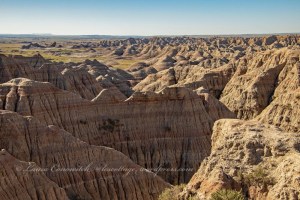
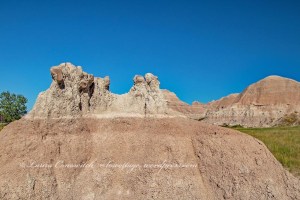

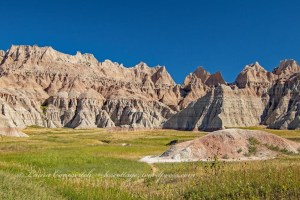

Norbeck Pass


White River Valley Overlook
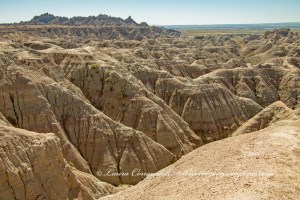
December 24, 1890, Minneconjue Chief Big Foot (aka Spotted Elk) lay waiting while his people cleared a pass down the Badlands Wall. Several hours of hard work with axes and spades made the disused trail passable. The band of 350 men, women, and children continued their flight from units of the United States Armies.
Big Foot was ill, close to death, and disillusioned by the broken promises of Whites and by the lack of unity among Indians. His agony would last only five days. On December 29th, he, nearly 200 of his people, and 30 soldiers, would die in the massacre at Wounded Knee, 65 miles south.

For a brief history of the Native American presence in the Badlands, click here.
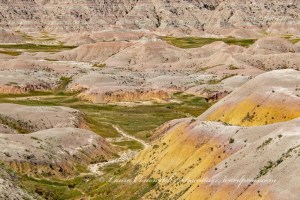
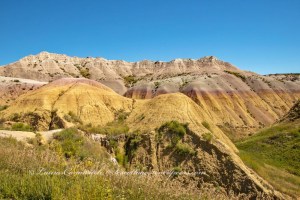
The Yellow Mounds get the mustardy color from a mineral called goethite.



See the world around you!




 LC's Cottage