Tag Archives: LCsCottage

Confederate Memorial State Historic Site

Kansas was one of my favorite states to travel through.
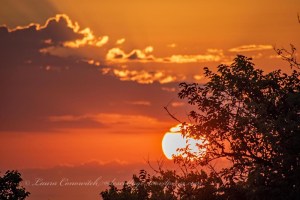
Sunrise Paxico Rest Area Kansas

For one thing, Kansas has fantastic sunrises and sunsets.

For another, Kansas takes good care of her travelers. Her rest areas are clean and cater to those who need a place to spend the night. I went to sleep listening to cicadas. (I love the sound of crickets at night, so it was easy for me to love the cicadas.)

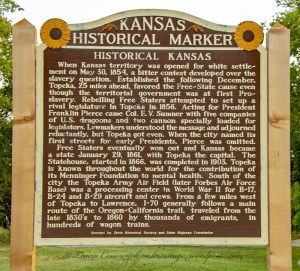
Kansas has easy to read and informative historical markers. This one was at a rest area; the same place where I photographed the rising sun.
Sunrise Paxico Rest Area Kansas

*Clicking on a photo will give you a closer look!
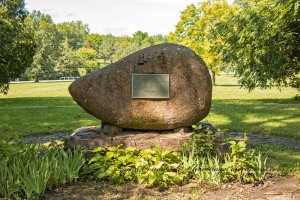
Confederate Memorial State Historic Site Missouri

Another unplanned stop was to a place that the Hubster, nor I, had ever heard of.

We came upon the Confederate Memorial State Historic Site in Missouri. We are so glad that we stopped to check it out!
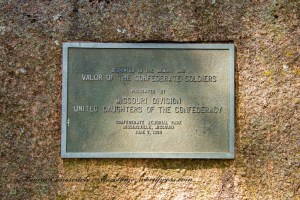
Confederate Memorial State Historic Site Missouri

The grounds are beautiful and offer picnic sites, walking trails, and ponds for recreational fishing.
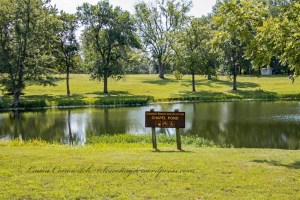
Confederate Memorial State Historic Site Missouri

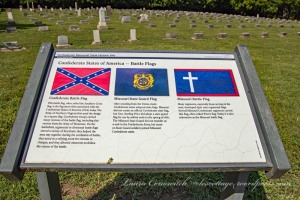
From 1891 to 1950, the site was used as an old soldiers’ home for veterans of the Confederate States Army after the American Civil War. 

Confederate veterans, some of whom had difficulty accessing medical treatment and who had been disenfranchised from voting, periodically met throughout the state of Missouri after the war. At a meeting in Higginsville in 1889, the idea of creating an old soldiers’ home to care for aging veterans was discussed. In 1891, 365 acres in the Higginsville vicinity were purchased to establish the old soldier’s home. The families of Confederate veterans were also allowed to live at the site.
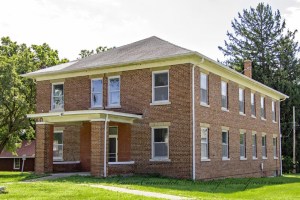
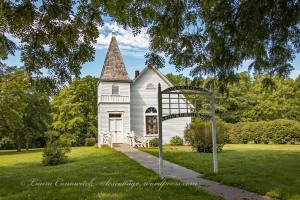
Confederate Memorial State Historic Site Missouri

Confederate Memorial State Historic Site Missouri

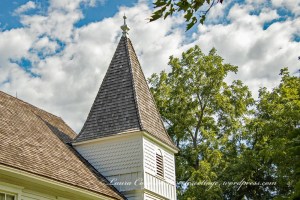
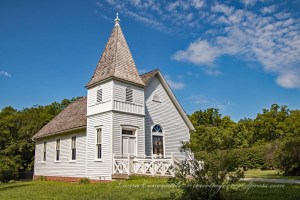
The chapel is one of about 30 buildings located on the grounds at its peak.
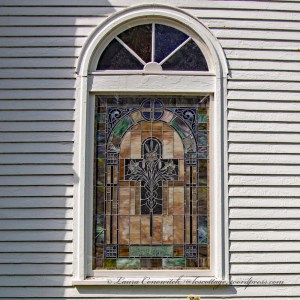
Confederate Memorial State Historic Site Missouri

Confederate Memorial State Historic Site Missouri

Confederate Memorial State Historic Site Missouri

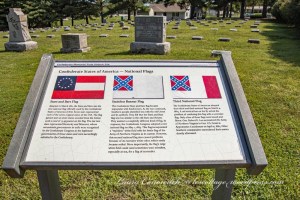
Within the cemetery are 723 graves and a monument erected by the United Daughters of the Confederacy.  
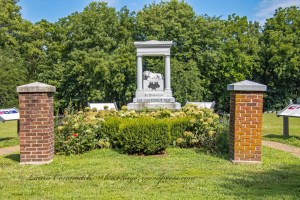
Confederate Memorial State Historic Site Missouri

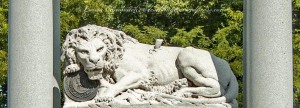
The monument is modeled on the Lion of Lucerne, one of the most famous sculptures in Switzerland.

USA author Mark Twain praised the sculpture of a mortally wounded lion as “the most mournful and moving piece of stone in the world.”
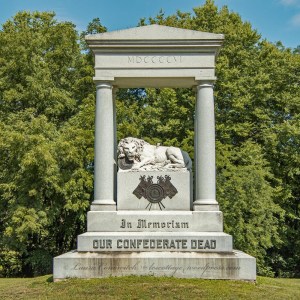
Confederate Memorial State Historic Site Missouri

I know it moved my soul.

Confederate Memorial State Historic Site Missouri

Confederate Memorial State Historic Site Missouri

Confederate Memorial State Historic Site Missouri

 The home remained in operation until 1950, when John T. Graves, the last Confederate veteran in the state died.

The state government purchased the site to operate as a state park.
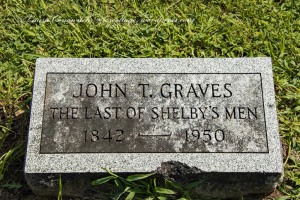
Confederate Memorial State Historic Site Missouri

For further reading, you might be interested in an article about the controversy in removing Confederate monuments.

See the world around you!
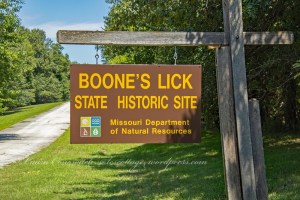
Boone’s Lick State Historic Site

The Hubster and I were looking for a place to have a picnic lunch. Little did we know that we were stepping into such an important part of westward expansion.

Boone's Lick State Historic Site

Three families, the Mackays, the Boones, and the Morrisons, along with a few others, turned a saline lick into a commercial enterprise that helped shape the Louisiana/Missouri Territory.

The Boonslick Road originally ended in Howard County, Missouri, where the Boones’ salt works is now a Missouri State Historic Site. After this road was extended westward from Howard County, the old Boonslick Road would become the Santa Fe Trail. This ancient thoroughfare later became U.S. Highway 40 and finally modern Interstate 70.

*Clicking on a photo will give you a closer look!

Boone's Lick State Historic Site

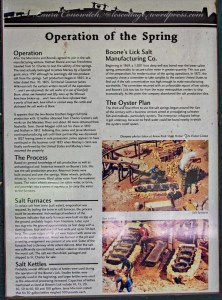
What is a salt lick? It is a briny spring where animals come to lick the ground. Approximately one -third of Missouri contains saline waters.

Salt was the main means of food preservation.

Boone's Lick State Historic Site

Boone’s Lick was not discovered by Daniel Boone as the following marker says. James Mackay was granted the land by the Spanish in 1797.

Boone's Lick State Historic Site

By 1804, Daniel Morgan and his brother, Nathan Boone were in partnership with Jesse and James Morrison.

There are many sign boards here where one can read about the history of the area. They are very informative.

If this period in American history interests you, then on page 2 of the Boonslick Historical Society Periodical, there is an excellent map detailing the Morrison commercial empire.

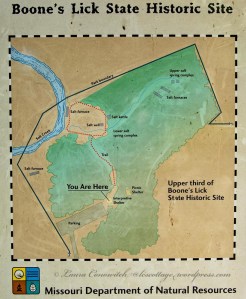
The Hubster and I took a short hike to see what was left of the salt lick.

Boone's Lick State Historic Site

Boone's Lick State Historic Site

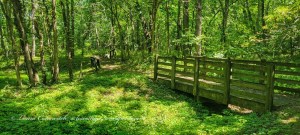
It is very overgrown and very pretty.

Boone's Lick State Historic Site

Boone's Lick State Historic Site

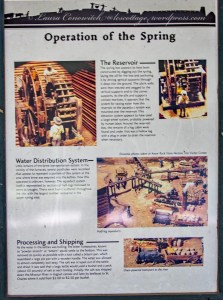
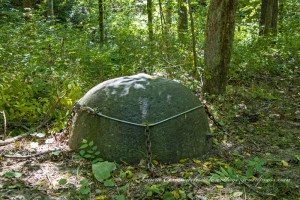
There is not much remaining, but one can see a large kettle used to boil the saltwater.

Boone's Lick State Historic Site

There is one grave marker here at Boones Lick.

It is the grave of Joseph L. Morrison, the son of Major James. Joseph somehow fell into a boiling kettle and was horribly scalded. It is said that he survived for a couple of days. He was 11 years old (16 years say some accounts).

Boone's Lick State Historic Site

Boone's Lick State Historic Site

See the world around you!

Fort Hays State Historic Site

By late afternoon the Hubster and I had been driving for quite a while and needed to stretch our legs.

We made an unplanned visit to Fort Hays State Historic Site in Kansas.

Fort Hays was named to honor General Alexander Hays, who was killed in 1864 at the Battle of the Wilderness.

Garrison strength at Fort Hays normally averaged three companies, or about 210 men. Fort Hays was home to the 7th U.S. Cavalry, commanded by Lt. Col. George A. Custer, the 5th U.S. Infantry, commanded by Col. Nelson Miles, and the 9th and 10th U.S. Cavalries, better known as the “Buffalo Soldiers.” Marcus A. Reno, George A. Forsyth, and Philip H. Sheridan were also among the noted military figures associated with the Fort.


In 1867, Hays City was staked out a mile to the north of the fort and with the arrival of the railroad in October, the fortunes of Hays City and Fort Hays became almost inseparable. The military post was used as a quartermaster depot that supplied other forts throughout the West and Southwest. Such an operation required a large number of civilian as well as military personnel and Hays City consequently experienced rapid development.

Fort Hays State Historic Site Kansas

*Clicking on a photo will give you a closer look!

Fort Hays State Historic Site Kansas

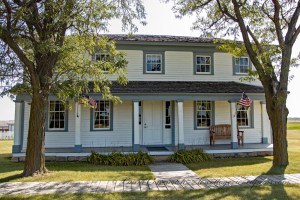
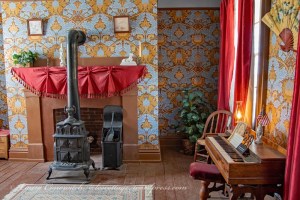
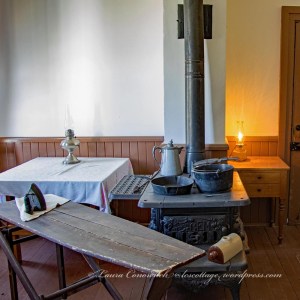
Since the park was locking up, I don’t have a lot to share. Most of the photos are from the officer’s quarters.

Fort Hays State Historic Site Kansas

Fort Hays State Historic Site Kansas

Fort Hays State Historic Site Kansas

Fort Hays State Historic Site Kansas

Fort Hays State Historic Site Kansas

Fort Hays State Historic Site Kansas

Fort Hays State Historic Site Kansas

A stone guardhouse was built in 1872. It contained a room for the officer of the guard, a guardroom, prison room and three solitary cells. Except for a small stone bakery, all other buildings were of frame construction.

Fort Hays State Historic Site Kansas

A cholera epidemic struck the area late in the summer of 1867. Among the victims was Elizabeth Polly, a woman who had been ministering to the ill at the fort. Buried at the base of a nearby hill, she went on to become a figure in local folklore, the “Blue Light Lady”, as people claimed to see her ghost in the area around the fort.

Fort Hays State Historic Site Kansas

See the world around you!