Tag Archives: Great Smoky Mountains National Park

Great Smoky Mountains National Park Part 2

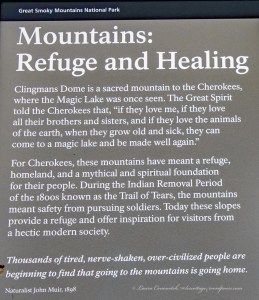
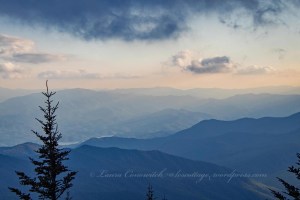
At 6,643 feet, Clingmans Dome is the highest peak in the Great Smoky Mountains National Park, and the third highest east of the Mississippi. It is the highest point along the Appalachian Trail.

If you choose to visit Clingmans Dome Tower, I suggest that you get to the parking lot early. It fills up fast! Or perhaps it is easier to park later and observe a fantastic sunset.

Great Smoky Mountains National Park Clingmans Dome

*Clicking on a photo will give you a closer look!

Great Smoky Mountains National Park Clingmans Dome

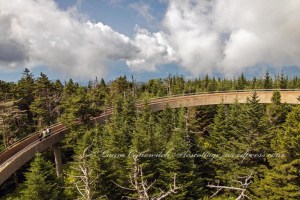
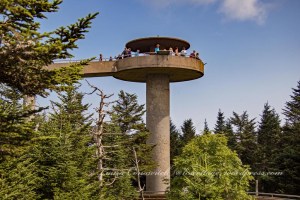
I also suggest bringing plenty of water. The half-mile paved trail is very steep, and is a strenuous walk up to a 54-foot observation tower with a 360-degree view of the park. Not for pets or the disabled (no wheelchairs). Take your time! If you are like me, and not used to the humidity, you will be hot and wet by the time you get to the top, but it is worth it!

Great Smoky Mountains National Park Clingmans Dome

Great Smoky Mountains National Park Clingmans Dome

Great Smoky Mountains National Park Clingmans Dome

Great Smoky Mountains National Park Clingmans Dome

Great Smoky Mountains National Park Clingmans Dome

Great Smoky Mountains National Park Clingmans Dome

Great Smoky Mountains National Park Clingmans Dome

Great Smoky Mountains National Park Clingmans Dome

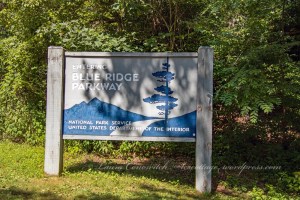
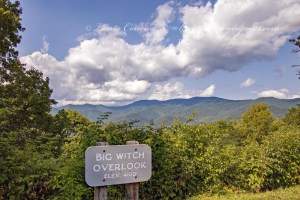
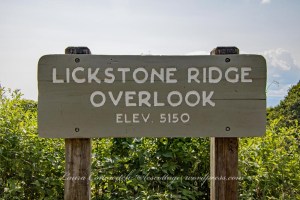
We had a lovely scenic drive on part of the Blue Ridge Parkway as we continued on with our road trip.

Great Smoky Mountains National Park

Great Smoky Mountains National Park

Great Smoky Mountains National Park

Great Smoky Mountains National Park

Great Smoky Mountains National Park

Great Smoky Mountains National Park

See the world around you!

Great Smoky Mountains National Park Part 1

I was looking forward to seeing the Great Smoky Mountains!

Did you know that this park is the most visited park in the United States?

Great Smoky Mountains National Park

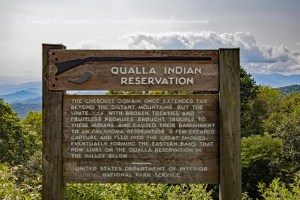
The Hubster and I stayed overnight in Cherokee, North Carolina, (the capital of the Eastern Band of Cherokee Indians and part of the traditional homelands of the Cherokee people. In the 1870s, the Eastern Band purchased the land for what is called the “Qualla Boundary”).

Great Smoky Mountains National Park

*Clicking on a photo will give you a closer look!

Great Smoky Mountains National Park

We saw black bear here, but didn’t get photos.

I love how green it is, and all of the beautiful wildflowers!

Great Smoky Mountains National Park

Great Smoky Mountains National Park

Great Smoky Mountains National Park

I had to have the Hubster pull over while on our scenic drive just to catch the rays!

Great Smoky Mountains National Park

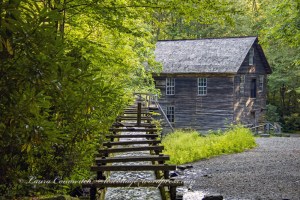
We stopped at the Mingus Mill to explore.

Great Smoky Mountains National Park Mingus Mill

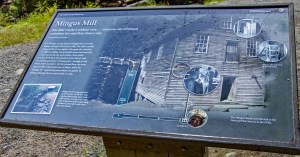
Designed by millwright contractor Sion Thomas Early and built in 1886, this historic grist (grain) mill uses a water-powered turbine instead of a water wheel to power all of the machinery in the building.

Great Smoky Mountains National Park Mingus Mill

A miller is on site to demonstrate the grinding of corn into cornmeal, which can be purchased. However, it was closed temporarily for preservation and rehabilitation work.

Great Smoky Mountains National Park Mingus Mill

While the mill itself is closed, one can still freely explore the area.

Great Smoky Mountains National Park Mingus Mill

Mingus Mill was the largest grist mill in the Smokies, and is said to have served over 200 local families.

Great Smoky Mountains National Park Mingus Mill

Mingus Mill became so important and successful because it used a steel turbine to power the mill’s stones and machinery, rather than the more commonly used wooden wheel.

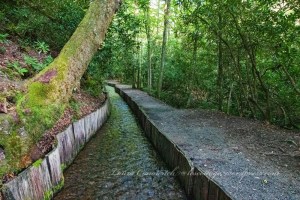
You can see where water from Mingus Creek feeds into the flume-like millrace.

Great Smoky Mountains National Park Mingus Mill

It channels the water downhill so that it gradually picks up speed.

The water is filtered along the way in order to remove any leaves, twigs, or grit before it reaches the turbine.

Great Smoky Mountains National Park Mingus Mill

The water reaches a 22-foot drop, where it pours into a reservoir known as the “penstock.” It is then channeled through a steel pipe and into the mechanisms of the turbine.

The water turns the blades of the turbine, which turns the massive millstones in the mill house above to grind the grist into grain. 

Great Smoky Mountains National Park Mingus Mill

It was a serene place for us to stretch our legs; only two other couples visited while we were there.

If you visit the Smoky Mountains, and love history, then you might not want to pass this up.

See the world around you!