Tag Archives: Gettysburg

Gettysburg Seminary Ridge

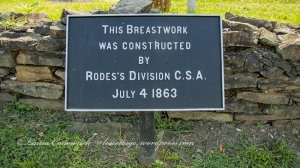
During the heavy fighting late in the afternoon of July 1, 1863, Seminary Ridge became the final defensive position of the Union’s First Army Corps west of Gettysburg. Twenty-one cannons and thousands of battle-weary men crowned the heights with the aim of repelling Confederate forces ascending the ridge.

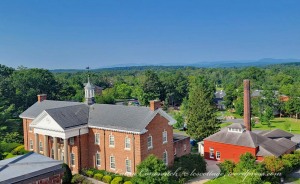
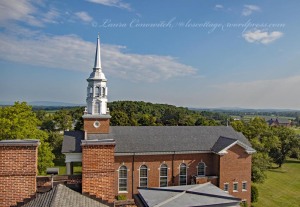
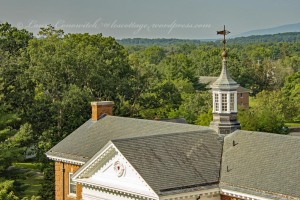
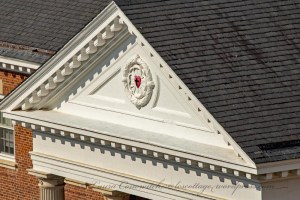
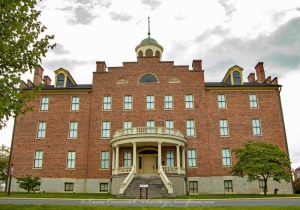
Schmucker Hall (Old Dorm), now known as the Seminary Ridge Museum is a must see stop if you are going to visit Gettysburg National Military Park.

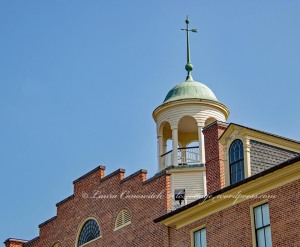
The Museum houses displays of many different aspects of the battle, the seminary, the town, and the civil war, and the struggle among faith groups over slavery, as well as offering tours of the cupola.

The Lutheran Theological Seminary opened with 11 students on September 5, 1826, at the 1810 Gettysburg Academy building.
Gettysburg Seminary Ridge

*Clicking on a photo will give you a closer look!
Gettysburg Seminary Ridge

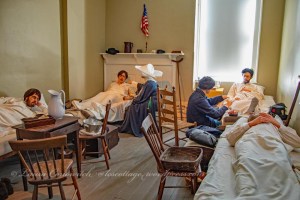
Old Dorm was used during the Gettysburg Campaign as an observatory and the surrounding area was used by both the Union artillery (morning of July 1st, 1863) and Confederate artillery (captured in late afternoon). Over 600 wounded Union and Confederate soldiers were treated inside and on the grounds.

“On every side the passion, rage and frenzy of fearless men or reckless boys devoted to slaughter or doomed to death! The same sun that a day before had been shining to cure the wheat-sheaves of the harvest of peace, now glared to pierce the gray pall of battle’s powder smoke or to bloat the corpses of battle’s victims.”
—Augustus Buell, “The Cannoneer” (1890)
Gettysburg Seminary Ridge

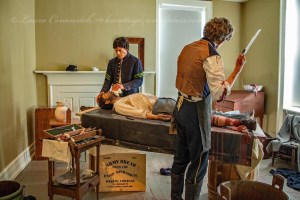
For shattered bones of arms and legs, amputation was the most successful treatment available. Piles of amputated limbs accumulated on the floor or outside the windows of rooms used for surgery. At the Seminary, ten-year-old Hugh Ziegler helped the medical staff by carrying away severed arms and legs.
Gettysburg Seminary Ridge

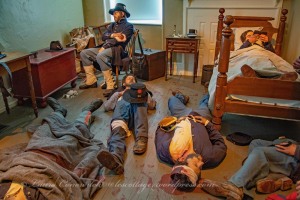
“It was a ghastly sight to see some of the men lying in pools of blood on the bare floor. Night and days were alike in spent in trying to alleviate the suffering of the wounded and dying,” wrote Lydia Ziegler (a teenager living with her family on the first floor.

“Major, Tell my father I died with my face to the enemy.” – I E Avery (written in a note)
Gettysburg Seminary Ridge

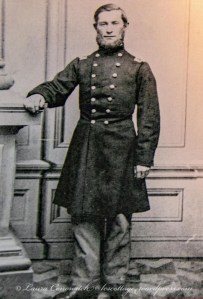
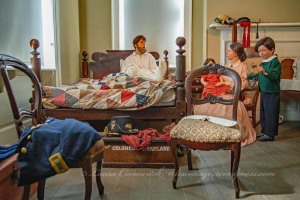
On July 1st, 1863, as the men of the 151st Pennsylvania Volunteers made a final stand on the west side of the Seminary, Lieutenant Colonel George F. McFarland was struck by bullets in both legs. Private Lyman Wilson dragged his commander through the north door of the Seminary as Confederates rushed through the south end.
Gettysburg Seminary Ridge

His wife, Addie, arrived July 10th with their young children, and stayed until the end of August. From September 7th to the 16th, 1863, McFarland was the only patient remaining at the Seminary. He was confined to bed for another 7 months. He resumed teaching and converted his school to an orphanage for the children of soldiers.
Gettysburg Seminary Ridge

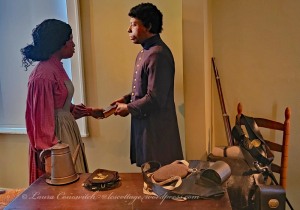
In 1800, there were 114 slaves in Adams County, Pennsylvania: most owned by farmers. By 1830, the number dropped to 45, and by 1840, there were just 2.
Gettysburg Seminary Ridge

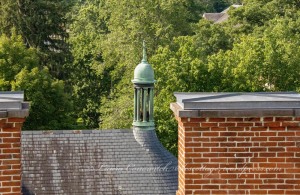
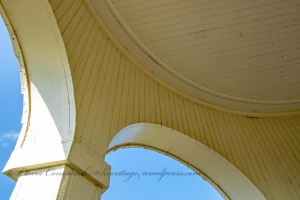
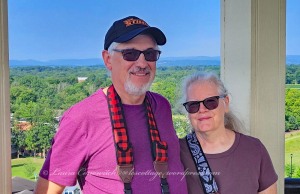
On June 30, 1863, Brigadier General John Buford climbed to the cupola of the Lutheran Seminary Building, where he saw the campfires of thousands of Confederate soldiers burning to the west.

Gettysburg Seminary Ridge

Predicting a clash was imminent, this view helped him lay out his lines of defense to protect Gettysburg’s pivotal road network.

The next morning, as the largest battle in the Western Hemisphere erupted, Buford again ascended to the Cupola to watch for vital Federal reinforcements.
Gettysburg Seminary Ridge

Gettysburg Seminary Ridge

Gettysburg Seminary Ridge

Gettysburg Seminary Ridge

Gettysburg Seminary Ridge

Gettysburg Seminary Ridge

Gettysburg Seminary Ridge

Gettysburg Seminary Ridge

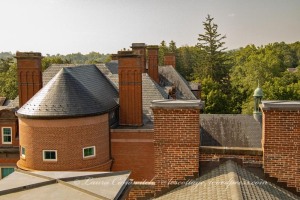
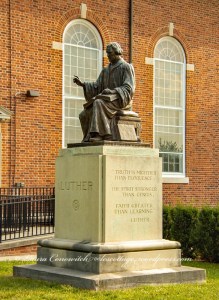
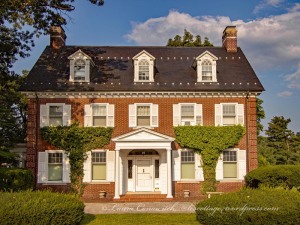
There is much more to Seminary Ridge than the museum. The following is a small sample of what you see when you take a walk (or a drive):
Gettysburg Seminary Ridge

Gettysburg Seminary Ridge

Gettysburg Seminary Ridge

Gettysburg Seminary Ridge

Gettysburg Seminary Ridge

Gettysburg Seminary Ridge

See the world around you!

Gettysburg Shriver House Museum

Gettysburg Shriver House Museum

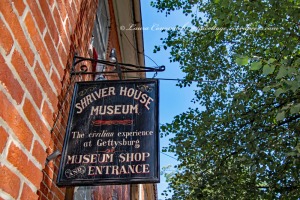
The Hubster and I drove to Gettysburg, Pennsylvania. Here we toured the Shriver House Museum.

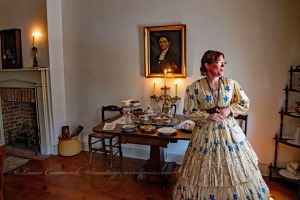
Nancie W. Gudmestad, Founder and Director, and her husband, Del, purchased the Shriver house in 1996. During restoration of the house, they made many discoveries that now give us insights into the civilian life and how the Battle of Gettysburg impacted civilians. It wasn’t only outlying fields that experienced the ravages of battle, but the entire town of Gettysburg as well.

*Clicking on a photo will give you a closer look!

Gettysburg Shriver House Museum

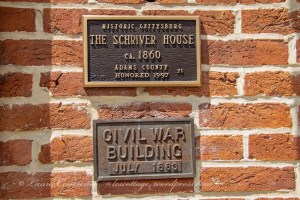
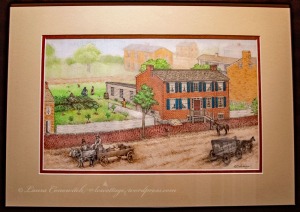
In 1860, George W. Shriver built one of the finest homes in town just months before the Civil War. The house served as a residence for his family, Hettie (his wife), Sadie (7), and Mollie (5).

The house also served as a business for George, called ‘Shriver’s Saloon & Ten-Pin Alley’.

Gettysburg Shriver House Museum

There are hundreds of items to see in the house/museum, including live Civil War ammunition, medical supplies, and more.

Gettysburg Shriver House Museum

Gettysburg Shriver House Museum

Gettysburg Shriver House Museum

Gettysburg Shriver House Museum

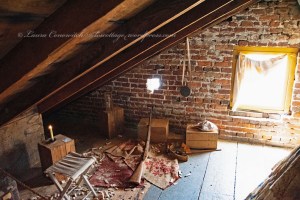
Confederate sharpshooters occupied the Shrivers’ home during the Battle of Gettysburg. Tillie Pierce, the Shrivers’ neighbor, recalled her father’s account of what he saw in the Shrivers’ garret (attic) during the fighting:

The south wall of this house, had a number of port holes knocked into it, through which the Rebels were firing at our men. All at once one of these sharp-shooters threw up his arms, and fell back upon the garret floor . . . afterward they carried a dead soldier out the back way, and through the garden.

Almost 143 years later, the residue of blood was still evident. Investigator Det. Lt. Nick Paonessa, a Crime Scene Investigator from New York, used a blood reagent called BLUESTAR® FORENSIC, to reveal the presence of blood directly underneath the portholes knocked through the Shriver’s attic wall during the battle. According to their website, “. . . the oldest blood discovered by BLUESTAR® FORENSIC was that of two confederate soldiers that were killed at the Battle of Gettysburg.”

Gettysburg Shriver House Museum

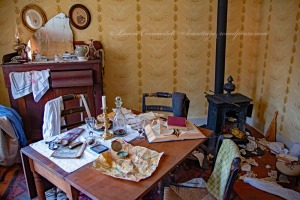
Medical supplies found hidden in the house testify that the house was also used as a hospital.

There was utter devastation left behind by the invading armies.

Gettysburg Shriver House Museum

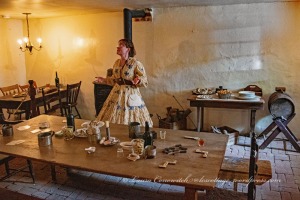
Our wonderful tour guide showing us the saloon in the cellar.

Gettysburg Shriver House Museum

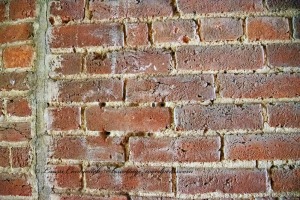
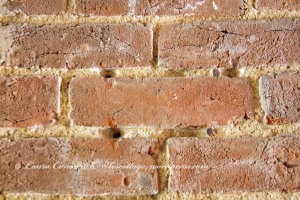
Numerous bullet holes scar the bricks. They can be seen when one walks in the alley.

Gettysburg Shriver House Museum

When battles and war happen, no one is left untouched in some way.

Gettysburg Shriver House Museum

George W. Shriver mustered into Company C, of Maryland’s Cole’s Cavalry in September, 1861, just months after the Civil War broke out. On New Year’s Day, 1864, George was one of 12 men captured in a skirmish with Mosby’s Raiders near Rectortown, Virginia. About that same time a stockade was being constructed in Andersonville, Georgia, to house Union prisoners of war.

George’s fate would be forever sealed in that small southern town.

*We did not have time to visit Jennie Wade’s House, but if you would like to learn more about the effect of the Battle of Gettysburg on civilians, then I suggest watching this excellent YouTube video – Jennie Wade: Gettysburg’s Lone Civilian Casualty

Jennie Wade was just 20 years old when a bullet struck her in the back while she was making bread for Union soldiers.

See the world around you!