
By late afternoon the Hubster and I had been driving for quite a while and needed to stretch our legs.
We made an unplanned visit to Fort Hays State Historic Site in Kansas.
Fort Hays was named to honor General Alexander Hays, who was killed in 1864 at the Battle of the Wilderness.
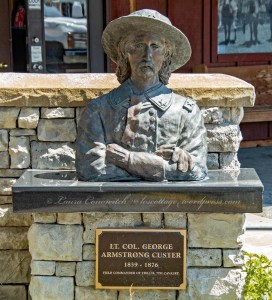
Garrison strength at Fort Hays normally averaged three companies, or about 210 men. Fort Hays was home to the 7th U.S. Cavalry, commanded by Lt. Col. George A. Custer, the 5th U.S. Infantry, commanded by Col. Nelson Miles, and the 9th and 10th U.S. Cavalries, better known as the “Buffalo Soldiers.” Marcus A. Reno, George A. Forsyth, and Philip H. Sheridan were also among the noted military figures associated with the Fort.
In 1867, Hays City was staked out a mile to the north of the fort and with the arrival of the railroad in October, the fortunes of Hays City and Fort Hays became almost inseparable. The military post was used as a quartermaster depot that supplied other forts throughout the West and Southwest. Such an operation required a large number of civilian as well as military personnel and Hays City consequently experienced rapid development.

*Clicking on a photo will give you a closer look!
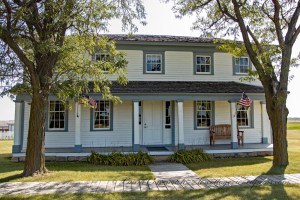
Since the park was locking up, I don’t have a lot to share. Most of the photos are from the officer’s quarters.


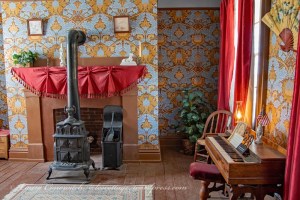
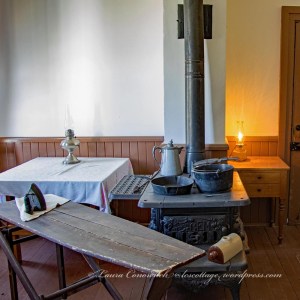


A stone guardhouse was built in 1872. It contained a room for the officer of the guard, a guardroom, prison room and three solitary cells. Except for a small stone bakery, all other buildings were of frame construction.

A cholera epidemic struck the area late in the summer of 1867. Among the victims was Elizabeth Polly, a woman who had been ministering to the ill at the fort. Buried at the base of a nearby hill, she went on to become a figure in local folklore, the “Blue Light Lady”, as people claimed to see her ghost in the area around the fort.

See the world around you!











 LC's Cottage