Tag Archives: Chalkley Beeson

Cross Country Vacation Sept./Oct. 2025-Post 22

Front Street, Dodge City, Boot Hill Museum, Kansas-Part 3

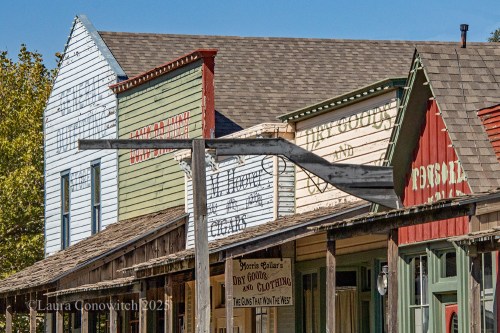
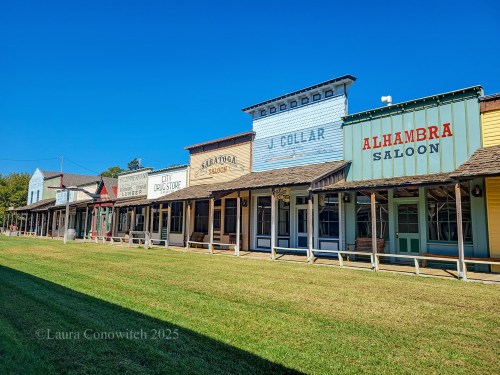
After visiting Boot Hill Cemetery, the Hubster and I explored the replica of Front Street. During the ‘tourist season’, there are gunfights and other reenactments and entertainments. On this day, Front Street was quiet.
Boot Hill Museum, Dodge City, Kansas

*Clicking on a photo will give you a closer look!
Boot Hill Museum, Dodge City, Kansas

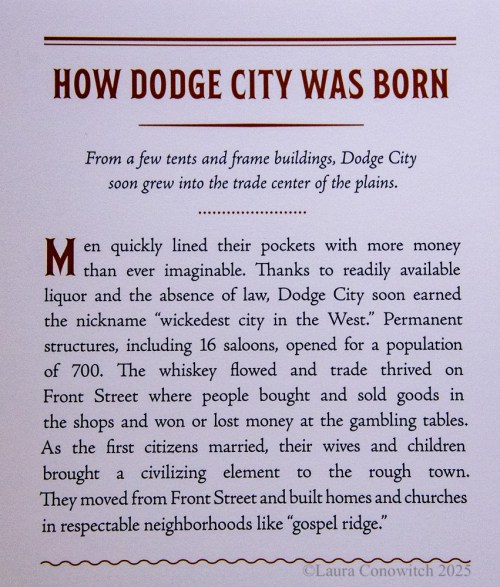
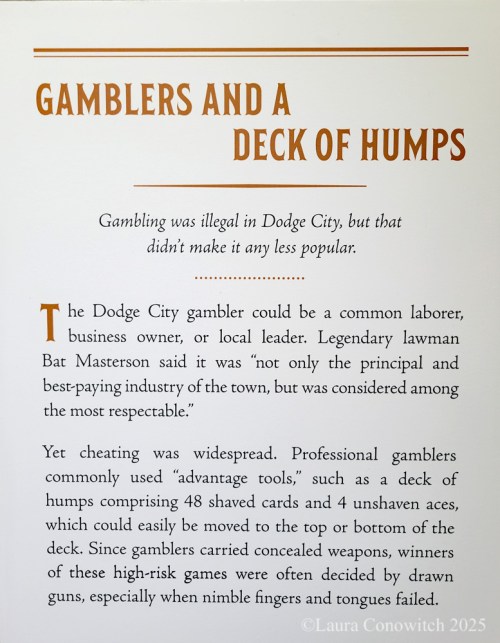
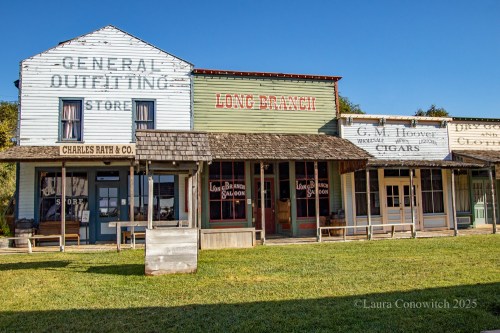
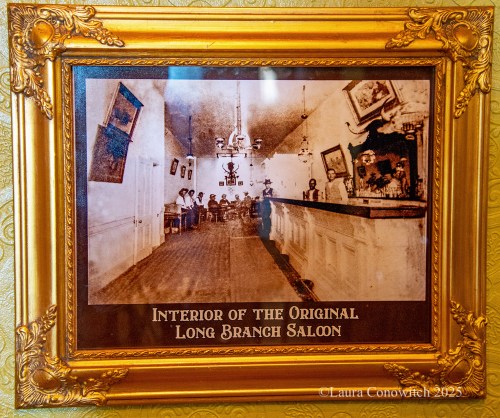
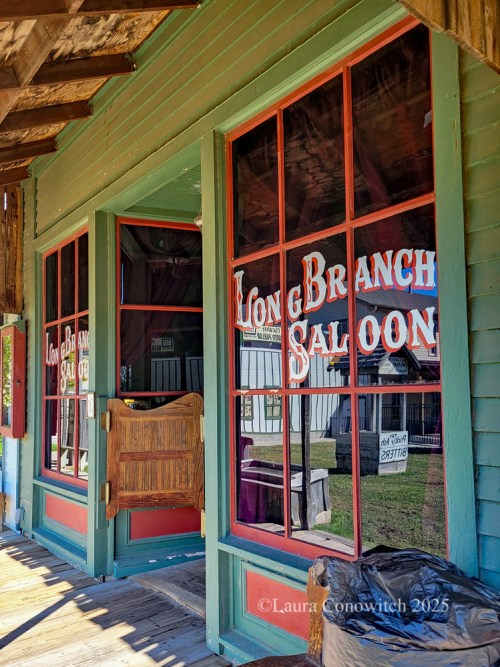
The Hubster and I began our exploration with the Long Branch Saloon, one of 16 saloons in Dodge City in 1868, and the fanciest of the saloon establishments, popular with cattlemen and gamblers.
Boot Hill Museum, Dodge City, Kansas

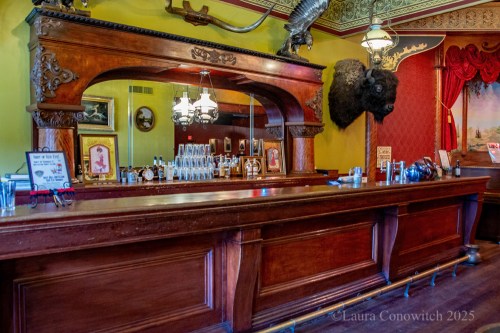
The front room housed a bar, a billiard table, and a stove. The middle room was used for private gambling, and the back room held storage as well as a room where drunks were locked up until they sobered up.
Boot Hill Museum, Dodge City, Kansas

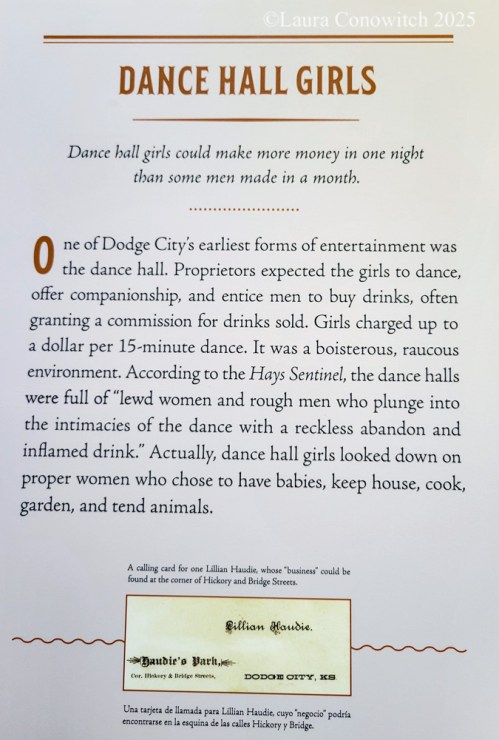
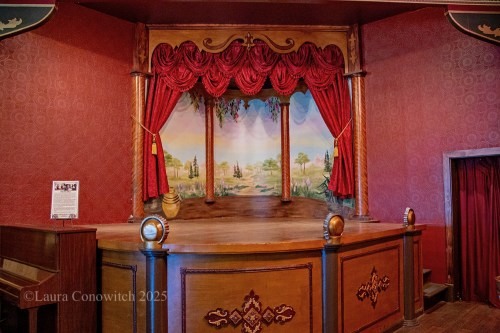
Not all girls in saloons and dance halls made their living by having paid relations with men. Saloon girls were paid to cheer up the men since men outnumbered women by at least three to one. Saloon girls would sing for the men, dance with them, talk to them thus inducing them to remain in the bar, buying drinks, and patronizing the games.

Saloon girls earned as much as $10 a week and a commission for every drink they sold. Whiskey was marked up 30 – 40% over its wholesale price. Customers were charged ten to seventy-five cents a shot. Drinks bought for the girls would be cold tea or colored sugar water served in a shot glass.

Saloon girls were regulated to the saloons and dance halls south of the railroad tracks while the saloons on North Front Street banned saloon girls and provided music and billiards as entertainment.
Boot Hill Museum, Dodge City, Kansas

Boot Hill Museum, Dodge City, Kansas

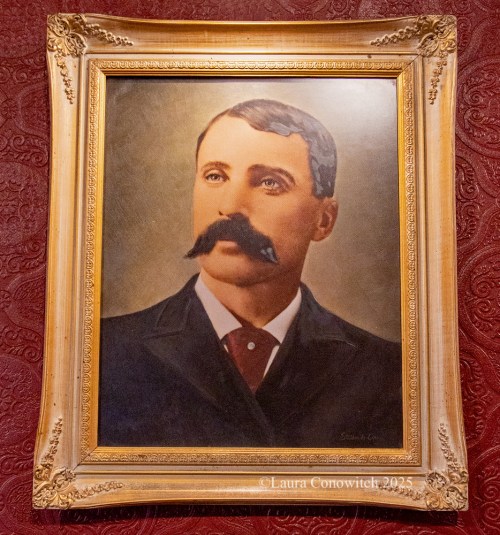
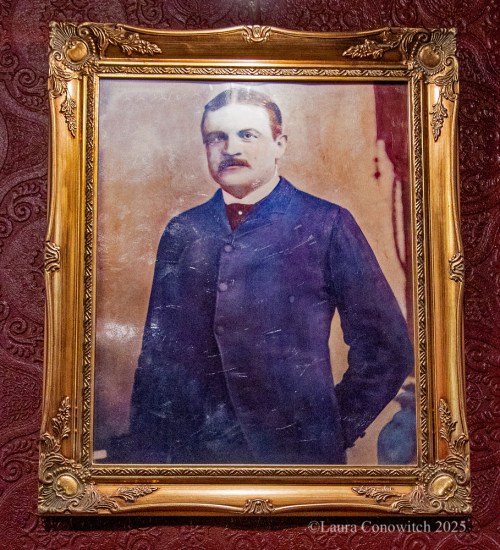
Chalkley Beeson ran the Saratoga Saloon with William Harris from 1876-1878. In 1878, they bought the Long Branch Saloon. Beeson sold his interest in the Long Branch Saloon in February 1883.
Boot Hill Museum, Dodge City, Kansas

While Beeson oversaw the entertainment, William Harris managed the gambling and liquor sales.
Boot Hill Museum, Dodge City, Kansas

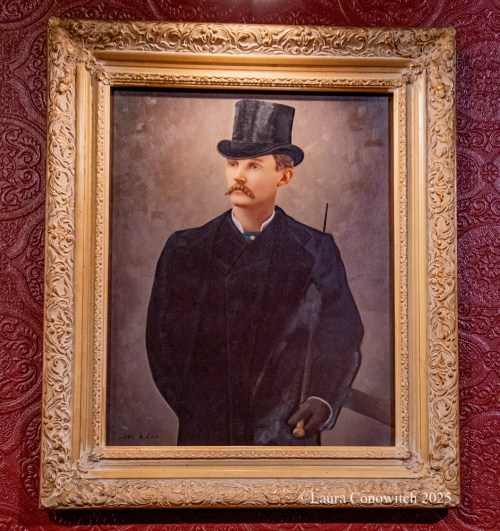
Luke Short, a small and dandified Texan with a background in gambling and gunplay arrived in Dodge City in August 1882. He bought Chalkley Beeson’s share in the Long Branch Saloon in February 1883. He hired female “entertainers” and city officials ran him out of town which resulted in the Dodge City Saloon War. Harris and Short sold the Long Branch in November 1883.
Boot Hill Museum, Dodge City, Kansas

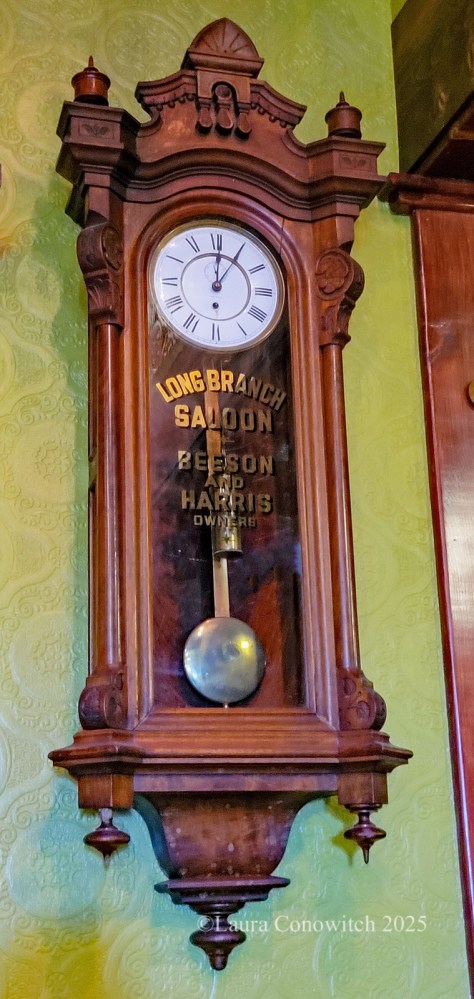
The Seth Thomas clock was purchased by Chalkley Beeson and William Harris in 1878. During the 1885 fire it was out for repairs and saved.
Boot Hill Museum, Dodge City, Kansas

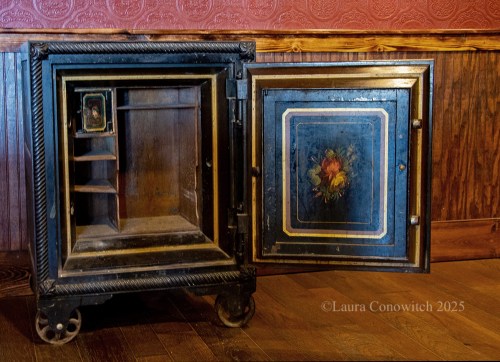
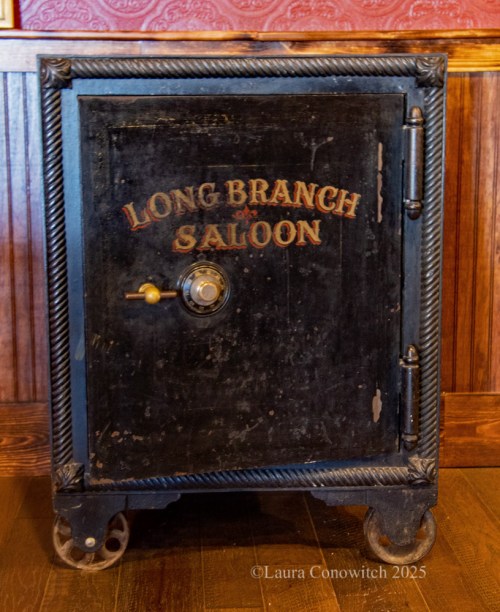
Likewise, the safe is original and survived the 1885 fire.
Boot Hill Museum, Dodge City, Kansas

Boot Hill Museum, Dodge City, Kansas

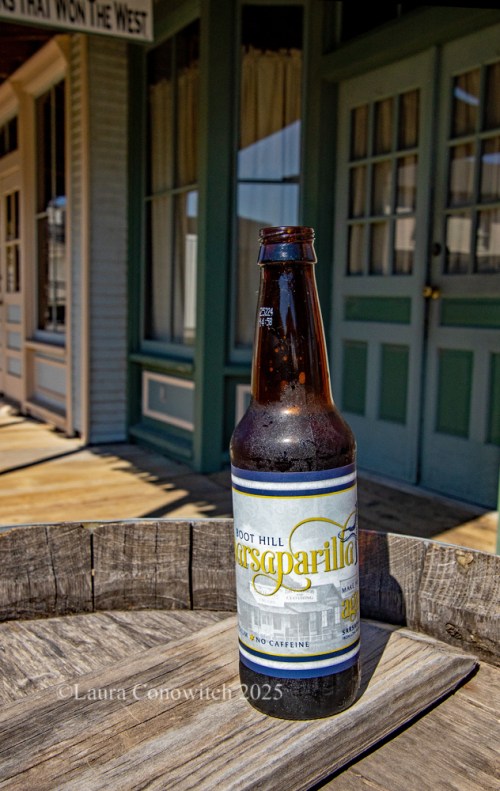
It was warm out, so the Hubster and I bought ourselves a treat from the Long Branch Saloon. We each enjoyed a sarsaparilla.
Boot Hill Museum, Dodge City, Kansas

Boot Hill Museum, Dodge City, Kansas

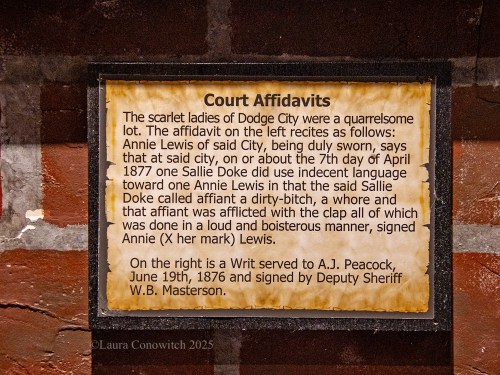
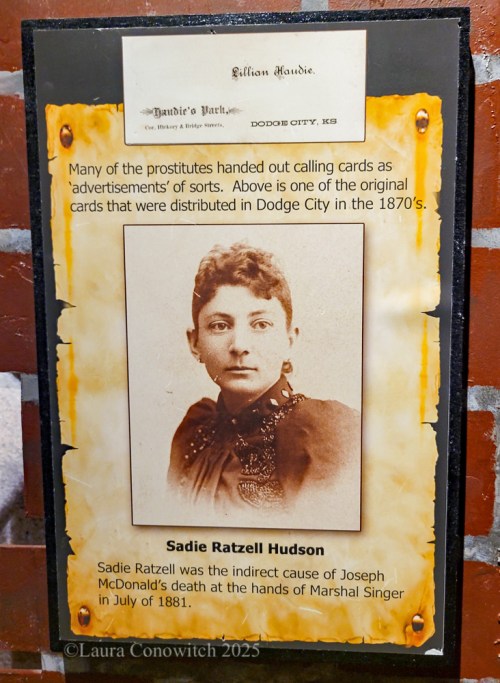
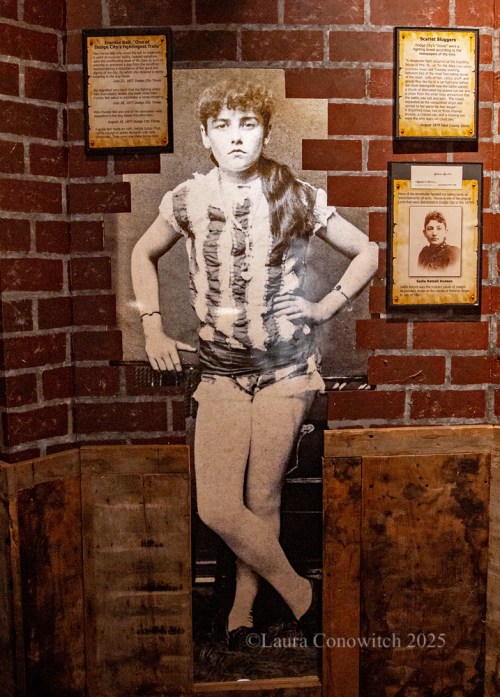
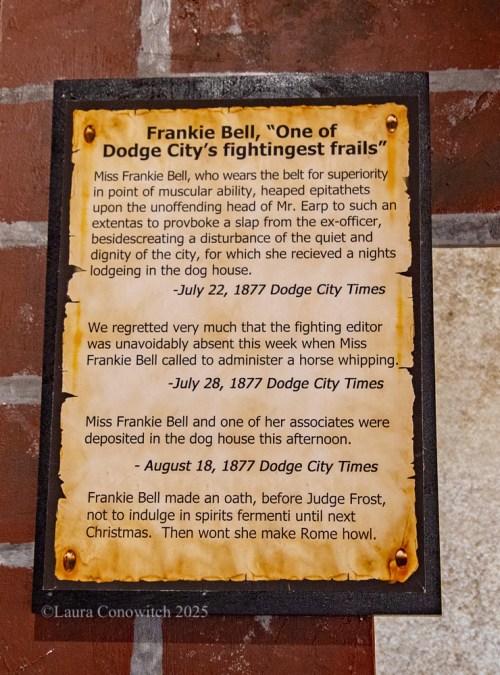
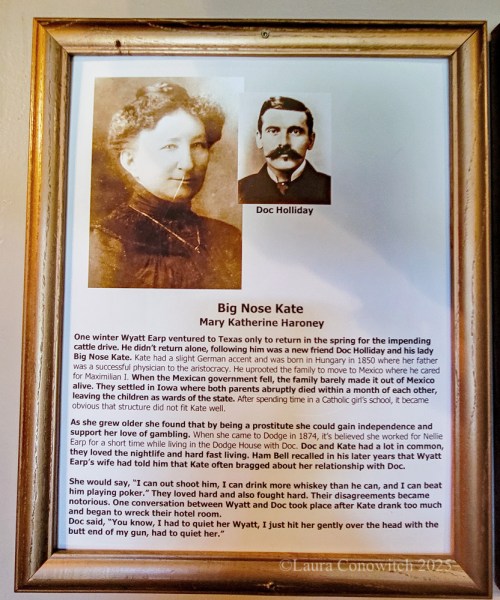
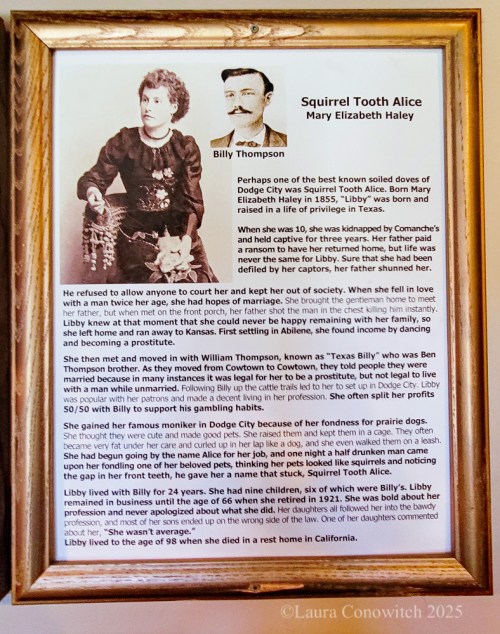
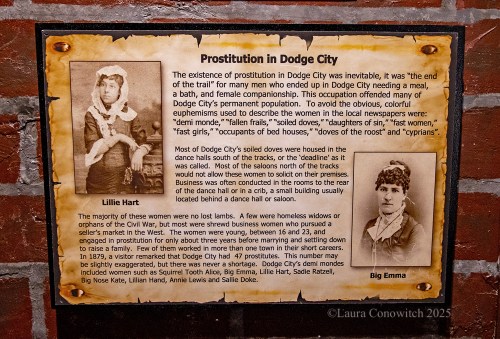
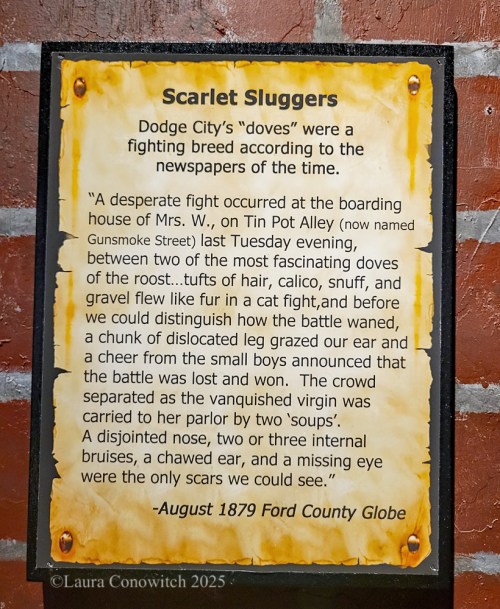
There is a difference between the saloon and dance hall girls and the soiled doves and prostitutes. I enjoyed learning about them!
Boot Hill Museum, Dodge City, Kansas

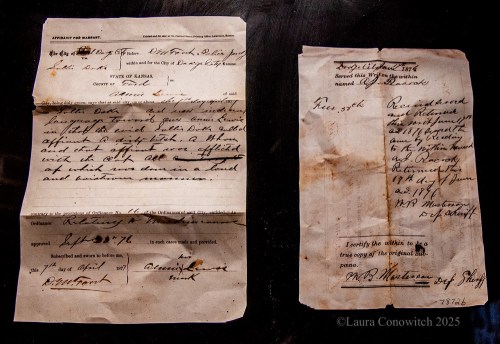
*Remember, clicking on a photo will give you a closer look and you will be able to read about these interesting women!
Boot Hill Museum, Dodge City, Kansas

Boot Hill Museum, Dodge City, Kansas

Boot Hill Museum, Dodge City, Kansas

Boot Hill Museum, Dodge City, Kansas

Boot Hill Museum, Dodge City, Kansas

Boot Hill Museum, Dodge City, Kansas

Boot Hill Museum, Dodge City, Kansas

Boot Hill Museum, Dodge City, Kansas

Boot Hill Museum, Dodge City, Kansas

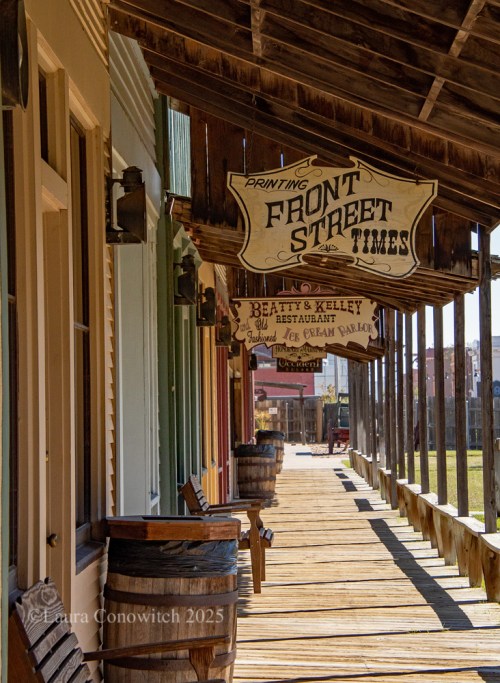
There is more to see, so we continued walking on Front Street.
Boot Hill Museum, Dodge City, Kansas

See the world around you!

More Travel Posts:
Cross Country Vacation Sept./Oct. 2025-Post 20

Boot Hill Museum, Dodge City, Kansas-Part 1

The Hubster and I spent all day at Boot Hill Museum and took hundreds of photos. It has been a big job sorting through said hundreds of photos.

Big!

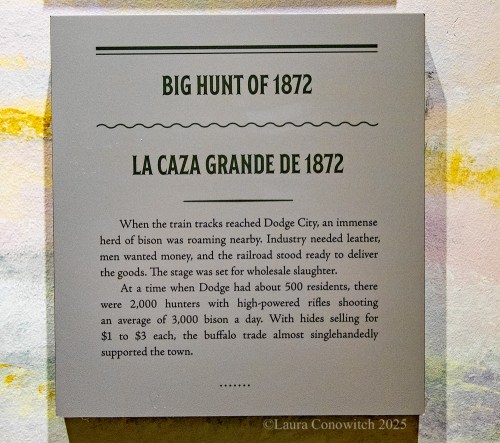
Anyway, Dodge City is rich in history and the museum site reflects that. It is very thorough and, if you are a sign reader (I am), you can learn a lot of human interest stories and western history from stage coach to rail travel and buffalo hunting (annihilation) to cattle drives and a lawless town to a respectable city.

The museum is open 362 days a year, but plan your trip during the summer months if you want historical interpreters, exciting gunfights, and other re-enactments. The Hubster and I visited in the off-season so we experienced none of that.

There is a lot to explore here!

Boot Hill Museum, Dodge City, Kansas

*Clicking on a photo will give you a closer look!

Boot Hill Museum, Dodge City, Kansas

Boot Hill Museum, Dodge City, Kansas

Boot Hill Museum, Dodge City, Kansas

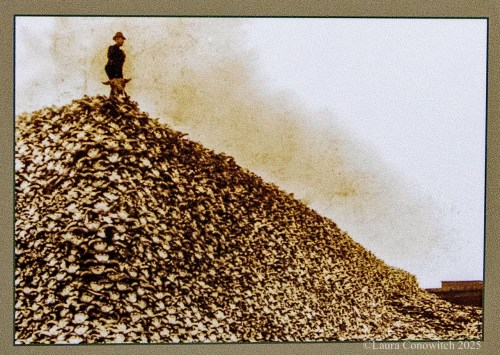
Bone pickers earned $4 to $8 a ton at a time when a laborer might earn $9 a week. It was easier than hunting buffalo, and it was something homesteaders could do to make extra money. Piles of skeletons 15 feet high stretched for miles along the tracks outside of town. Some estimate that 8,000,000 pounds of bones were shipped out of Dodge City by 1883.

Boot Hill Museum, Dodge City, Kansas

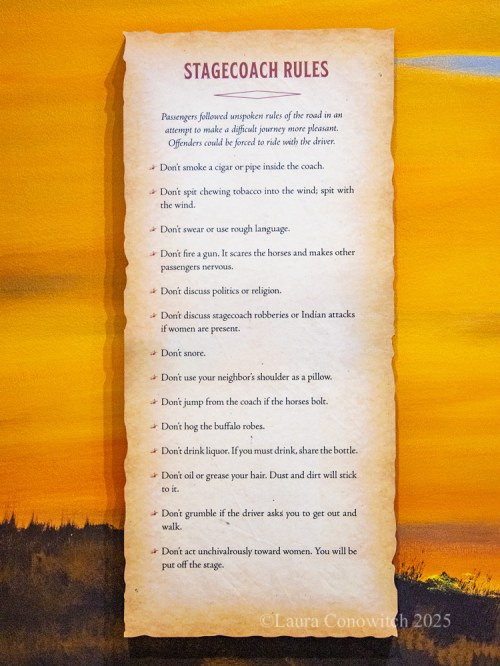
Stagecoach traveling was dirty, uncomfortable, and hazardous, not only due to road and weather conditions, but due to robberies and Indian attacks as well.

Boot Hill Museum, Dodge City, Kansas

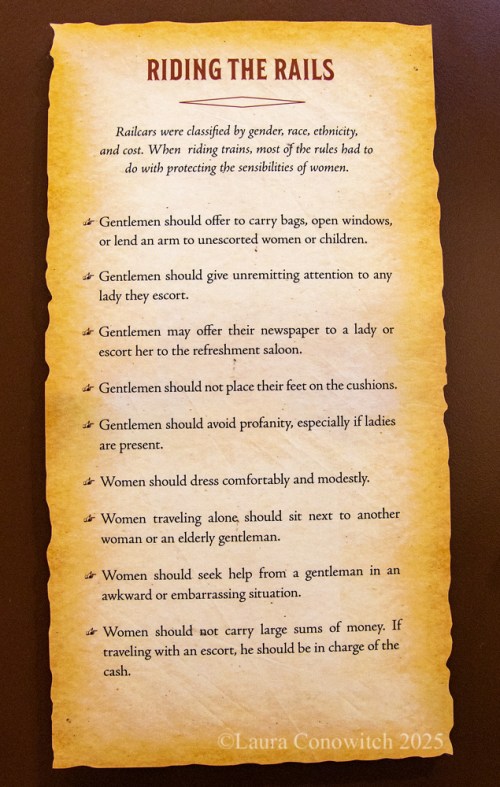
* Click on these photos and then click on the i in the lower right corner to view full size so that you can read these rules easier if you would like.

Boot Hill Museum, Dodge City, Kansas

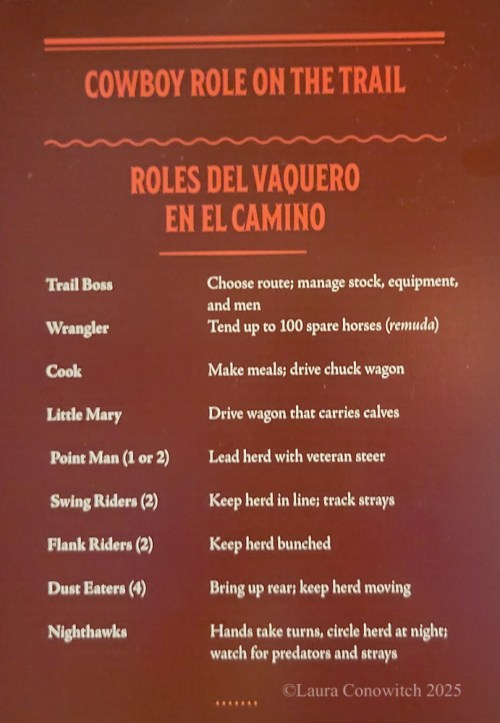
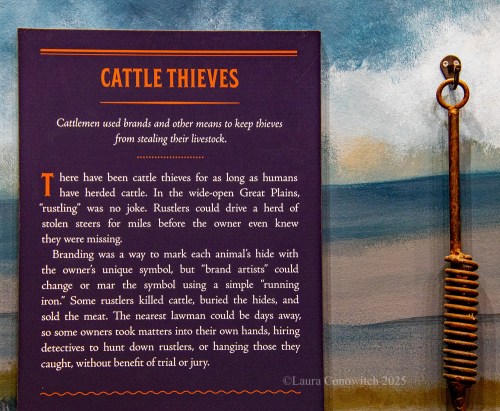
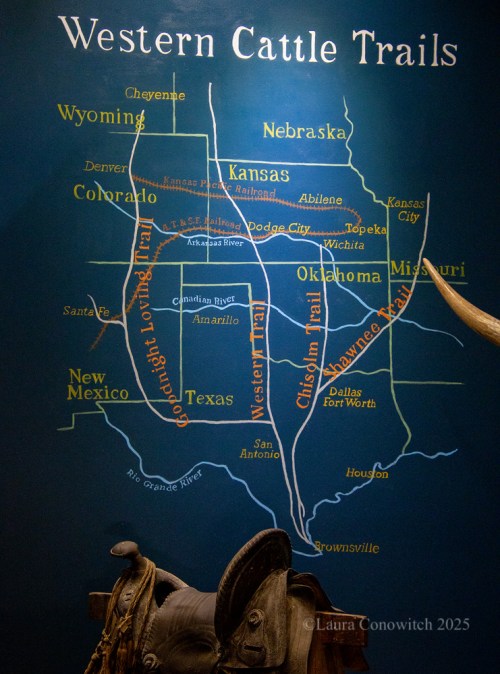
Cattle drives began in the spring, traveling 8 to 20 miles a day, for 2 to 5 months. A drive cost an owner $500 a month, but the cattle could not be driven in a hurry, or they would lose weight and sell for less at market.

The cowboys were poorly paid (about $25 to $40 a month) and worked around the clock, guarding against predators, rustlers, and Indians, as well as rounding up strays and stopping stampedes. They slept in their clothes on the ground and ate beans, biscuits, bacon, and drank coffee.

Boot Hill Museum, Dodge City, Kansas

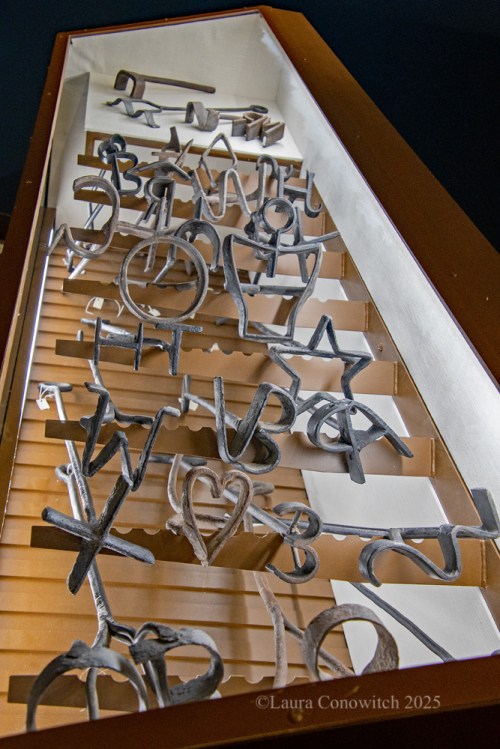
Branding irons:

Boot Hill Museum, Dodge City, Kansas

Boot Hill Museum, Dodge City, Kansas

Boot Hill Museum, Dodge City, Kansas

Boot Hill Museum, Dodge City, Kansas

Boot Hill Museum, Dodge City, Kansas

Boot Hill Museum, Dodge City, Kansas

Boot Hill Museum, Dodge City, Kansas

Boot Hill Museum, Dodge City, Kansas

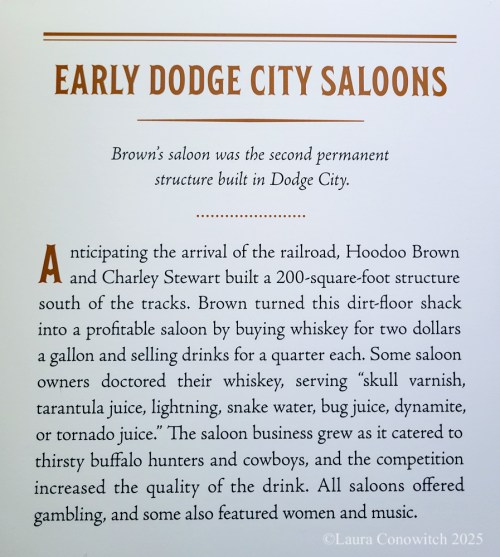
Saloon owner, Hoodoo Brown, also known as Hyman G. Neill, led the Dodge City Gang in Las Vegas, New Mexico, in 1879 and early 1880, a gang that participated in several stagecoach and train robberies and organized cattle rustling. It was said to have been responsible for multiple murders and lynchings.

Boot Hill Museum, Dodge City, Kansas

Boot Hill Museum, Dodge City, Kansas

Boot Hill Museum, Dodge City, Kansas

Boot Hill Museum, Dodge City, Kansas

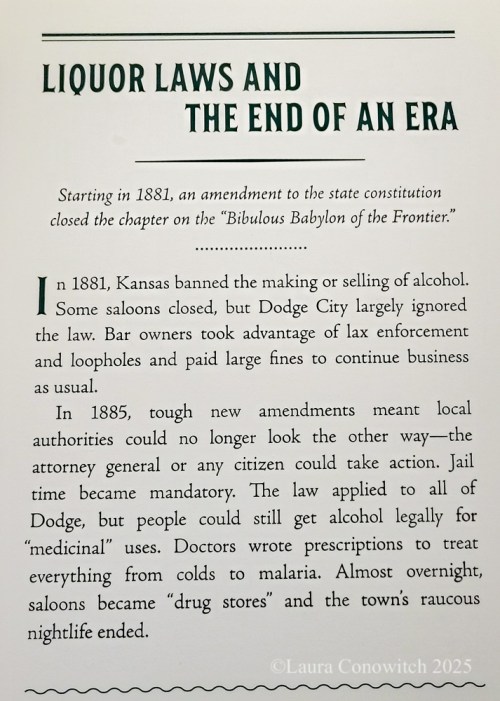
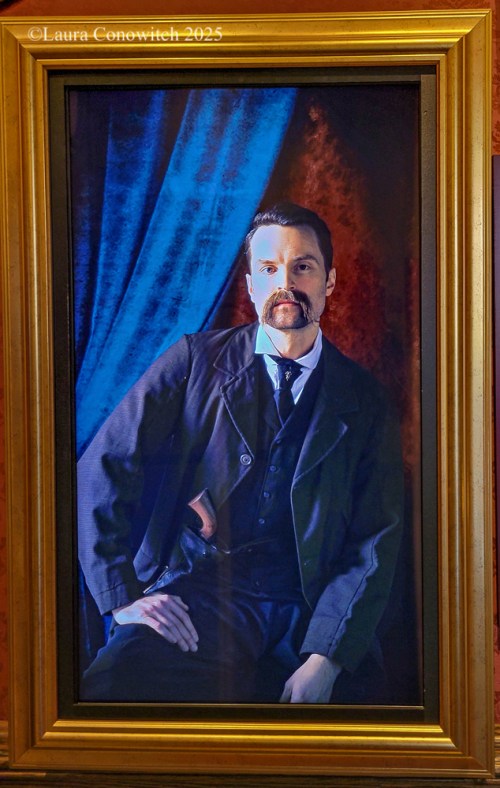
Alonzo B. Webster, a Civil War veteran, moved to Dodge City in 1872. He ran a dry goods store on First Street and owned the Stock Exchange Saloon and later the Palace Drug Store with Orlando “Brick” Bond.

In 1881, Webster won his first of four elections for mayor. He issued rules for lawmen, city police had to wear a badge, stay sober, and not leave town without permission. Webster knew how to use a gun and once faced down Bat Masterson.

He secured a waterworks and sewer system for Dodge.

Boot Hill Museum, Dodge City, Kansas

Wyatt Earp came to Dodge City in 1876. He served as deputy city marshal, and deputy sheriff with his brother Morgan and friend Bat Masterson, and assistant city marshal. Wyatt and Bat rode in the posse that chased down Dora Hand‘s killer.

Boot Hill Museum, Dodge City, Kansas

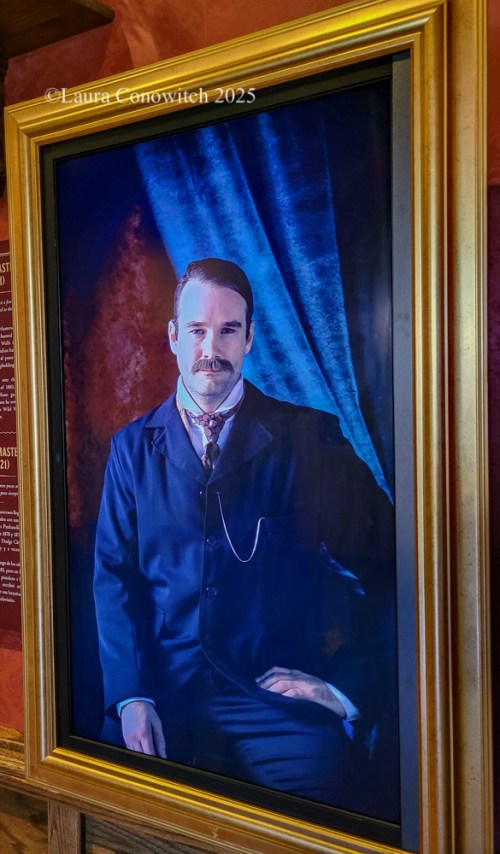
Lawman and gambler William “Bat” Masterson arrived in Kansas in 1872. He hunted buffalo with his brothers and fought at Adobe Walls in the Texas Panhandle during the famous 1874 Indian battle. Between 1876 and 1879, Bat served in several posts as a Dodge City lawman and deputy marshal. He was in and out of Dodge over the years, and returned during the “saloon war” of 1883.

Boot Hill Museum, Dodge City, Kansas

Chalkley “Chalk” Beeson moved to Dodge City in 1876. He was a cowboy, historian, and avid collector. He saw the value in remembering Dodge City through artifacts. Beeson was one of the early owners of the Long Branch Saloon and the Saratoga Saloon. He served as Ford County Sheriff from1892 to 1896, was a state legislator and ranched near Dodge City. Beeson was also the founder of Dodge City’s beloved Cowboy Band which performed at the inauguration of U.S. President Benjamin Harrison, in Washington, D.C. on March 4, 1889. He was well beloved, and the town shut down for his funeral.

Boot Hill Museum, Dodge City, Kansas

Boot Hill Museum, Dodge City, Kansas

Boot Hill Museum, Dodge City, Kansas

Boot Hill Museum, Dodge City, Kansas

See the world around you!

More Travel Posts: