Tag Archives: Boot Hill Museum

Cross Country Vacation Sept./Oct. 2025-Post 23

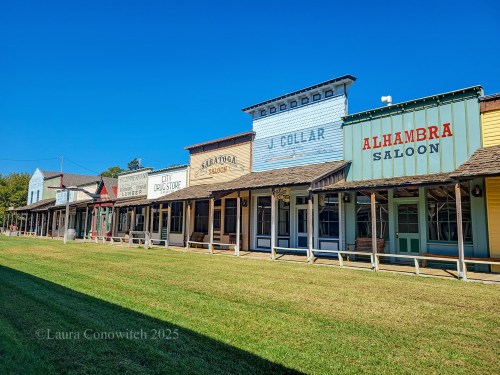
Front Street, Dodge City, Boot Hill Museum, Kansas-Part 4

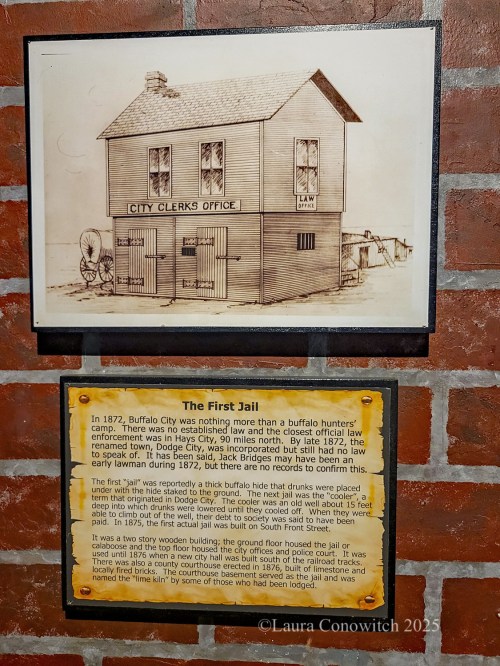
During Dodge City’s first four months of existence in 1872, the town grew to a population of slightly less than 200, and there were at least 12 untimely deaths; 1873 would bring at least 24 more. Many did not take what law there was seriously. The Atchison Daily Champion wrote in 1876 that Dodge City, “was infested principally with gamblers, horse thieves, prostitutes, and murderers, who look upon the law as a huge joke. The arm of the law is palsied and hangs powerless by the side of Justice, who stands away in the background like a statue of a forlorn and helpless exile. Horse thieves, burglars, disturbers and even murderers go at large.”
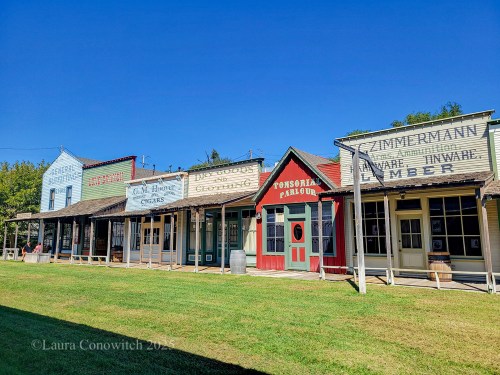
Boot Hill Museum, Dodge City, Kansas

*Clicking on a photo will give you a closer look!

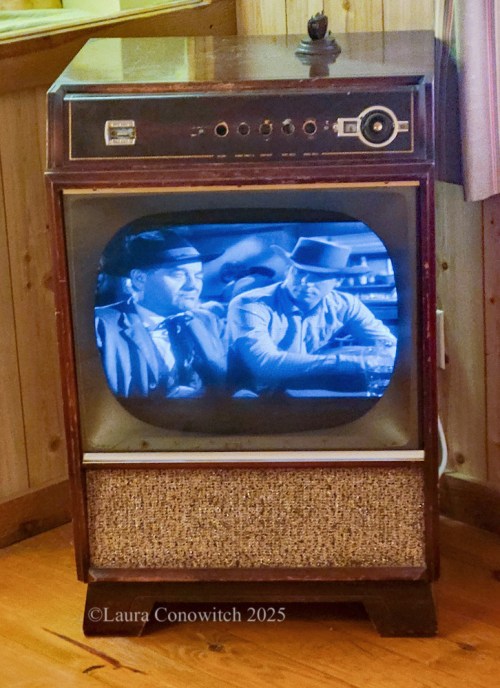
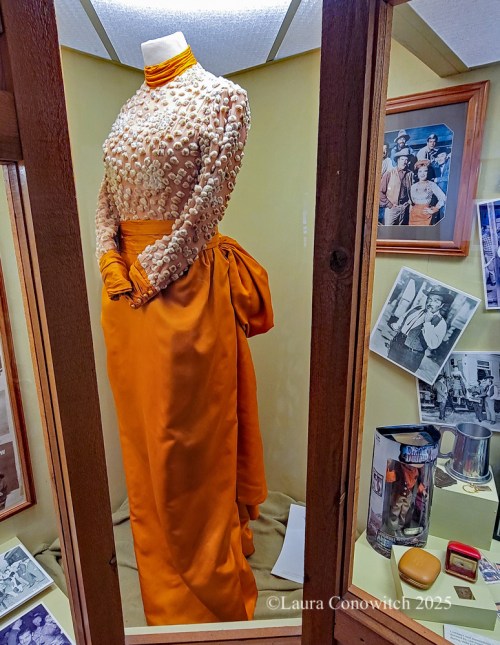
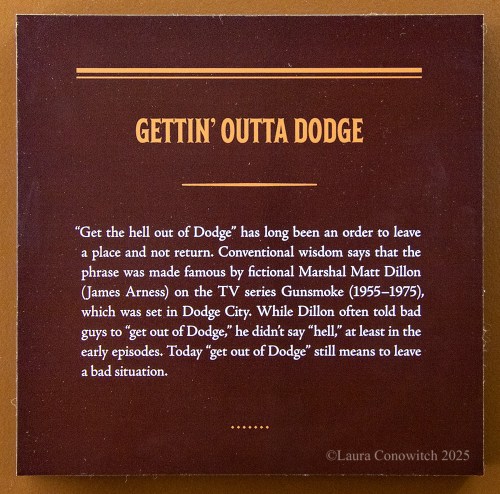
Continuing our stroll on Front Street, Dodge City, Kansas (from the previous post), we come upon a fun Gunsmoke display. The iconic television series centered on Dodge City, Kansas, in the 1870s, during the settlement of the American West. I grew up watching Gunsmoke. Maybe you did too.
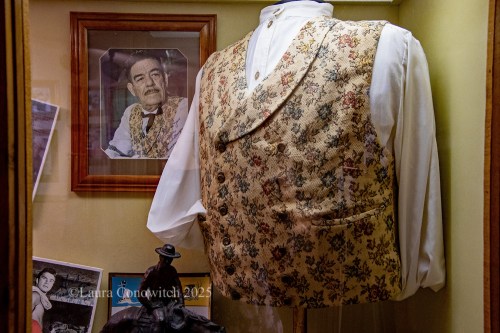
Boot Hill Museum, Dodge City, Kansas

Boot Hill Museum, Dodge City, Kansas

Boot Hill Museum, Dodge City, Kansas

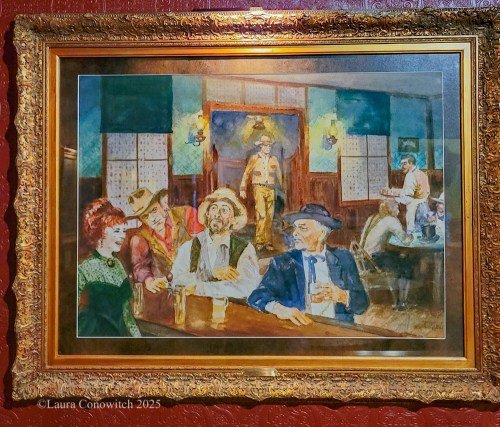
Buck Taylor, who played the character “Newly” on Gunsmoke, created this painting of the Long Branch Saloon:
Boot Hill Museum, Dodge City, Kansas

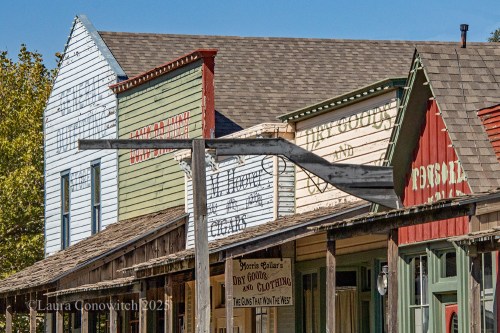
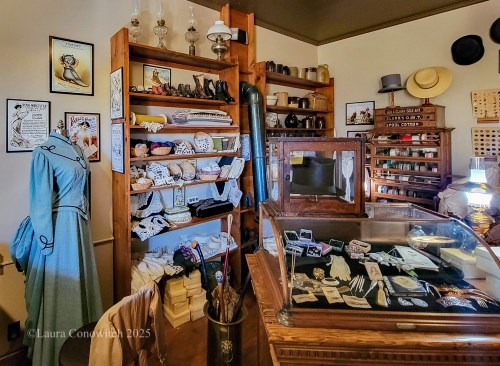
A quick visit to the Dry Goods store:
Boot Hill Museum, Dodge City, Kansas

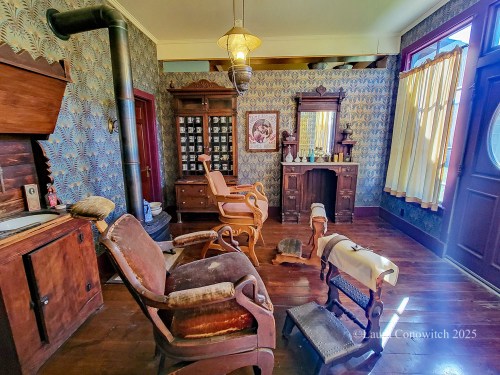
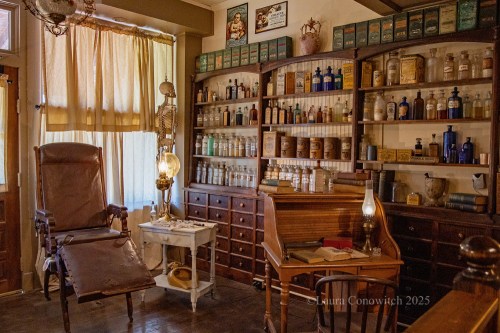
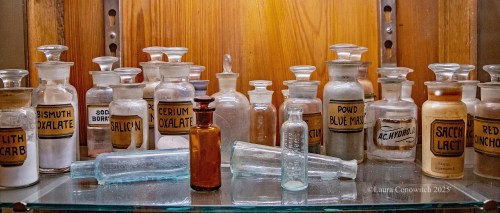
The Tonsorial Parlour was where cowboys and buffalo hunters could get a haircut, shave, bath, and have their teeth pulled.

The straps in front of the chairs are called “strops” and have a rough surface for sharpening razors. Shaving mugs were personalized with names and occupations of regular customers and were stored until their next visit. A gauge of the success of a barber was the number of personalized shaving mugs on his shelves. Though the tools of the trade were standardized, many barbers were “jack-of-all-trades” with various skill levels. Many moonlighted at other jobs or offered hot baths in the back for a quarter to make ends meet. One of the proud professionals was Dodge City barber, George Dieter, who advertised himself as “the eminent tonsorial artist of the Arkansas Valley”.
Boot Hill Museum, Dodge City, Kansas

Boot Hill Museum, Dodge City, Kansas

Boot Hill Museum, Dodge City, Kansas

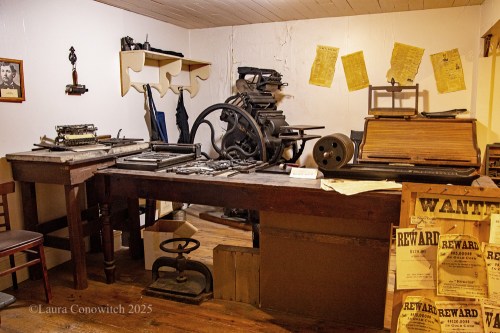
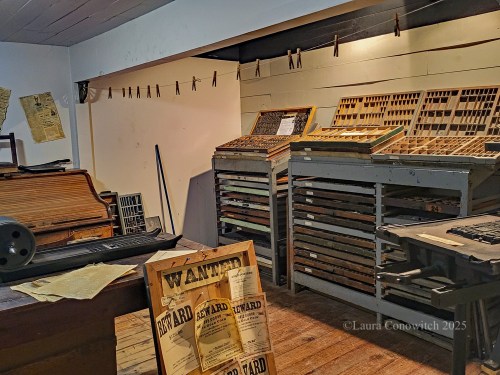
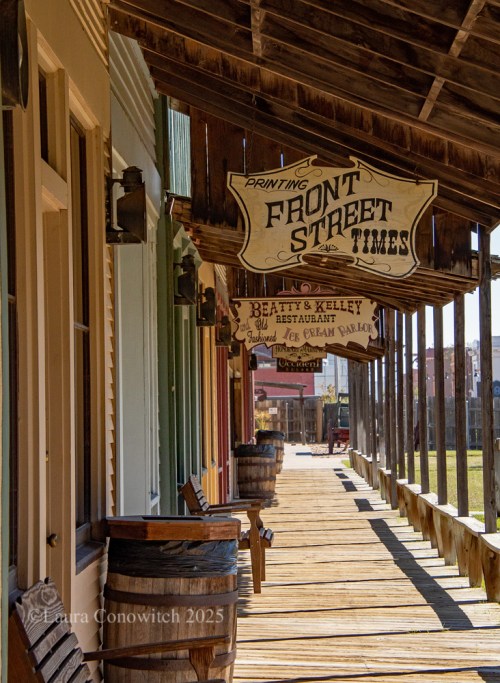
The print shop:

Boot Hill Museum, Dodge City, Kansas

Boot Hill Museum, Dodge City, Kansas

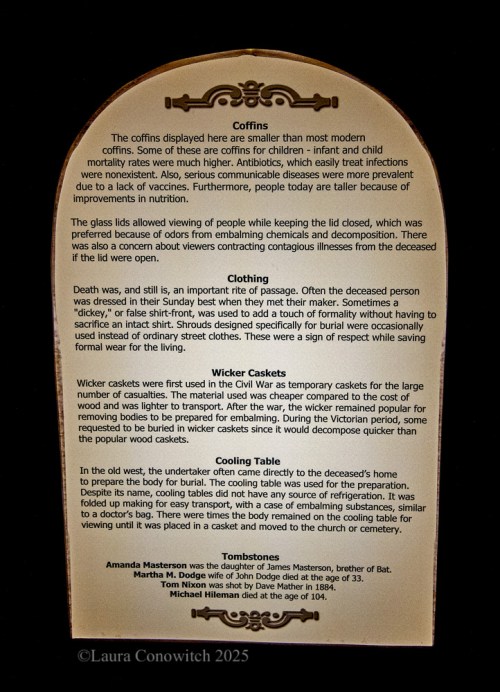
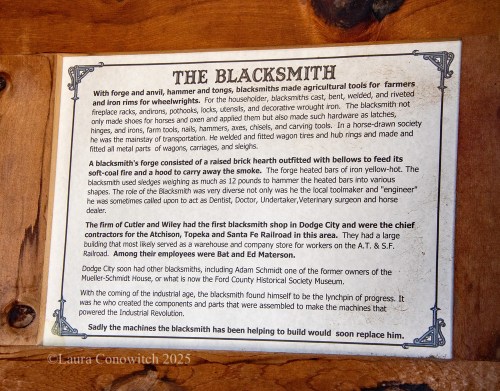
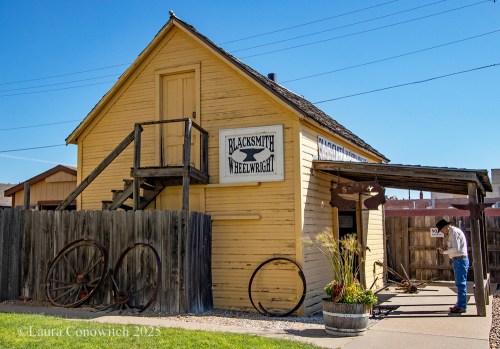
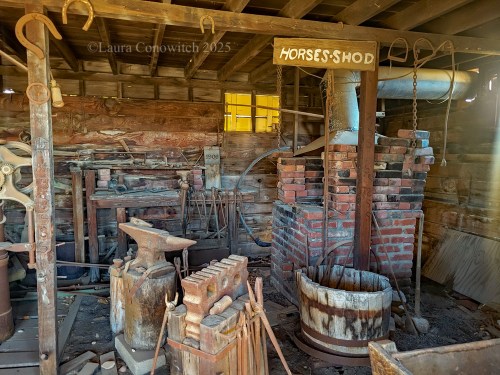
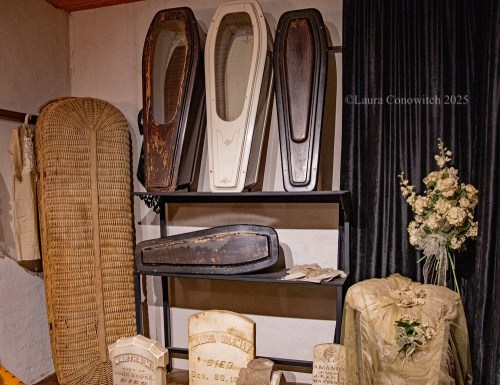
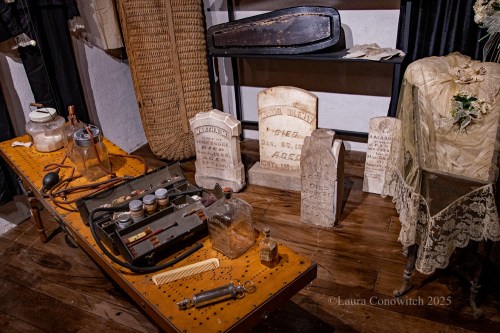
The Undertaker’s shop:

Boot Hill Museum, Dodge City, Kansas

*Remember, clicking on a photo, and then clicking on the i in the lower right, will give you a closer look and you will be able to read easier if you wish.
Boot Hill Museum, Dodge City, Kansas

Boot Hill Museum, Dodge City, Kansas

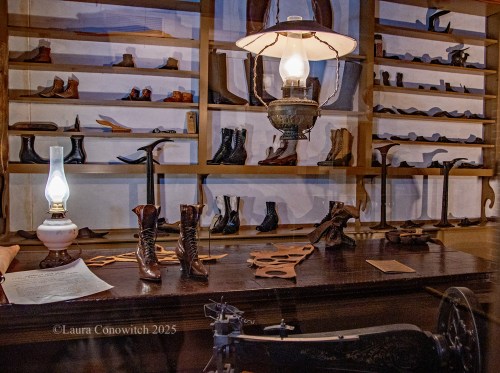
Following the Civil War, men arrived out west wearing low heeled stovepipe boots or military issue cavalry boots. Neither style suited the cowboys who spent 10 to 12 hours in the saddle. To satisfy the drovers needs, the boot was made to feature round toes, reinforced arches and higher heels that kept the boots from slipping through the stirrups. The new style became known as the Coffeyville boot because it originated in Coffeyville, Kansas. It also made the cowboy feel taller and gave him more swagger when he walked.

John Mueller immigrated to the United States in 1855 from Germany. He was wounded twice in the Civil War. Afterwards, he became an expert boot maker in St. Louis. He moved to Kansas and became friends with Buffalo Bill Cody and Wild Bill Hickok.

He opened his boot shop in Dodge City in 1874, and sold and repaired ready-made boots from $8 to $18.

In 1877, Mueller merged his business with another shoe craftsman, Walter Strater. They kept as many as six boot makers busy. Strater oversaw the shop while Mueller did the cutting and bookkeeping.

In 1881, Mueller sold out of the boot business and took up ranching.

John Mueller – “Gave perfect fits, performed excellent work and used nothing but the best material”.
Boot Hill Museum, Dodge City, Kansas

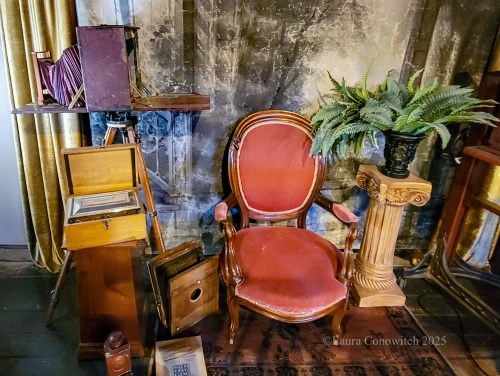
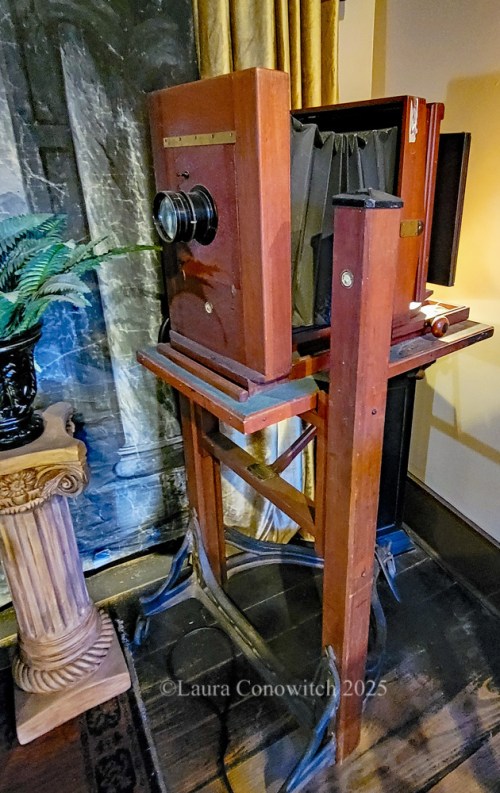
The photographer’s shop:

Boot Hill Museum, Dodge City, Kansas

Boot Hill Museum, Dodge City, Kansas

The U.S. Army built the first post office in 1851 at Fort Atkinson six miles west of Dodge City. In 1865, the Army established the county’s second at Fort Dodge. On September 3, 1872, this office was moved to Dodge City to become the city’s first post office.

The relocation is why the city is called “Dodge City” rather than “Buffalo City”. Another town in Kansas already had the name “Buffalo”.

The City Drug Store housed Dodge City’s first post office at Front Street. The first postmaster was Herman J. Fringer.
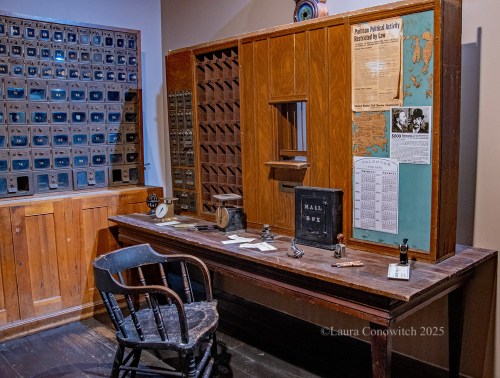
Boot Hill Museum, Dodge City, Kansas

The bank:

Boot Hill Museum, Dodge City, Kansas

Boot Hill Museum, Dodge City, Kansas

Just in case it is necessary to restrain you:
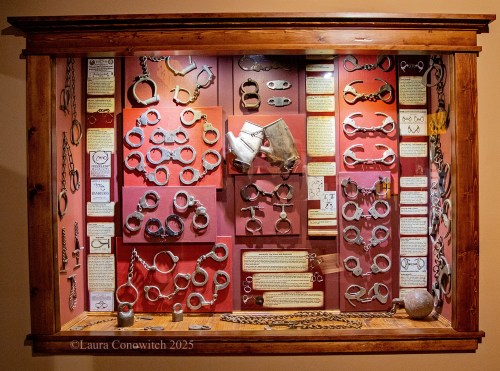
Boot Hill Museum, Dodge City, Kansas

Boot Hill Museum, Dodge City, Kansas

Boot Hill Museum, Dodge City, Kansas

Boot Hill Museum, Dodge City, Kansas

Boot Hill Museum, Dodge City, Kansas

Boot Hill Museum, Dodge City, Kansas

Boot Hill Museum, Dodge City, Kansas

Boot Hill Museum, Dodge City, Kansas

Boot Hill Museum, Dodge City, Kansas

Boot Hill Museum, Dodge City, Kansas

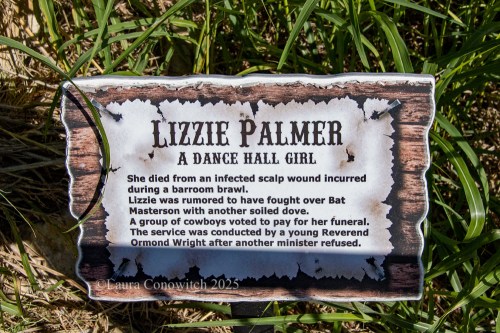
Reverend Ormond Wright arrived in Dodge City in early 1877. The very evening that he arrived, he performed the burial on Boot Hill of a saloon girl who had passed away.

Wright was instrumental in the building of Union Church, the first nondenominational place of worship in Dodge City. He convinced Wyatt Earp and Bat Masterson to be deacons. He welcomed people of all backgrounds, including the store owners and families, cowboys, gamblers, and dance hall girls.

On Monday mornings, he could be seen entering the saloons to cash in the gambling chips that had been left in the offering plate at Sunday services.

Wright was friends with Dora Hand, songstress of the Lady Gay Saloon, and invited her to sing at Saturday evening services. Her beautiful voice packed the house of worship.
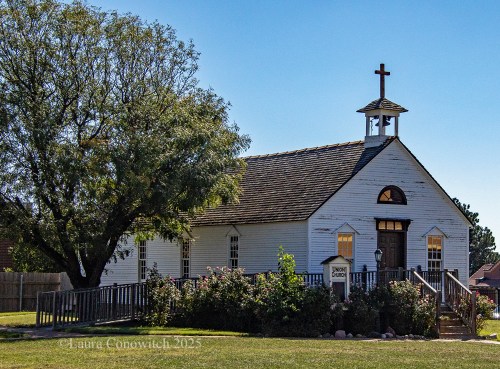
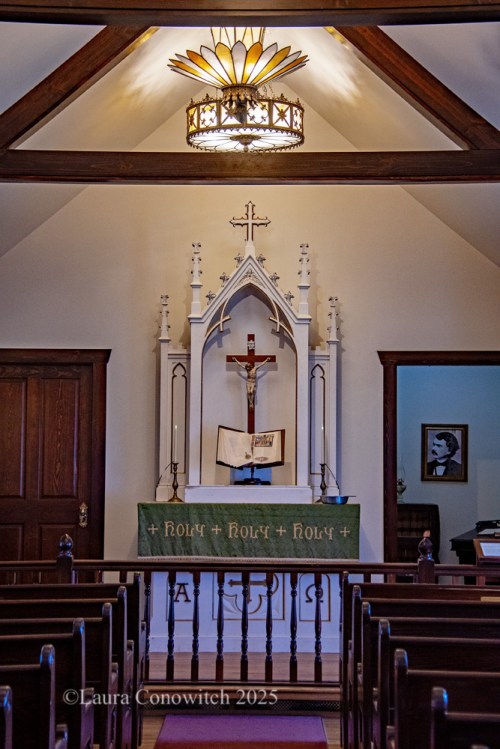
Boot Hill Museum, Dodge City, Kansas

Boot Hill Museum, Dodge City, Kansas

See the world around you!

More Travel Posts:
Cross Country Vacation Sept./Oct. 2025-Post 22

Front Street, Dodge City, Boot Hill Museum, Kansas-Part 3

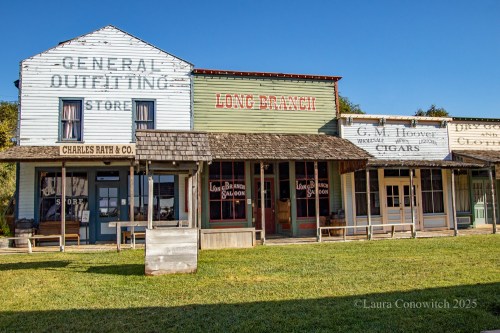
After visiting Boot Hill Cemetery, the Hubster and I explored the replica of Front Street. During the ‘tourist season’, there are gunfights and other reenactments and entertainments. On this day, Front Street was quiet.

Boot Hill Museum, Dodge City, Kansas

*Clicking on a photo will give you a closer look!

Boot Hill Museum, Dodge City, Kansas

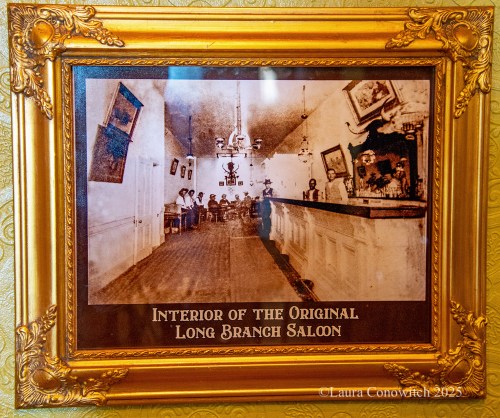
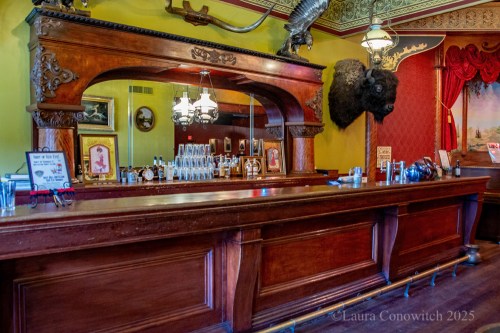
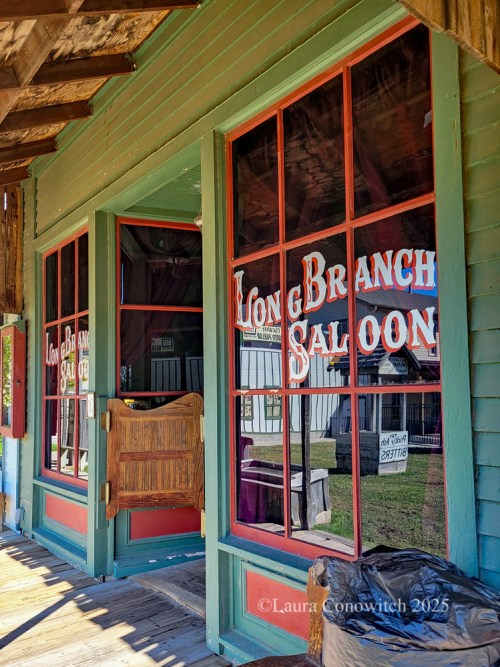
The Hubster and I began our exploration with the Long Branch Saloon, one of 16 saloons in Dodge City in 1868, and the fanciest of the saloon establishments, popular with cattlemen and gamblers.

Boot Hill Museum, Dodge City, Kansas

The front room housed a bar, a billiard table, and a stove. The middle room was used for private gambling, and the back room held storage as well as a room where drunks were locked up until they sobered up.

Boot Hill Museum, Dodge City, Kansas

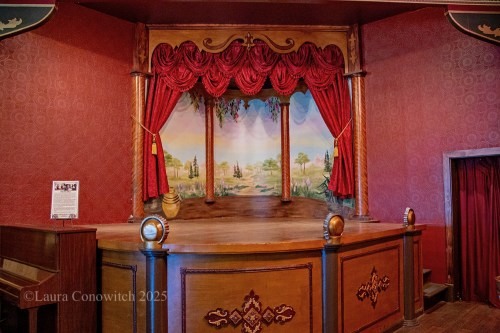
Not all girls in saloons and dance halls made their living by having paid relations with men. Saloon girls were paid to cheer up the men since men outnumbered women by at least three to one. Saloon girls would sing for the men, dance with them, talk to them thus inducing them to remain in the bar, buying drinks, and patronizing the games.

Saloon girls earned as much as $10 a week and a commission for every drink they sold. Whiskey was marked up 30 – 40% over its wholesale price. Customers were charged ten to seventy-five cents a shot. Drinks bought for the girls would be cold tea or colored sugar water served in a shot glass.

Saloon girls were regulated to the saloons and dance halls south of the railroad tracks while the saloons on North Front Street banned saloon girls and provided music and billiards as entertainment.

Boot Hill Museum, Dodge City, Kansas

Boot Hill Museum, Dodge City, Kansas

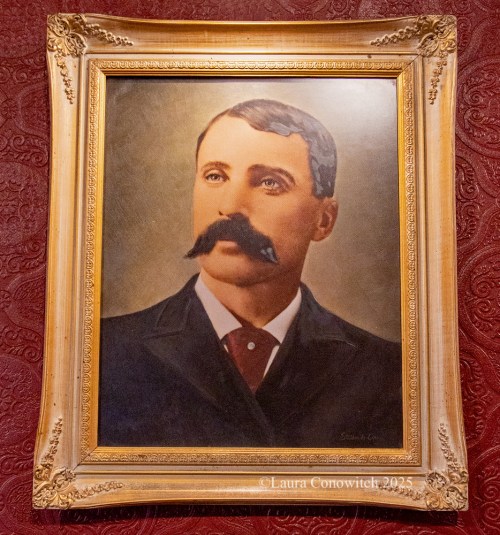
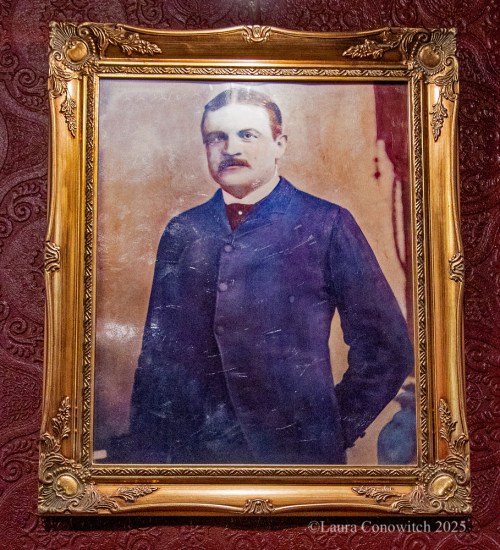
Chalkley Beeson ran the Saratoga Saloon with William Harris from 1876-1878. In 1878, they bought the Long Branch Saloon. Beeson sold his interest in the Long Branch Saloon in February 1883.

Boot Hill Museum, Dodge City, Kansas

While Beeson oversaw the entertainment, William Harris managed the gambling and liquor sales.

Boot Hill Museum, Dodge City, Kansas

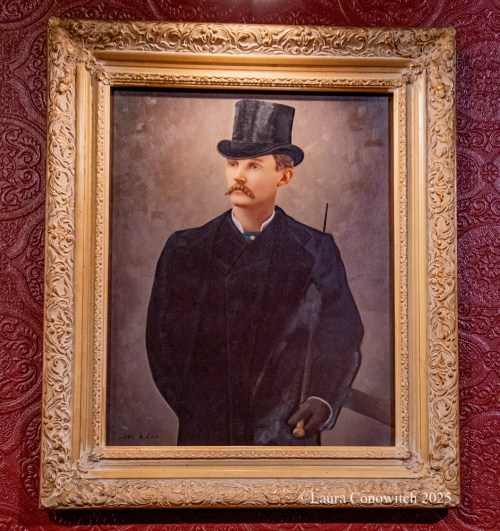
Luke Short, a small and dandified Texan with a background in gambling and gunplay arrived in Dodge City in August 1882. He bought Chalkley Beeson’s share in the Long Branch Saloon in February 1883. He hired female “entertainers” and city officials ran him out of town which resulted in the Dodge City Saloon War. Harris and Short sold the Long Branch in November 1883.

Boot Hill Museum, Dodge City, Kansas

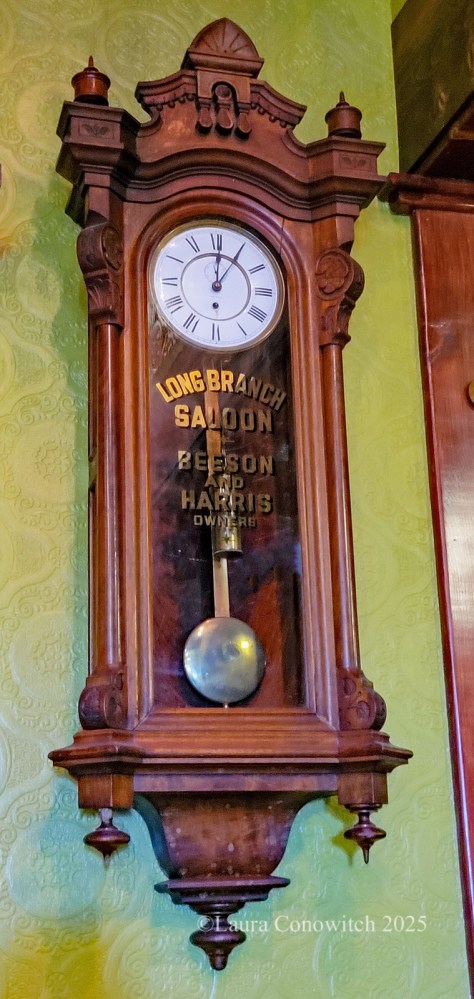
The Seth Thomas clock was purchased by Chalkley Beeson and William Harris in 1878. During the 1885 fire it was out for repairs and saved.

Boot Hill Museum, Dodge City, Kansas

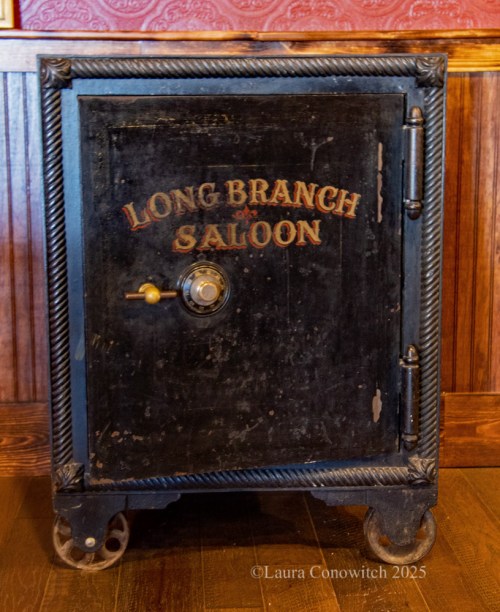
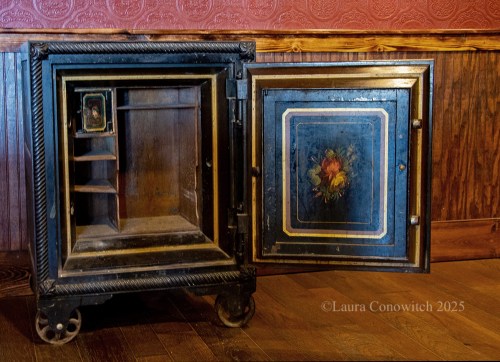
Likewise, the safe is original and survived the 1885 fire.

Boot Hill Museum, Dodge City, Kansas

Boot Hill Museum, Dodge City, Kansas

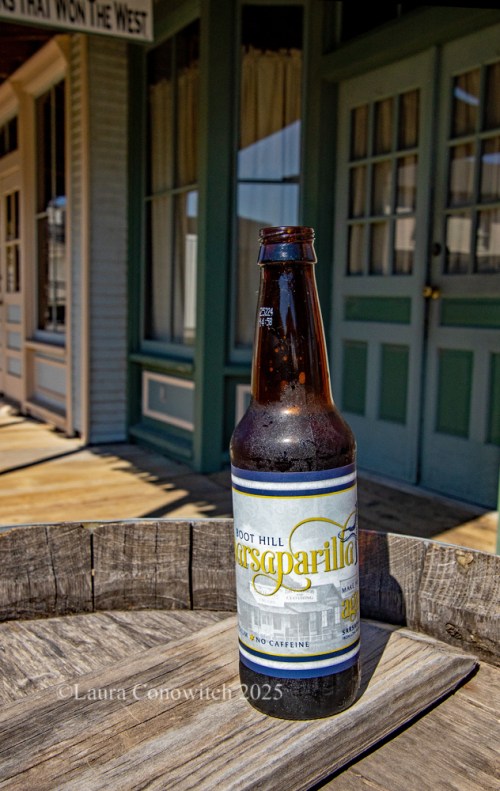
It was warm out, so the Hubster and I bought ourselves a treat from the Long Branch Saloon. We each enjoyed a sarsaparilla.

Boot Hill Museum, Dodge City, Kansas

Boot Hill Museum, Dodge City, Kansas

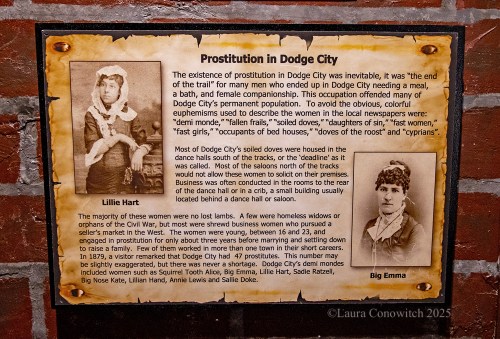
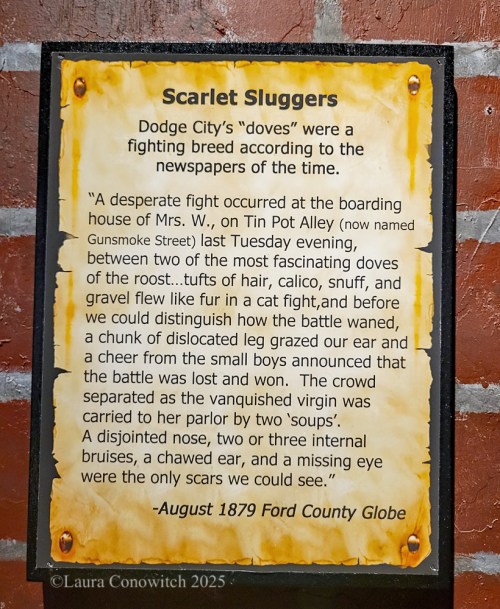
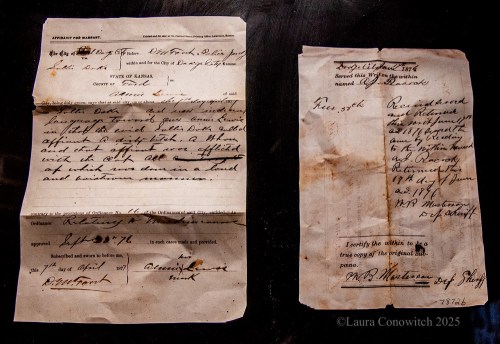
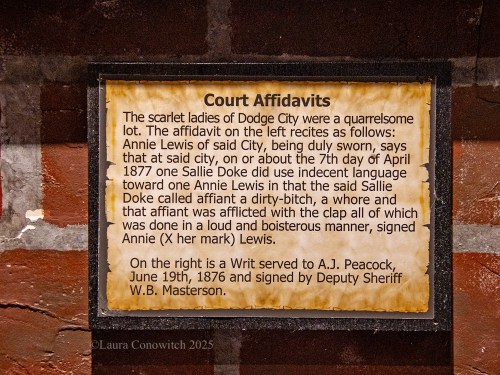
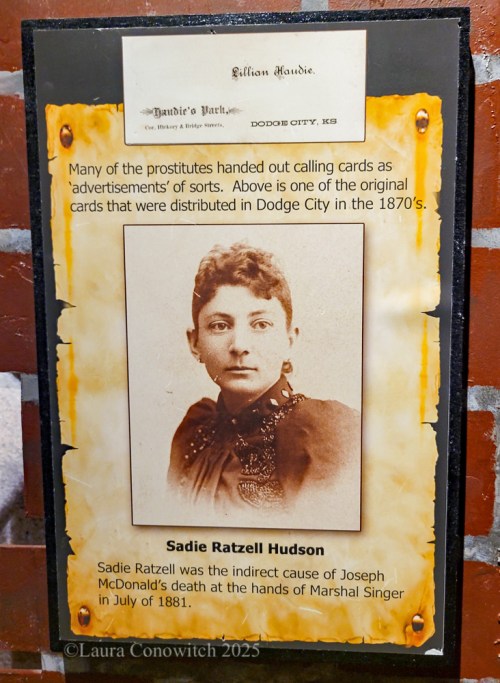
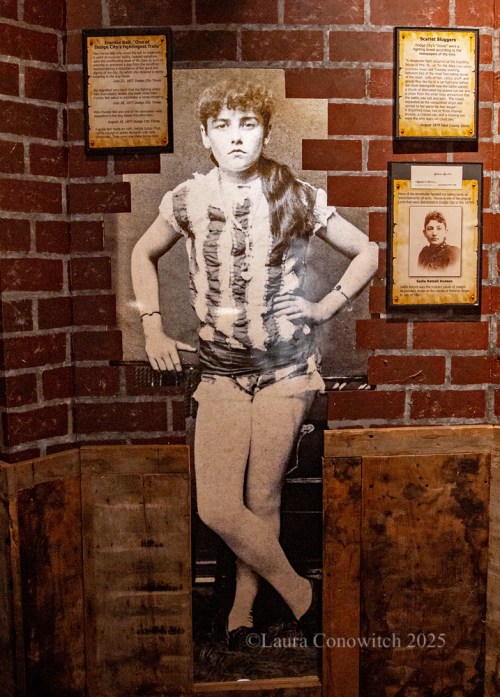
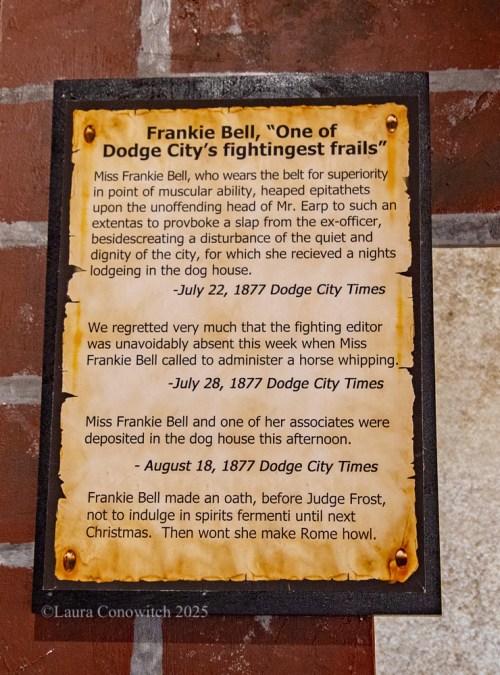
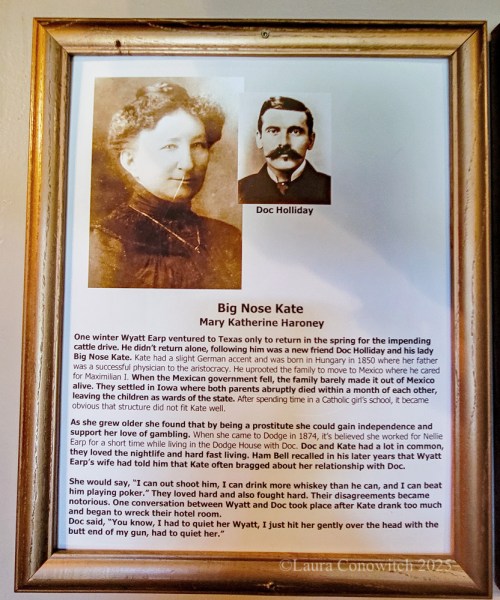
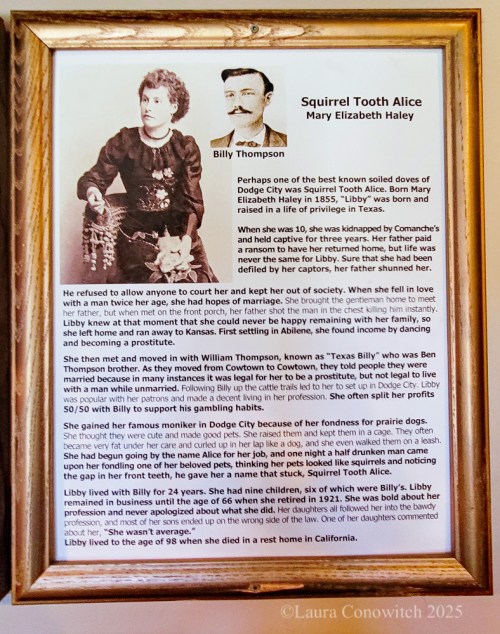
There is a difference between the saloon and dance hall girls and the soiled doves and prostitutes. I enjoyed learning about them!

Boot Hill Museum, Dodge City, Kansas

*Remember, clicking on a photo will give you a closer look and you will be able to read about these interesting women!

Boot Hill Museum, Dodge City, Kansas

Boot Hill Museum, Dodge City, Kansas

Boot Hill Museum, Dodge City, Kansas

Boot Hill Museum, Dodge City, Kansas

Boot Hill Museum, Dodge City, Kansas

Boot Hill Museum, Dodge City, Kansas

Boot Hill Museum, Dodge City, Kansas

Boot Hill Museum, Dodge City, Kansas

Boot Hill Museum, Dodge City, Kansas

There is more to see, so we continued walking on Front Street.

Boot Hill Museum, Dodge City, Kansas

See the world around you!

More Travel Posts:
Cross Country Vacation Sept./Oct. 2025-Post 21

Boot Hill Cemetery, Dodge City, Kansas-Part 2

Boot Hill Museum, Dodge City, Kansas

* Normally, clicking on a photo and then clicking on the i in the lower right corner to view full size so that you can get a better look works, however, I don’t think you can read the above photo. Since I am using the sign (taken at Boot Hill Museum) as a source, I will type out most of it for you to easily read.

Boot Hill Cemetery

“Is this the real cemetery?”…yes.

“Are there any bodies buried here?”…perhaps.

The fame of Boot Hill Cemetery has lasted more than a century. It is rooted in a brief period of Dodge City history, from 1872 to 1878. No official burial grounds existed in Dodge City at that time.

During the town’s first year, it saw nearly 30 killings; an alarming rate since the population was only about 500. Boot Hill began as a resting place for the departed who did not have enough money to be afforded the luxury of being laid to rest at Fort Dodge. Often they were stripped of their valuables and wearing apparel worth saving, then rolled in blankets and buried on Boot Hill. Few had ceremonies, none had coffins; and since most died were buried with their boots on, the cemetery gained its name “Boot Hill.” People who had friends, relatives and money were taken to Fort Dodge for burial.

In 1878, the decision was made to abandon Boot Hill and to build a new cemetery east of town. The bodies from Boot Hill were moved to the new cemetery, Prairie Grove. The Town Company sold Boot Hill to Fringer and Marshall, who divided it up and put it on the market for homes.

“The skeletons removed from the graves on Boot Hill were found to be in a fine state of preservation, and even the rude box coffins were as sound as when placed in the ground….Col. Straughn, the coroner, who removed them, says they were as fine a collection of the extinct human race as ever handled. Some were resting quietly with their boots on, while others made more pretensions to style having had their boots taken off and placed under their heads for a pillow. Only a few of them could be recognized as all the head-boards, if there ever were any, had long since wasted away, and nothing remained to denote where their bodies lay but little mounds of clay. They now are all resting side by side, like one happy family, at the lower end of Prairie Grove Cemetery….

The enchanting click of the festive revolver they no longer hear.”

January 28, 1879 – the Ford County Globe

In 1879, Herman J. Fringer sold one half of a block of land on Boot Hill to School District #1, Ford County, on which was to be built a schoolhouse. This building was located directly to your right.

According to one newspaper report, there were over 60 bodies buried on Boot Hill. In 1879, approximately 32 men and 1 woman were removed. The tough men who failed to shoot quickly enough are gone, but people of vision can stand on Boot Hill today and forget the City around them and picture the unstirring dead beneath their feet.

Boot Hill Museum, Dodge City, Kansas

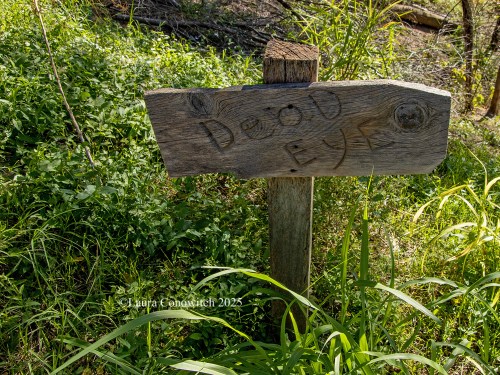
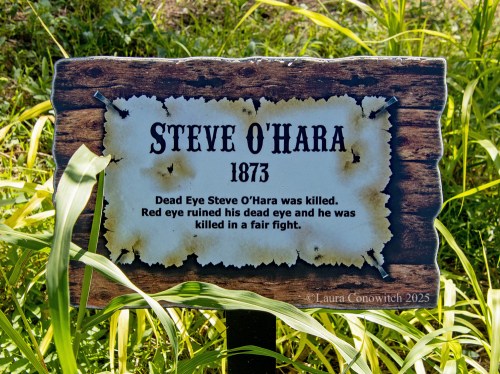
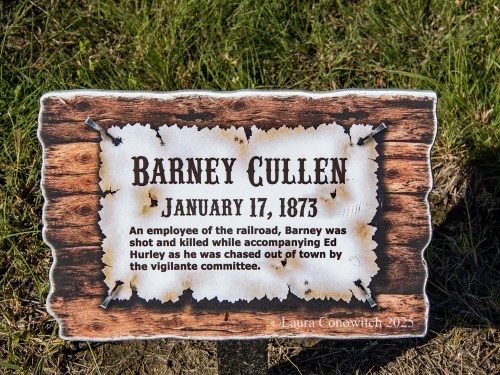
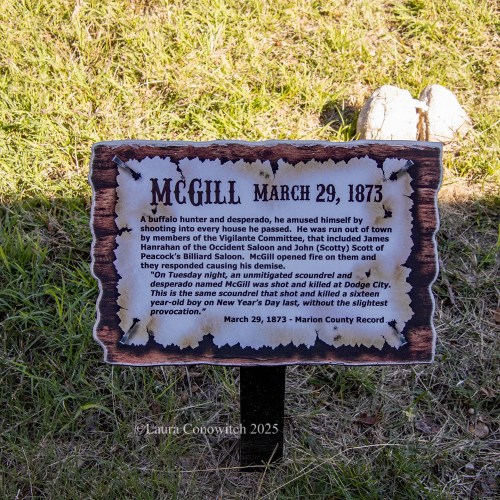
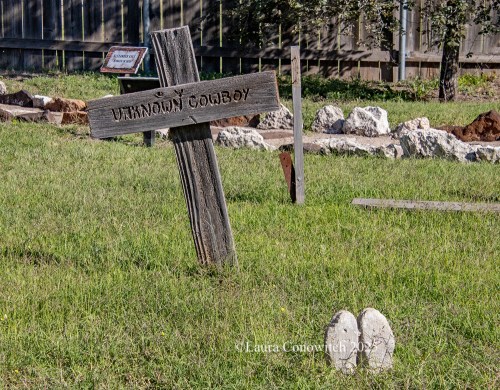
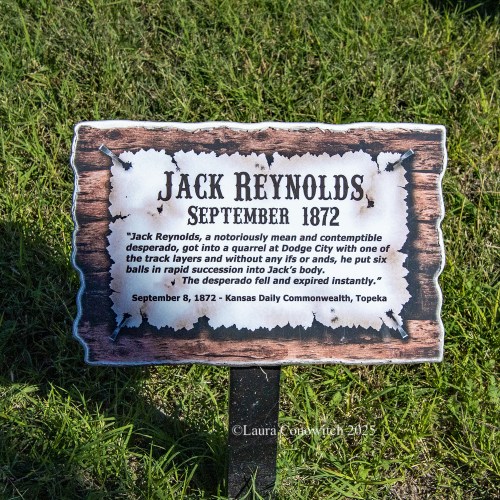
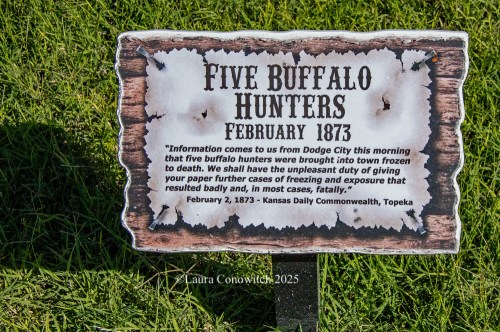
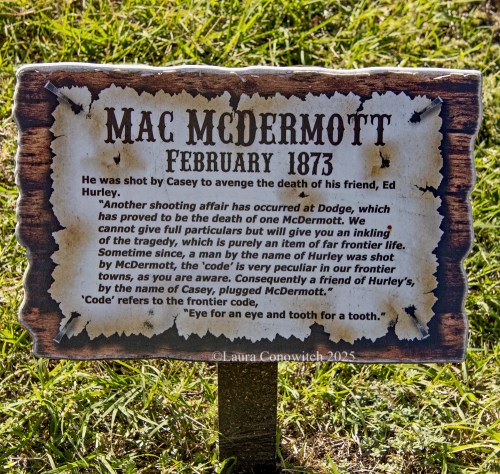
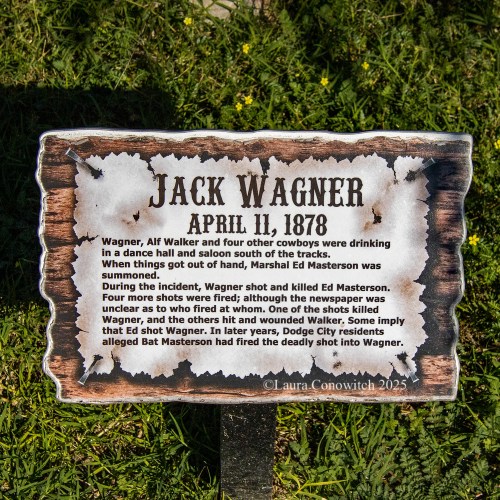
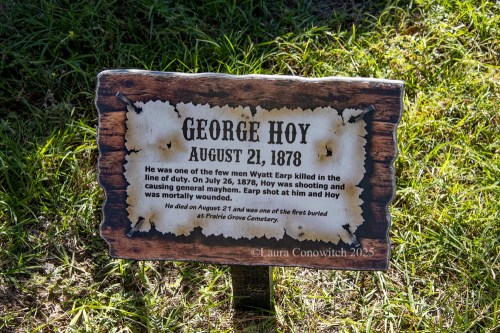
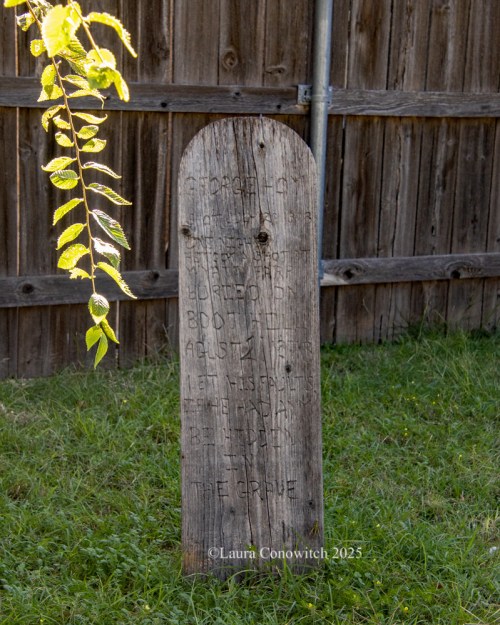
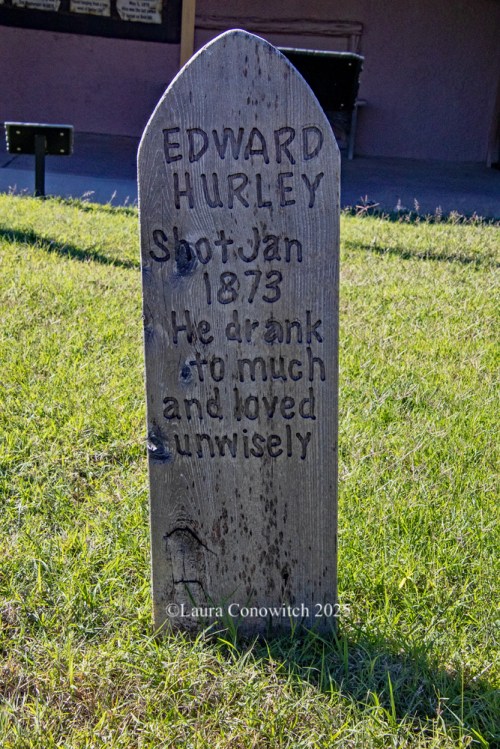
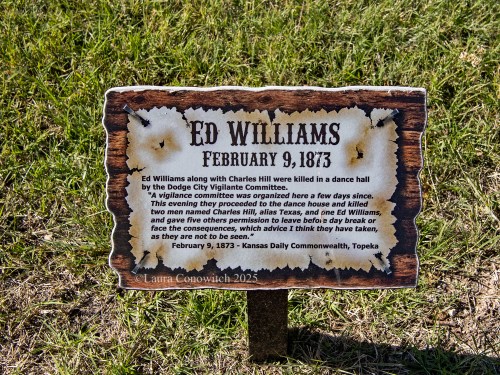
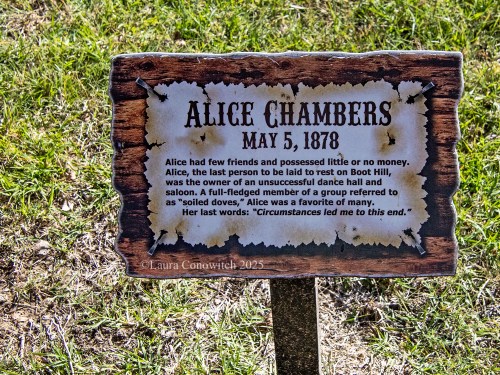
There are carved markers as well as historical plaques that share the stories of those who were buried on Boot Hill.

Boot Hill Museum, Dodge City, Kansas

Boot Hill Museum, Dodge City, Kansas

Boot Hill Museum, Dodge City, Kansas

Boot Hill Museum, Dodge City, Kansas

Boot Hill Museum, Dodge City, Kansas

Boot Hill Museum, Dodge City, Kansas

Boot Hill Museum, Dodge City, Kansas

Boot Hill Museum, Dodge City, Kansas

Boot Hill Museum, Dodge City, Kansas

Boot Hill Museum, Dodge City, Kansas

Boot Hill Museum, Dodge City, Kansas

Boot Hill Museum, Dodge City, Kansas

Boot Hill Museum, Dodge City, Kansas

Boot Hill Museum, Dodge City, Kansas

Boot Hill Museum, Dodge City, Kansas

Boot Hill Museum, Dodge City, Kansas

Boot Hill Museum, Dodge City, Kansas

Boot Hill Museum, Dodge City, Kansas

*The bodies were disinterred from Prairie Grove Cemetery and reinterred to Maple Grove Cemetery in 1889.

Boot Hill Museum, Dodge City, Kansas

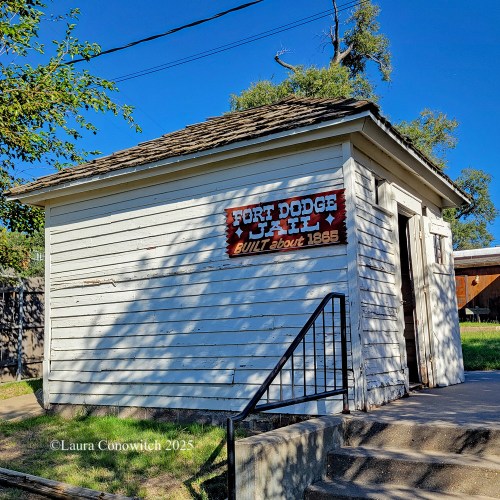
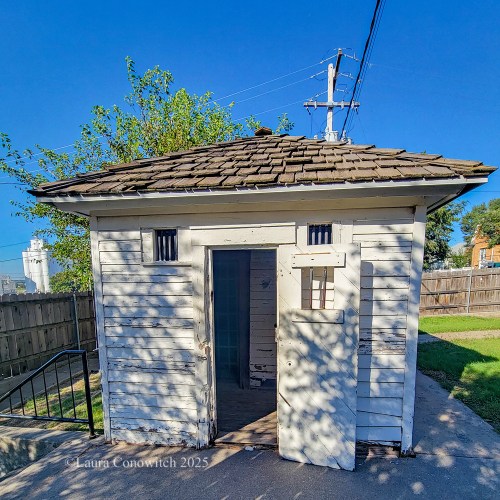
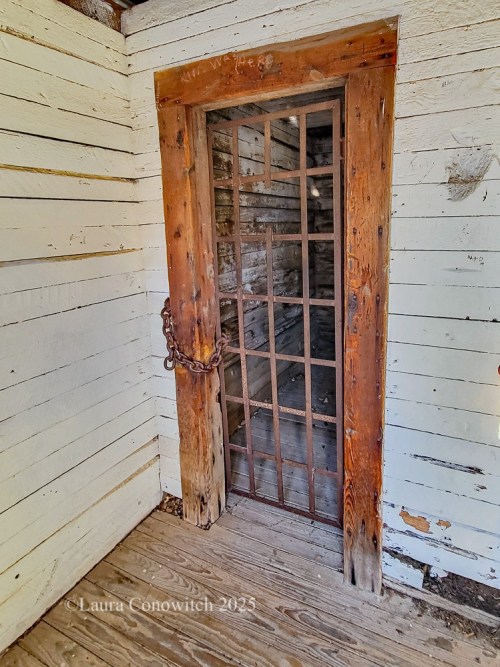
The old Fort Dodge Jail was built c. 1865 and located at Fort Dodge five miles east of Dodge City. It was a place of incarceration for petty crimes and was called a ‘guardhouse’. Soldiers were often confined in the guardhouse for weeks at a time. The jail was miserably cold in the winter, worse in the stifling heat of the summer and unequipped with any facilities.

In 1872, the Commandant of the Fort banned alcohol for all enlisted men and civilians, so it is possible that there were those who were confined for alcohol related offenses.

In 1953, the Dodge City Jaycees brought the jail from the Kansas Soldiers Home (Fort Dodge) to Boot Hill Cemetery.

Boot Hill Museum, Dodge City, Kansas

Boot Hill Museum, Dodge City, Kansas

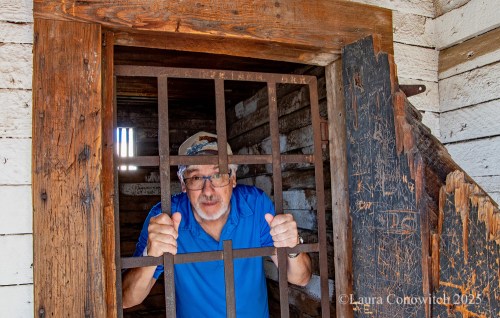
Surely, this man looks innocent. Perhaps I should let him out.

Boot Hill Museum, Dodge City, Kansas

Boot Hill Museum, Dodge City, Kansas

See the world around you!

More Travel Posts: