Tag Archives: Bat Masterson

Cross Country Vacation Sept./Oct. 2025-Post 24

Dodge City, Kansas-Part 4

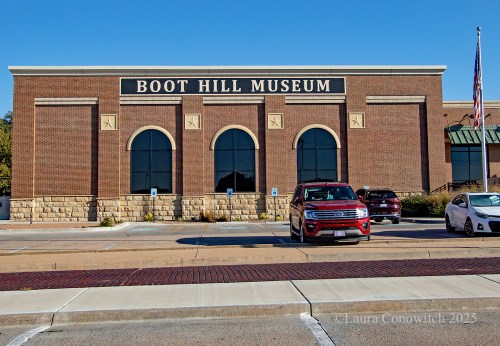
Boot Hill Museum, Dodge City, Kansas

*Clicking on a photo will give you a closer look!
Boot Hill Museum, Dodge City, Kansas

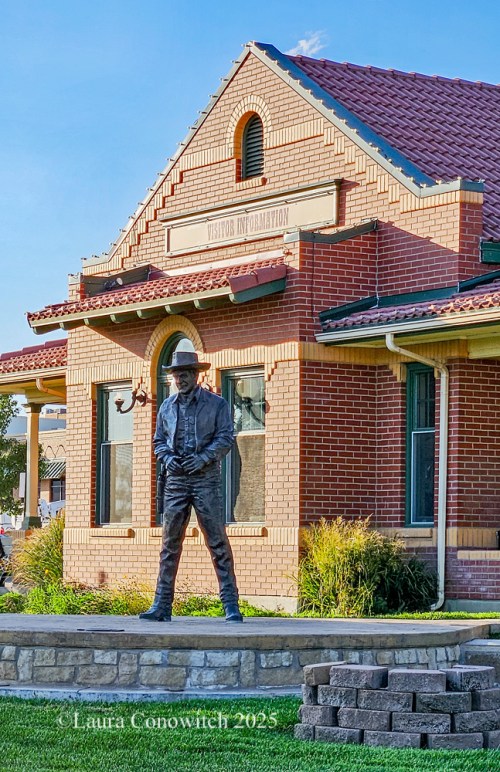
Dodge City has an Historic Dodge City Walking Tour featuring monuments and statues. The Hubster and I did not have time to take this walk, but we did see a couple of them.

Above is the life-sized bronze sculpture of James Arness character, Matt Dillon, from Gunsmoke.

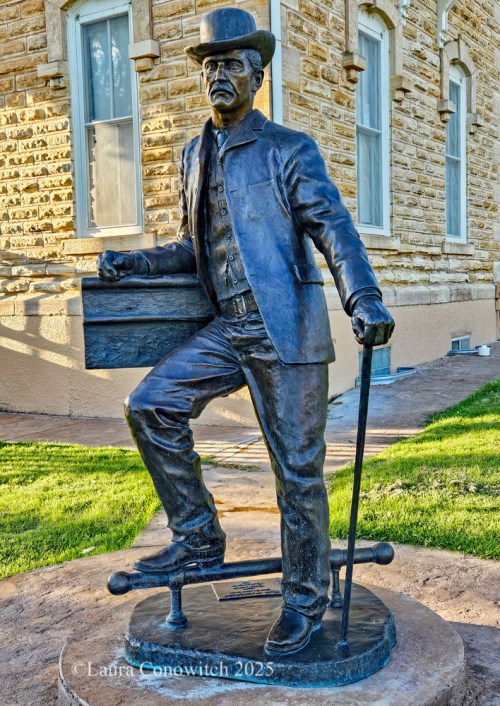
Below is the life-sized bronze sculpture of Bat Masterson.
Boot Hill Museum, Dodge City, Kansas

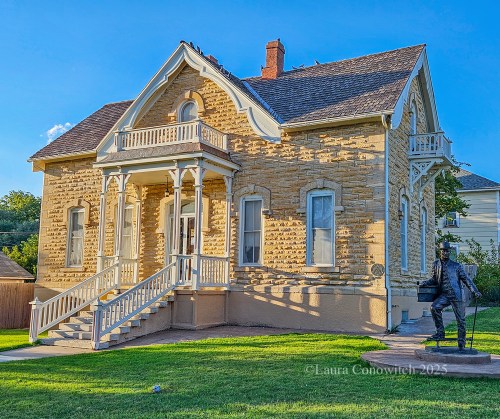
The Mueller-Schmidt House Museum
Listed on the National Register of Historic Places, 72000499

Built to be one of the most splendid homes in Dodge City, Ford County’s “Home of Stone” is the oldest house still on its original site and the only home in the city made from limestone.

The “Home of Stone” was built in 1881 by John Mueller, the first bootmaker in old Dodge City, and a leading cattleman, hotel and bar owner. It was sold in 1890 to pioneer blacksmith Adam Schmidt. Two of Adam and Elizabeth Schmidt’s children lived in the house until 1960. Ford County purchased the house in 1965.

Original furniture from the Mueller and Schmidt families is featured, along with artifacts from the pioneers of Dodge City, including Robert M. Wright, Charles Rath, Bat Masterson, George M. Hoover, Wyatt Earp & Ham Bell.
Boot Hill Museum, Dodge City, Kansas

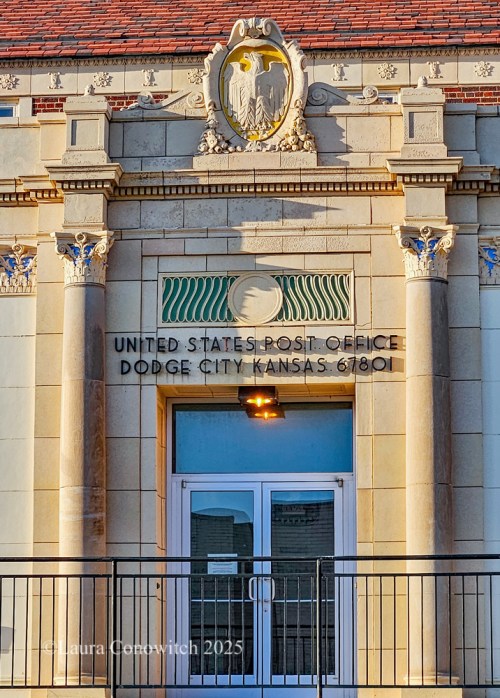
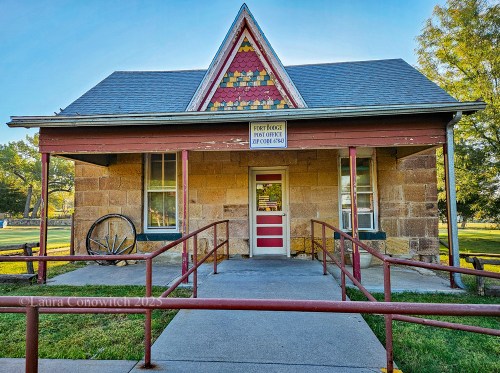
Dodge City Post Office

Boot Hill Museum, Dodge City, Kansas

Boot Hill Museum, Dodge City, Kansas

St. Cornelius’ Episcopal Church is the oldest church building in continuous use in Dodge City. It is situated on what, 100 years ago, was known as “Holy Hill”.
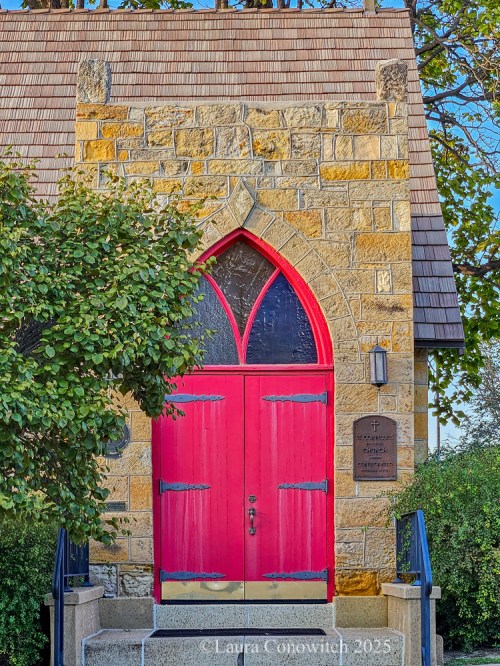
Boot Hill Museum, Dodge City, Kansas

Founded in 1865, Fort Dodge is the oldest permanent settlement in this area of Kansas.

Fort Dodge was a pivotal fort during the Indian campaigns of 1868-69 and 1874-75. The Wet and Dry Routes of the Santa Fe Trail met here; the Fort Hays-Fort Dodge Trail ended here, and the Fort-Dodge-Fort Supply Trail began here. Millions of pounds of armaments and supplies were shipped south in trains of as many as 270 wagons.

It not only protected those traveling on the Santa Fe Trail, but provided supplies and a resting place for traders and buffalo hunters. The first buildings were sod and adobe, and some troops lived in dugouts. Once lumber arrived, wooden buildings were erected. At its greatest capacity, the fort boasted four companies of infantry.
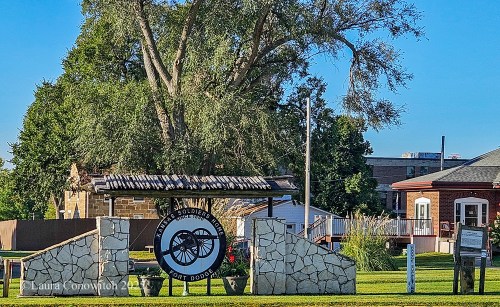
Boot Hill Museum, Dodge City, Kansas

The fort was abandoned in 1882. Eight years later, Fort Dodge was deeded to the state for use as the Kansas Soldiers Home. Today, it still serves this purpose as a retirement community and nursing facility for retired Kansas veterans. A historic library and self-guided walking tour tell the fort’s history to visitors. Many of the original buildings are still in use, and not open to the public.

Fort Dodge Museum and Library – Army Quartermaster Building 1867
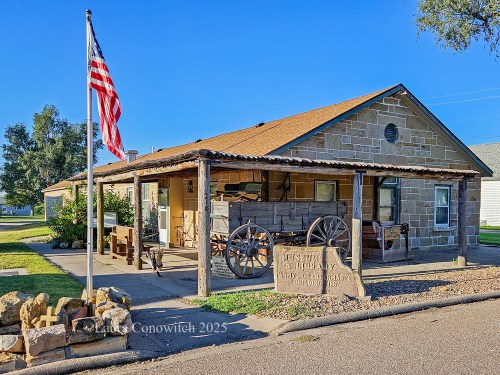
Boot Hill Museum, Dodge City, Kansas

This building, and a few surrounding, served as storehouses and offices for post headquarters and for the quartermaster. The bakery had two ovens and could bake 500 rations of bread each day.

Major Henry Douglas, in command, and Lieutenant George A. Hesselberger, quartermaster, were severely reprimanded by General R. B. Marcy for reckless extravagance in constructing buildings grand enough ‘for the national capitol’.
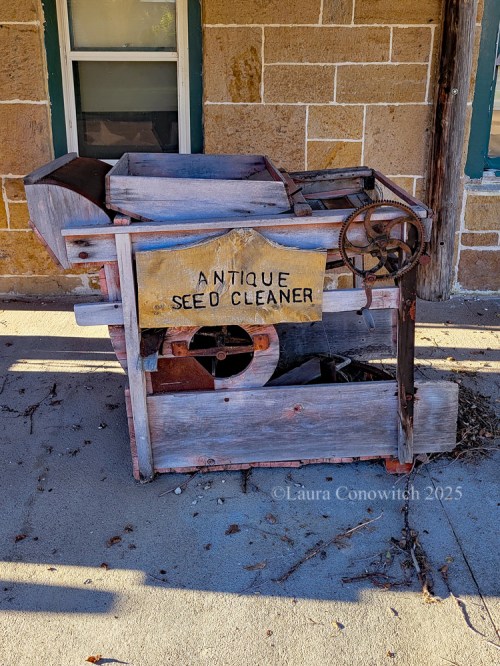
Boot Hill Museum, Dodge City, Kansas

At Fort Dodge we secured a few supplies such as fresh milk and baker’s bread-sweet and delicious. The water was good and refreshing.
Mrs. Frank D. Baldwin
September, 1867
Boot Hill Museum, Dodge City, Kansas

Boot Hill Museum, Dodge City, Kansas

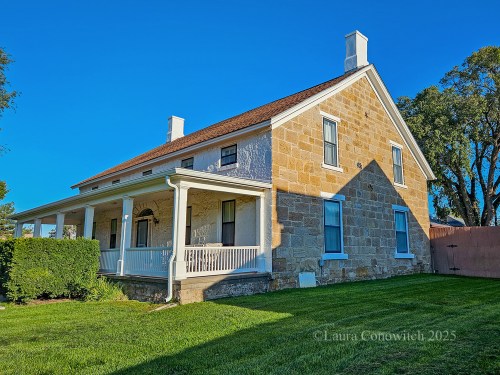
The commanding officer’s quarters was one of the last stone structures to be built at Fort Dodge. In the years before it was completed the officer and his family lived near the river in a four-room dugout, three feet below ground and four feet above.

‘The houses are more picturesque than elegant. We are living somewhat in the manner of prairie dogs. Mrs. Henry T. Douglas; February 3, 1867.’

This one-and-a-half story building contains a spacious center hall with two large rooms on each side. The attached kitchen forms an ell. The lower level was heated with fireplaces. The upper story has four rooms with windows which may have served as gun ports and can be seen just above the porch line. There is a servants’ quarters above the kitchen.

Boot Hill Museum, Dodge City, Kansas

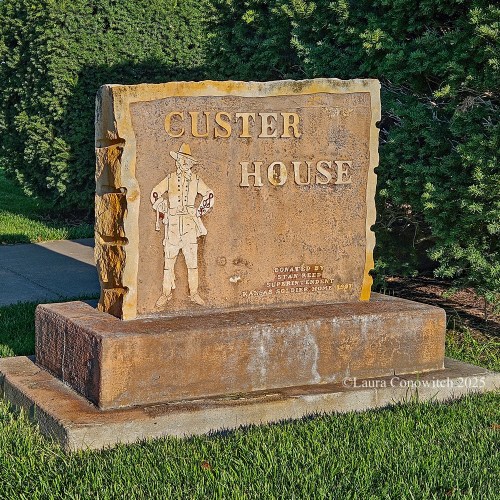
The stone building has been called Custer House for many years. Although Brevet Major General George A. Custer never was stationed at Fort Dodge he did lead the Seventh Cavalry from here to the Battle of the Washita.
Boot Hill Museum, Dodge City, Kansas

Boot Hill Museum, Dodge City, Kansas

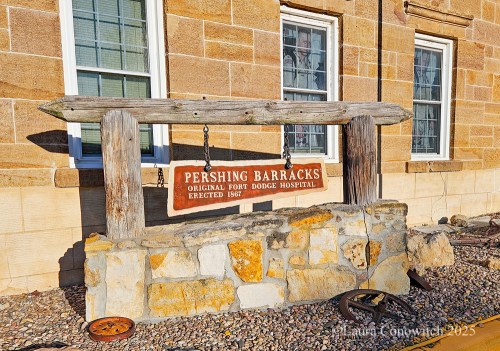
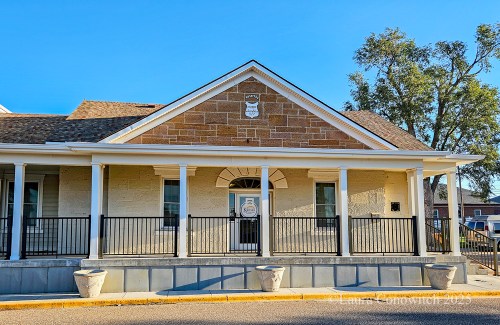
The first post hospital was built in 1865 of sod. Poor drainage, damp conditions, and rodent infestation made the building unsatisfactory. This one-story stone was built and provided a ward of twelve beds, a dispensary, and other facilities. It was heated by stoves and lighted with candles. African American troops were cared for in a separate five bed facility.

At first, the building was a hospital, and then a barracks. Now, it houses the Commission on Veterans Affairs.
Boot Hill Museum, Dodge City, Kansas

Diarrhea was the most common complaint, but ailments from abscesses to wounds were treated. Cholera swept through the Kansas forts carried by soldiers marching from Missouri to New Mexico. Thirty cases occurred at Fort Dodge in July of 1867. Twenty people died including Mrs. Isadore Bowman Douglas, wife of the commanding officer. Major Henry Douglas and their baby son also were infected but recovered.
Boot Hill Museum, Dodge City, Kansas

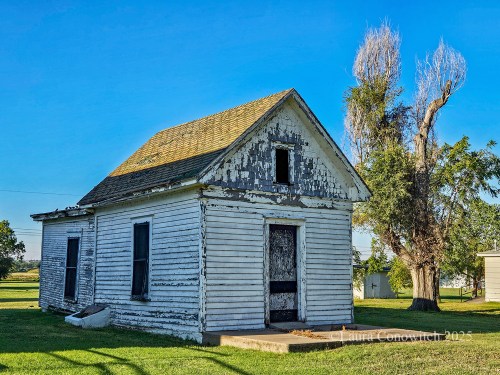
The Dead House (morgue) was used as temporary storage for bodies, especially during the winter months when the ground was frozen. This one has been relocated just west of the hospital.

Boot Hill Museum, Dodge City, Kansas

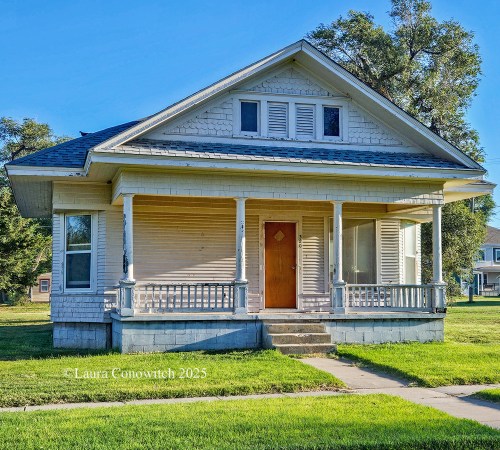
The Junior Officers’ Quarters, built ca. 1870, was an officers’ quarters and its twin served as the post for the quartermaster and family.

Boot Hill Museum, Dodge City, Kansas

Boot Hill Museum, Dodge City, Kansas

Boot Hill Museum, Dodge City, Kansas

Boot Hill Museum, Dodge City, Kansas

Boot Hill Museum, Dodge City, Kansas

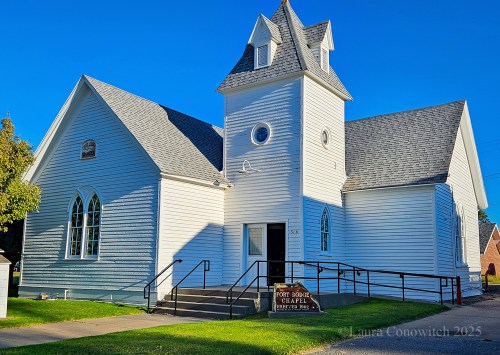
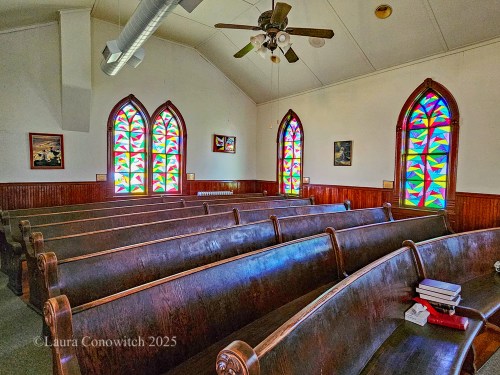
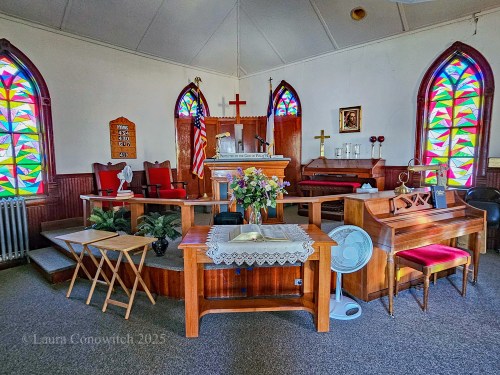
The Fort Dodge Chapel was built in 1902. It continues to be an active place of worship.
Boot Hill Museum, Dodge City, Kansas

Boot Hill Museum, Dodge City, Kansas

See the world around you!

More Travel Posts:
Cross Country Vacation Sept./Oct. 2025-Post 20

Boot Hill Museum, Dodge City, Kansas-Part 1

The Hubster and I spent all day at Boot Hill Museum and took hundreds of photos. It has been a big job sorting through said hundreds of photos.

Big!

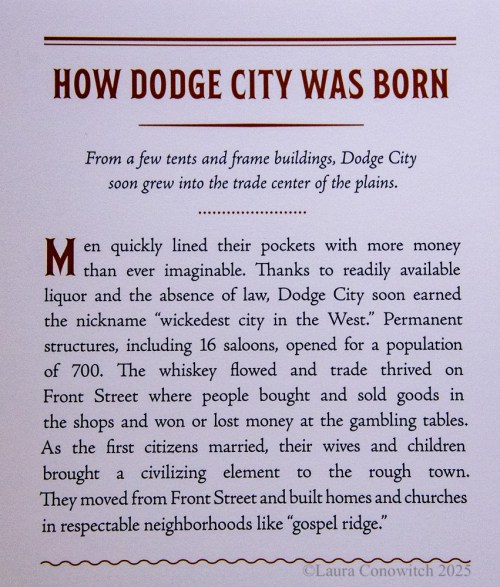
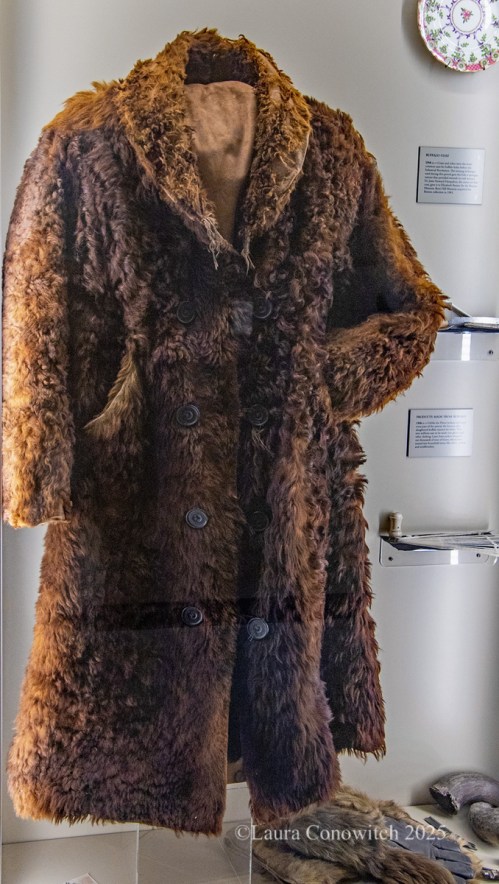
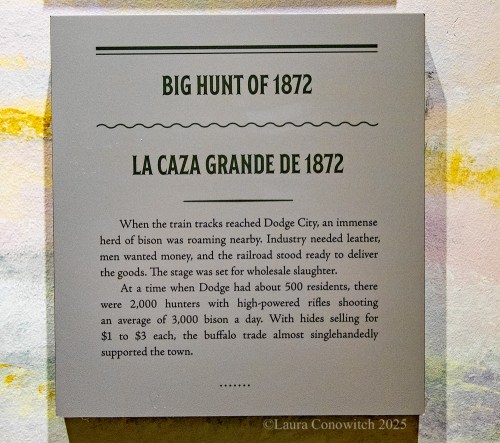
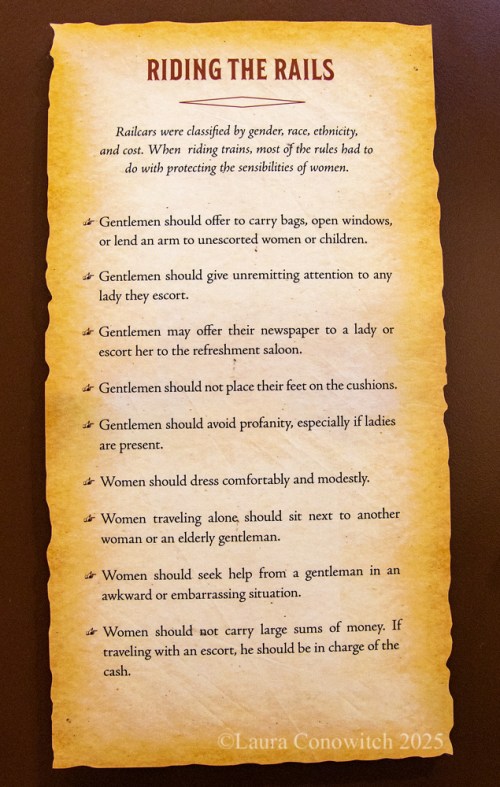
Anyway, Dodge City is rich in history and the museum site reflects that. It is very thorough and, if you are a sign reader (I am), you can learn a lot of human interest stories and western history from stage coach to rail travel and buffalo hunting (annihilation) to cattle drives and a lawless town to a respectable city.

The museum is open 362 days a year, but plan your trip during the summer months if you want historical interpreters, exciting gunfights, and other re-enactments. The Hubster and I visited in the off-season so we experienced none of that.

There is a lot to explore here!

Boot Hill Museum, Dodge City, Kansas

*Clicking on a photo will give you a closer look!

Boot Hill Museum, Dodge City, Kansas

Boot Hill Museum, Dodge City, Kansas

Boot Hill Museum, Dodge City, Kansas

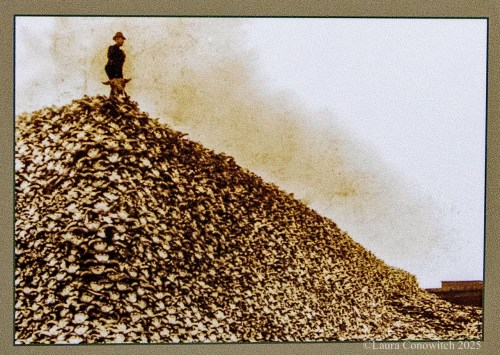
Bone pickers earned $4 to $8 a ton at a time when a laborer might earn $9 a week. It was easier than hunting buffalo, and it was something homesteaders could do to make extra money. Piles of skeletons 15 feet high stretched for miles along the tracks outside of town. Some estimate that 8,000,000 pounds of bones were shipped out of Dodge City by 1883.

Boot Hill Museum, Dodge City, Kansas

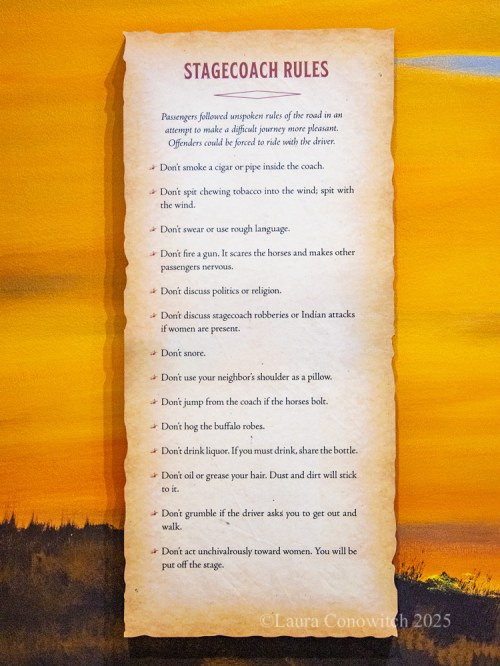
Stagecoach traveling was dirty, uncomfortable, and hazardous, not only due to road and weather conditions, but due to robberies and Indian attacks as well.

Boot Hill Museum, Dodge City, Kansas

* Click on these photos and then click on the i in the lower right corner to view full size so that you can read these rules easier if you would like.

Boot Hill Museum, Dodge City, Kansas

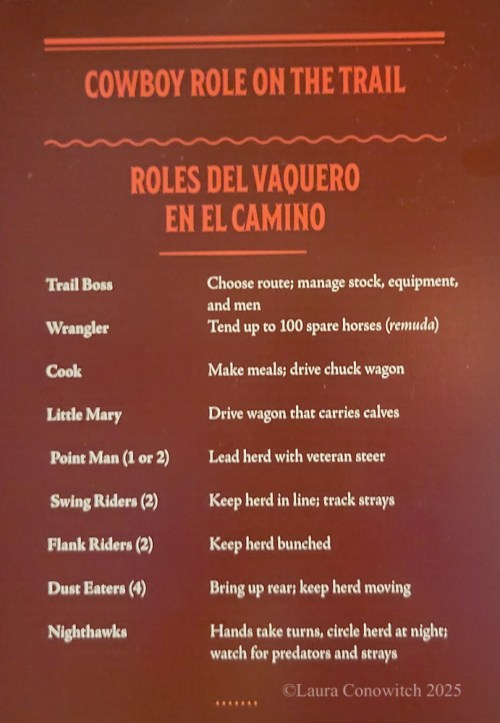
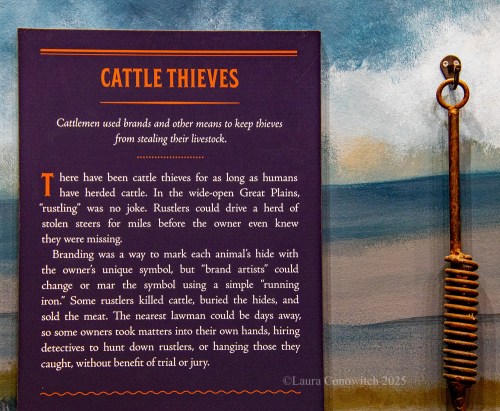
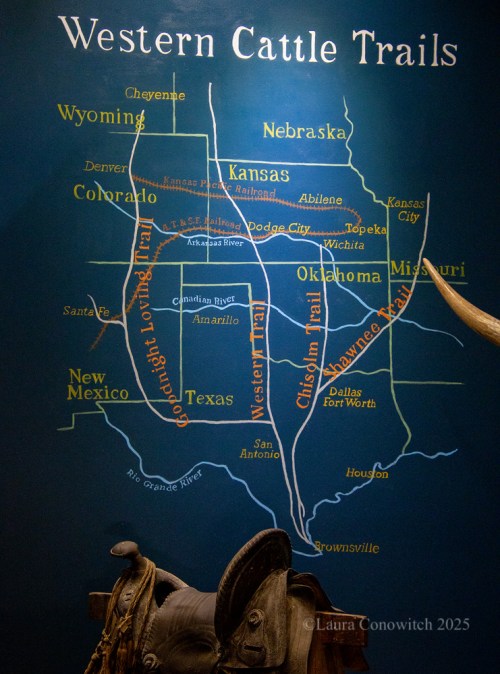
Cattle drives began in the spring, traveling 8 to 20 miles a day, for 2 to 5 months. A drive cost an owner $500 a month, but the cattle could not be driven in a hurry, or they would lose weight and sell for less at market.

The cowboys were poorly paid (about $25 to $40 a month) and worked around the clock, guarding against predators, rustlers, and Indians, as well as rounding up strays and stopping stampedes. They slept in their clothes on the ground and ate beans, biscuits, bacon, and drank coffee.

Boot Hill Museum, Dodge City, Kansas

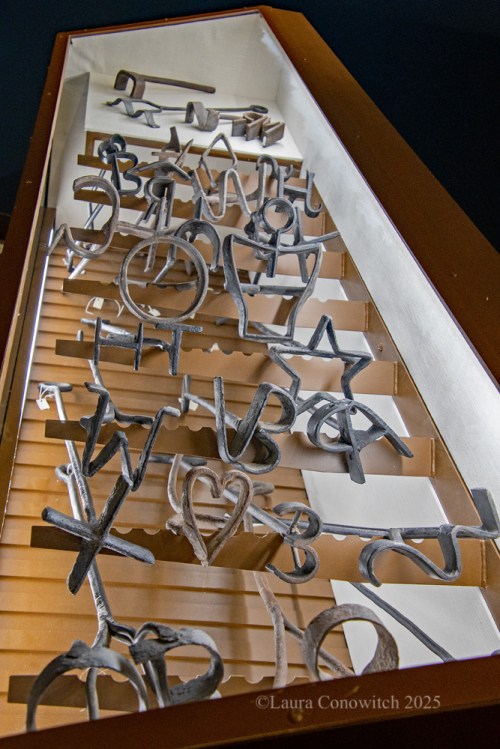
Branding irons:

Boot Hill Museum, Dodge City, Kansas

Boot Hill Museum, Dodge City, Kansas

Boot Hill Museum, Dodge City, Kansas

Boot Hill Museum, Dodge City, Kansas

Boot Hill Museum, Dodge City, Kansas

Boot Hill Museum, Dodge City, Kansas

Boot Hill Museum, Dodge City, Kansas

Boot Hill Museum, Dodge City, Kansas

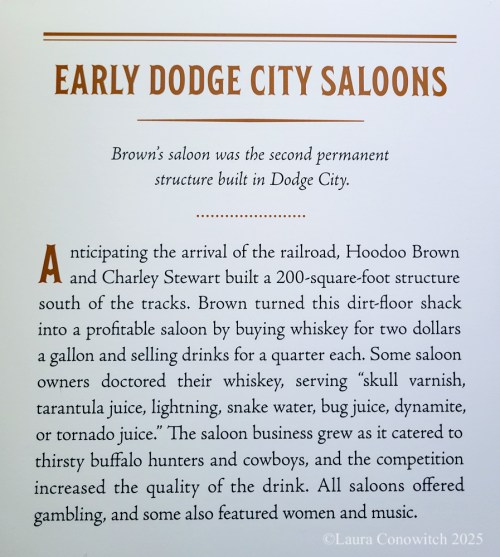
Saloon owner, Hoodoo Brown, also known as Hyman G. Neill, led the Dodge City Gang in Las Vegas, New Mexico, in 1879 and early 1880, a gang that participated in several stagecoach and train robberies and organized cattle rustling. It was said to have been responsible for multiple murders and lynchings.

Boot Hill Museum, Dodge City, Kansas

Boot Hill Museum, Dodge City, Kansas

Boot Hill Museum, Dodge City, Kansas

Boot Hill Museum, Dodge City, Kansas

Alonzo B. Webster, a Civil War veteran, moved to Dodge City in 1872. He ran a dry goods store on First Street and owned the Stock Exchange Saloon and later the Palace Drug Store with Orlando “Brick” Bond.

In 1881, Webster won his first of four elections for mayor. He issued rules for lawmen, city police had to wear a badge, stay sober, and not leave town without permission. Webster knew how to use a gun and once faced down Bat Masterson.

He secured a waterworks and sewer system for Dodge.

Boot Hill Museum, Dodge City, Kansas

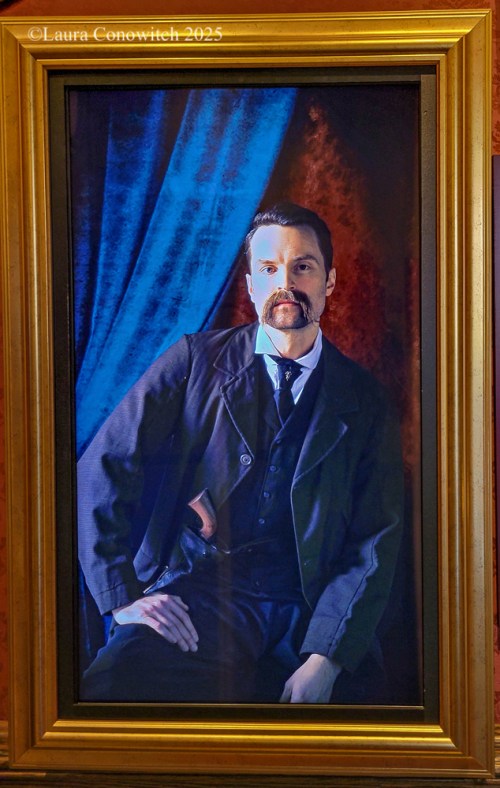
Wyatt Earp came to Dodge City in 1876. He served as deputy city marshal, and deputy sheriff with his brother Morgan and friend Bat Masterson, and assistant city marshal. Wyatt and Bat rode in the posse that chased down Dora Hand‘s killer.

Boot Hill Museum, Dodge City, Kansas

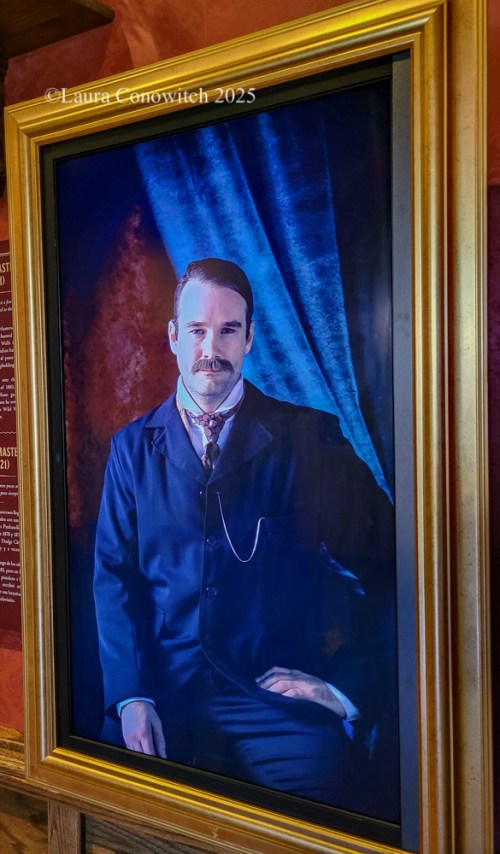
Lawman and gambler William “Bat” Masterson arrived in Kansas in 1872. He hunted buffalo with his brothers and fought at Adobe Walls in the Texas Panhandle during the famous 1874 Indian battle. Between 1876 and 1879, Bat served in several posts as a Dodge City lawman and deputy marshal. He was in and out of Dodge over the years, and returned during the “saloon war” of 1883.

Boot Hill Museum, Dodge City, Kansas

Chalkley “Chalk” Beeson moved to Dodge City in 1876. He was a cowboy, historian, and avid collector. He saw the value in remembering Dodge City through artifacts. Beeson was one of the early owners of the Long Branch Saloon and the Saratoga Saloon. He served as Ford County Sheriff from1892 to 1896, was a state legislator and ranched near Dodge City. Beeson was also the founder of Dodge City’s beloved Cowboy Band which performed at the inauguration of U.S. President Benjamin Harrison, in Washington, D.C. on March 4, 1889. He was well beloved, and the town shut down for his funeral.

Boot Hill Museum, Dodge City, Kansas

Boot Hill Museum, Dodge City, Kansas

Boot Hill Museum, Dodge City, Kansas

Boot Hill Museum, Dodge City, Kansas

See the world around you!

More Travel Posts: