
Bald Point State Park, Florida
Bald Point State Park is located on Alligator Point where the Ochlockonee Bay meets Apalachee Bay. The Hubster and I have never been to Florida, much less the gulf coast, and we were looking for a place to stretch our legs. What a treat this place turned out to be!
The coastal marshes, pine flat woods, and oak thickets support a diverse biological community that makes this park perfect for birding and viewing wildlife. View migrations of birds and butterflies in the fall into winter. This park offers sunbathing, fishing and hiking and facilities include a fishing dock and picnic pavilions.

*Clicking on a photo will give you a closer look!
Pavement and boardwalks make for easy access, including wheelchairs, to white sand beaches and a marsh overlook. Public restrooms are available.

As you can see, on this gorgeous late September day, the Hubster and I nearly had the place to ourselves.
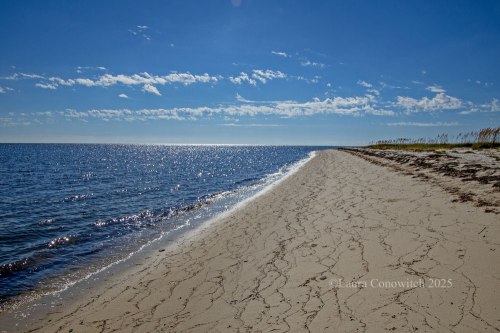
We didn’t see sea turtles, but we were refreshed and rewarded with a peaceful panorama. The sea oats fluttering in the ocean breeze were lovely.


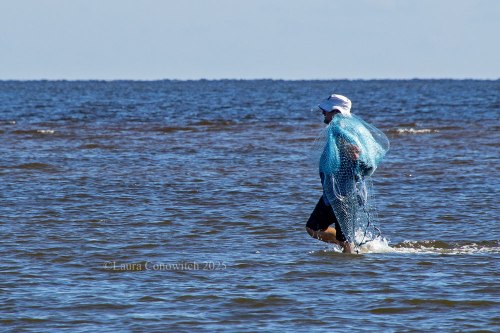
It was fun watching this fisherman casting his net.
We had never seen this sea creature before (unfortunately it had met its demise), and the fisherman explained that it was a horseshoe crab. Did you know that these creatures are related to scorpions and spiders rather than crabs?! They have 10 legs and 9 eyes! They don’t reach adulthood until they are about 10 years old, and they can live to be about 20 years old.

We learned that with the outbreak of World War II, soldiers from Camp Gordon Johnston near Carrabelle practiced beach training here. In 1942, amphibious warfare training centers were hurried into construction. The Amphibious Training Center (ATC) camp covered over 100,000 acres of remote training area and varied beachfronts and sand bluffs. The US Army 4th Infantry Division that trained at Camp Gordon Johnston led the landing at Normandy.
In addition to the training function, German and Italian POWs were moved to this site in March 1944. Camp Gordon Johnston later became the second largest POW base camp in the state with branch camps at Telogia, Dale Mabry Field and Eglin Field. Prisoners housed at this site principally performed work in the military camp.

Did you know that a Gulf Fritillary butterfly has a chemical defense mechanism in which it releases odorous chemicals in response to predator sightings? Common predators learn to avoid this species. I wonder if this is anything like the skunks in my backyard!

I really wanted, but not wanted, to see an alligator on this trip.
Never happened.

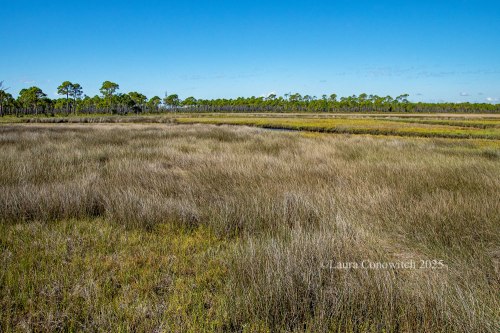
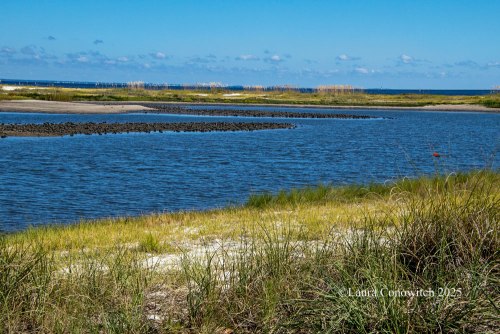
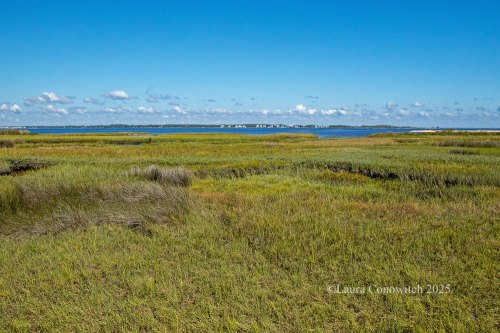
We strolled on the boardwalk over the tidal marshes and creeks.
The ground ‘moving’ caught my eye and, upon closer inspection, the receding tide exposed hundreds of fiddler crabs! I think these are Leptuca pugilators, if I can believe Google, and are another creature that I don’t see back home.

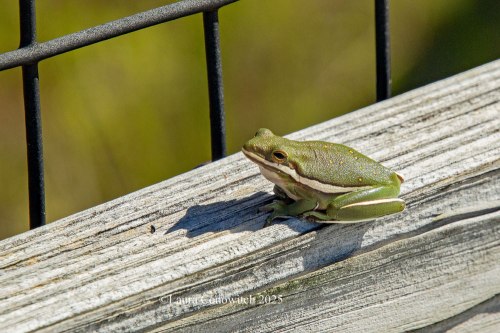
Another critter I met was the American green tree frog. I have lots of his frog cousins back home and it was a pleasure to meet this little guy. If you want to know what he sounds like, then click here.
See the world around you!
More Travel Posts:



 LC's Cottage