
Boot Hill Cemetery, Dodge City, Kansas-Part 2

* Normally, clicking on a photo and then clicking on the i in the lower right corner to view full size so that you can get a better look works, however, I don’t think you can read the above photo. Since I am using the sign (taken at Boot Hill Museum) as a source, I will type out most of it for you to easily read.
Boot Hill Cemetery
“Is this the real cemetery?”…yes.
“Are there any bodies buried here?”…perhaps.
The fame of Boot Hill Cemetery has lasted more than a century. It is rooted in a brief period of Dodge City history, from 1872 to 1878. No official burial grounds existed in Dodge City at that time.
During the town’s first year, it saw nearly 30 killings; an alarming rate since the population was only about 500. Boot Hill began as a resting place for the departed who did not have enough money to be afforded the luxury of being laid to rest at Fort Dodge. Often they were stripped of their valuables and wearing apparel worth saving, then rolled in blankets and buried on Boot Hill. Few had ceremonies, none had coffins; and since most died were buried with their boots on, the cemetery gained its name “Boot Hill.” People who had friends, relatives and money were taken to Fort Dodge for burial.
In 1878, the decision was made to abandon Boot Hill and to build a new cemetery east of town. The bodies from Boot Hill were moved to the new cemetery, Prairie Grove. The Town Company sold Boot Hill to Fringer and Marshall, who divided it up and put it on the market for homes.
“The skeletons removed from the graves on Boot Hill were found to be in a fine state of preservation, and even the rude box coffins were as sound as when placed in the ground….Col. Straughn, the coroner, who removed them, says they were as fine a collection of the extinct human race as ever handled. Some were resting quietly with their boots on, while others made more pretensions to style having had their boots taken off and placed under their heads for a pillow. Only a few of them could be recognized as all the head-boards, if there ever were any, had long since wasted away, and nothing remained to denote where their bodies lay but little mounds of clay. They now are all resting side by side, like one happy family, at the lower end of Prairie Grove Cemetery….
The enchanting click of the festive revolver they no longer hear.”
January 28, 1879 – the Ford County Globe
In 1879, Herman J. Fringer sold one half of a block of land on Boot Hill to School District #1, Ford County, on which was to be built a schoolhouse. This building was located directly to your right.
According to one newspaper report, there were over 60 bodies buried on Boot Hill. In 1879, approximately 32 men and 1 woman were removed. The tough men who failed to shoot quickly enough are gone, but people of vision can stand on Boot Hill today and forget the City around them and picture the unstirring dead beneath their feet.
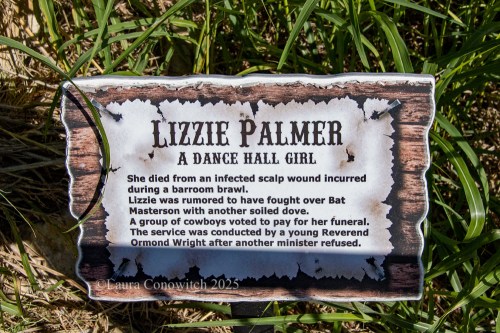
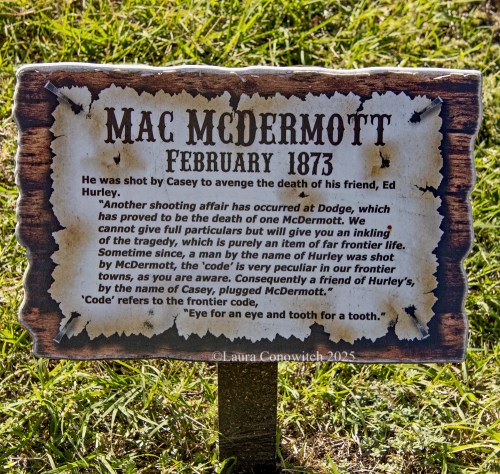
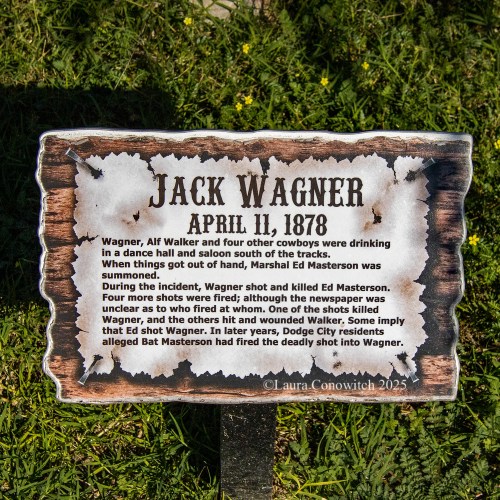
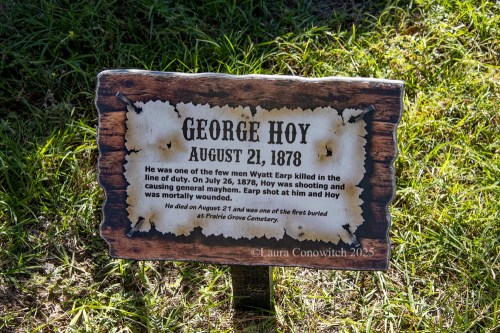
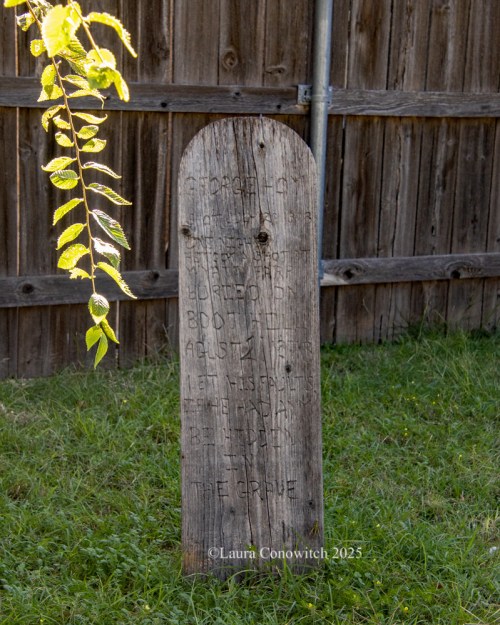
There are carved markers as well as historical plaques that share the stories of those who were buried on Boot Hill.
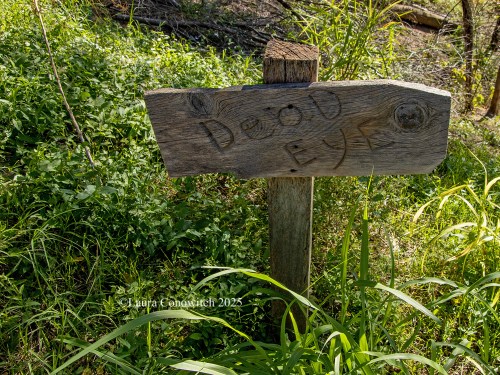
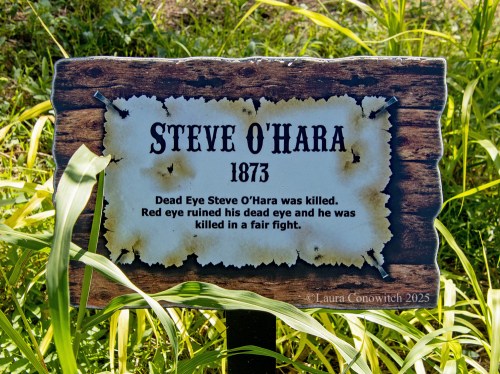

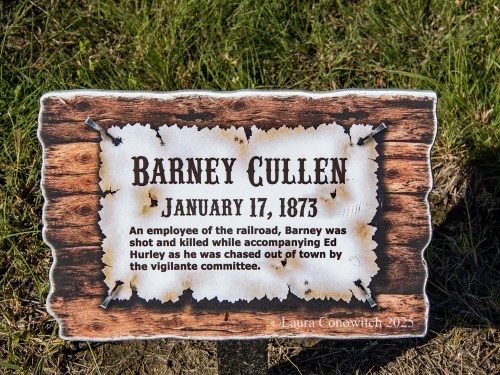
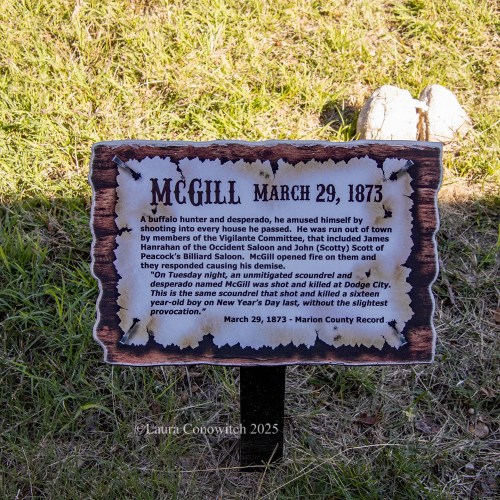


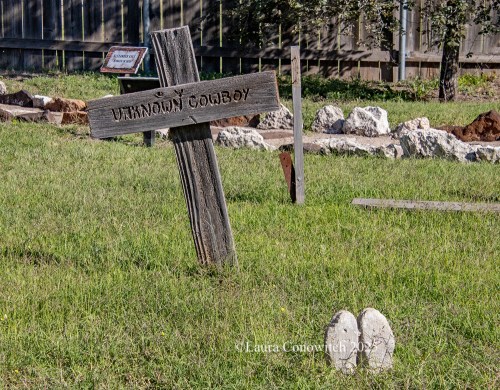
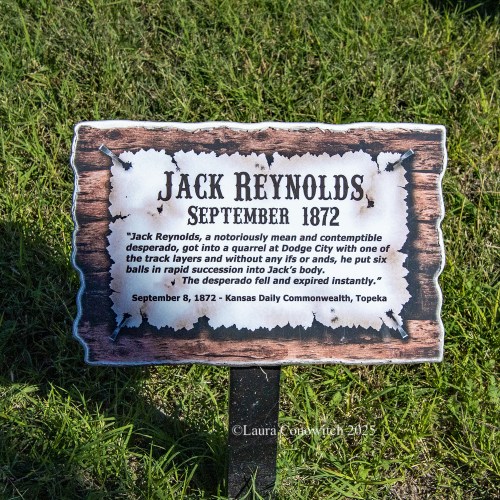
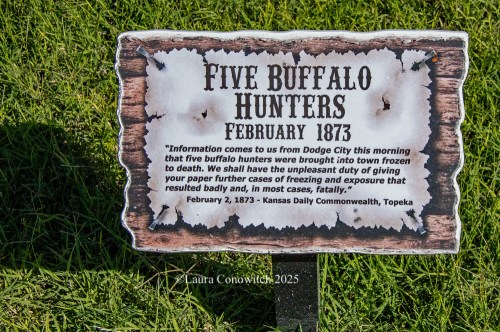

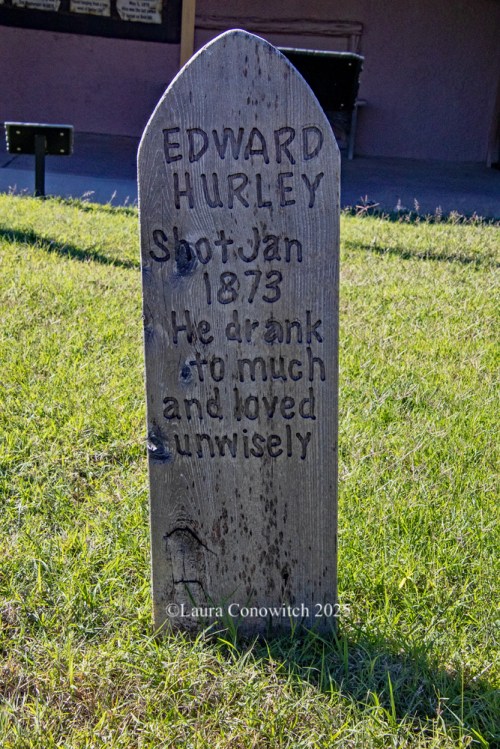
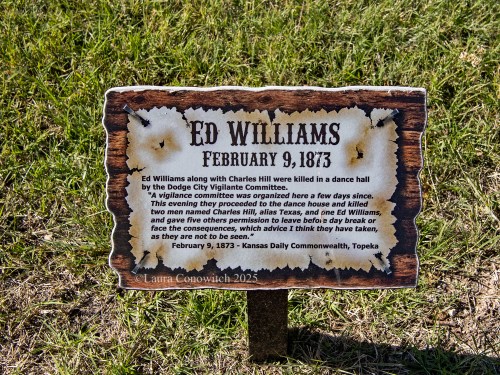
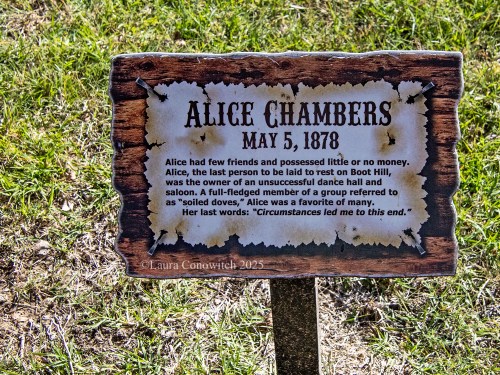
*The bodies were disinterred from Prairie Grove Cemetery and reinterred to Maple Grove Cemetery in 1889.
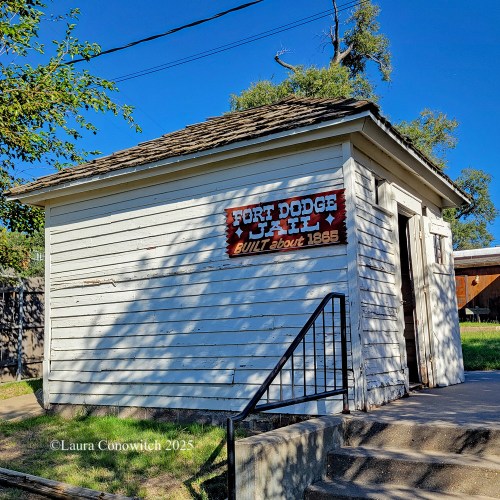
The old Fort Dodge Jail was built c. 1865 and located at Fort Dodge five miles east of Dodge City. It was a place of incarceration for petty crimes and was called a ‘guardhouse’. Soldiers were often confined in the guardhouse for weeks at a time. The jail was miserably cold in the winter, worse in the stifling heat of the summer and unequipped with any facilities.
In 1872, the Commandant of the Fort banned alcohol for all enlisted men and civilians, so it is possible that there were those who were confined for alcohol related offenses.
In 1953, the Dodge City Jaycees brought the jail from the Kansas Soldiers Home (Fort Dodge) to Boot Hill Cemetery.
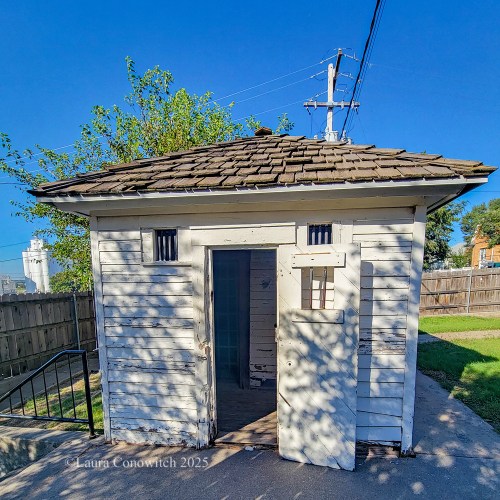
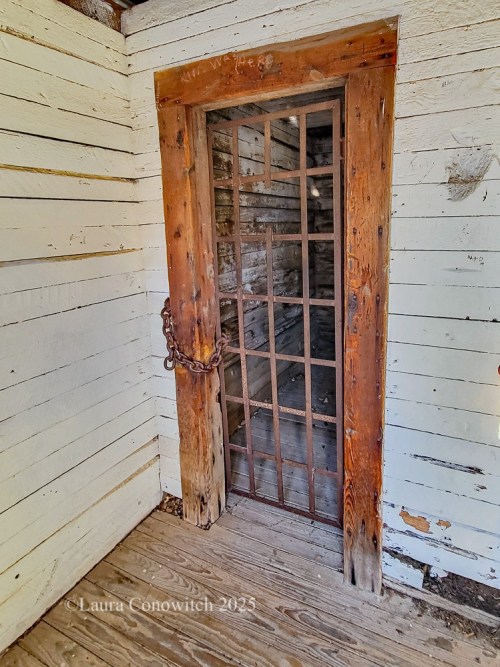
Surely, this man looks innocent. Perhaps I should let him out.
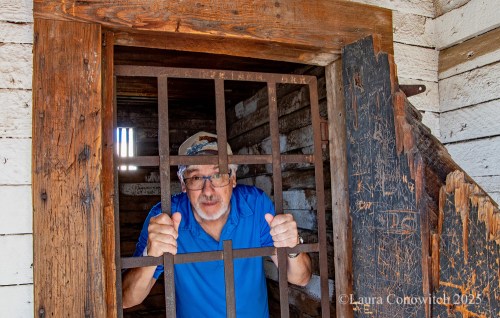

See the world around you!
More Travel Posts:




 LC's Cottage
Different times. I found it disturbing they hung a child.
LikeLike
I don’t know anything about the individual…the background for the hanging, and whether ‘kid’ was a nickname, as in ‘Billy the Kid’, or what age the Kid was. He could very well have been a teenager. I don’t know how different the times really are…thinking about gangs today.
LikeLike
Cemetery hunting is one of my daughters and mine favorite think to do together. The older the better – of course. ooooh wouldn’t;t it be fun to do some ancestry research on people on the older tombstone engravings – now that sounds like fun to me. Happy new years Laura 🥰
LikeLike
My grandchildren think I am crazy when I have a picnic with my Mom. The Hubster and I always pack chairs, flowers, and lunch when we visit her grave. We have picnicked in other cemeteries. We find them quite parklike and peaceful.
Another thing we have in common, Sharon! 😁
LikeLike