
Boot Hill Museum, Dodge City, Kansas-Part 1
The Hubster and I spent all day at Boot Hill Museum and took hundreds of photos. It has been a big job sorting through said hundreds of photos.
Big!
Anyway, Dodge City is rich in history and the museum site reflects that. It is very thorough and, if you are a sign reader (I am), you can learn a lot of human interest stories and western history from stage coach to rail travel and buffalo hunting (annihilation) to cattle drives and a lawless town to a respectable city.
The museum is open 362 days a year, but plan your trip during the summer months if you want historical interpreters, exciting gunfights, and other re-enactments. The Hubster and I visited in the off-season so we experienced none of that.
There is a lot to explore here!
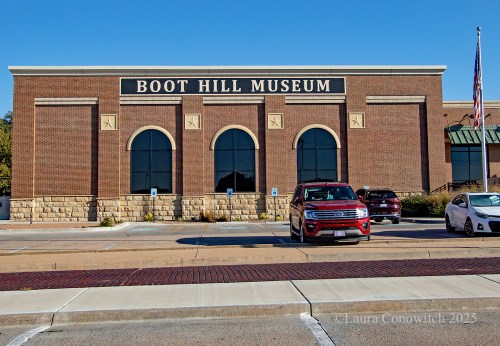
*Clicking on a photo will give you a closer look!
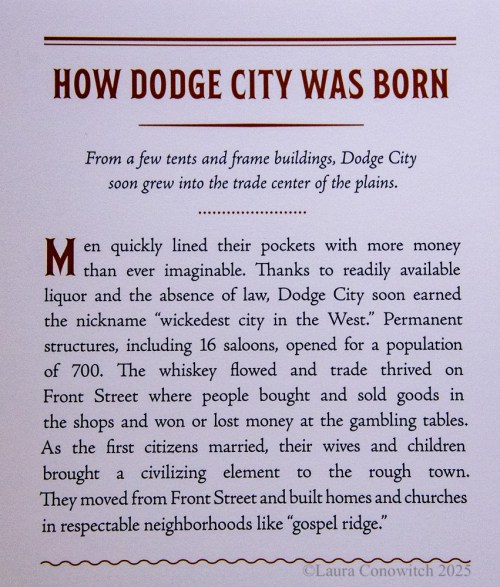
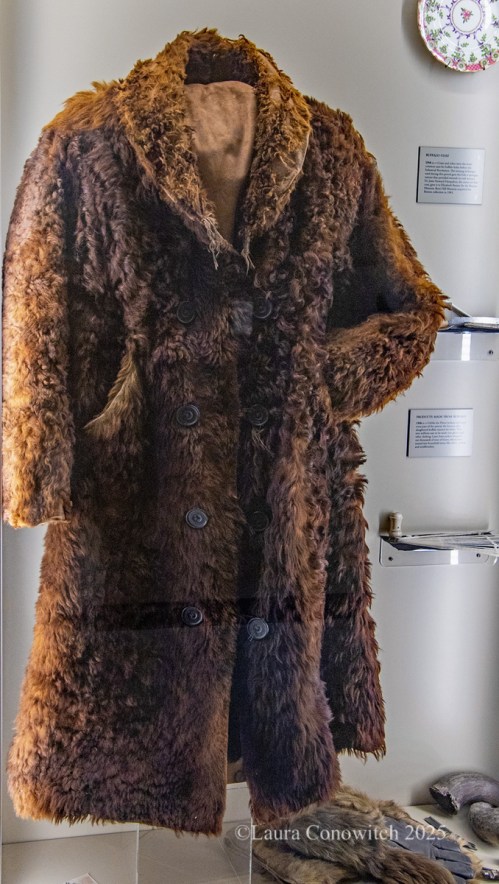
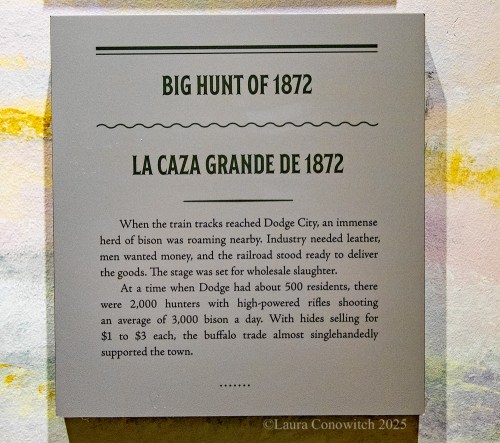
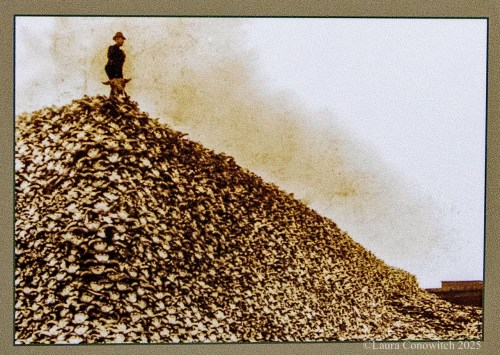
Bone pickers earned $4 to $8 a ton at a time when a laborer might earn $9 a week. It was easier than hunting buffalo, and it was something homesteaders could do to make extra money. Piles of skeletons 15 feet high stretched for miles along the tracks outside of town. Some estimate that 8,000,000 pounds of bones were shipped out of Dodge City by 1883.
Stagecoach traveling was dirty, uncomfortable, and hazardous, not only due to road and weather conditions, but due to robberies and Indian attacks as well.
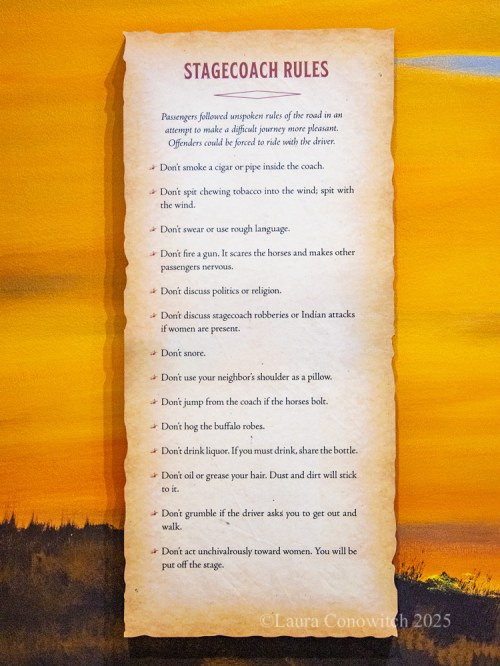
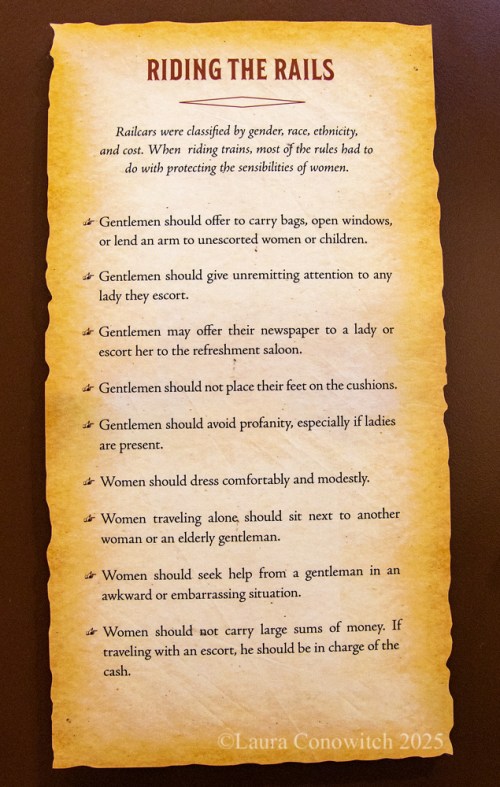
* Click on these photos and then click on the i in the lower right corner to view full size so that you can read these rules easier if you would like.
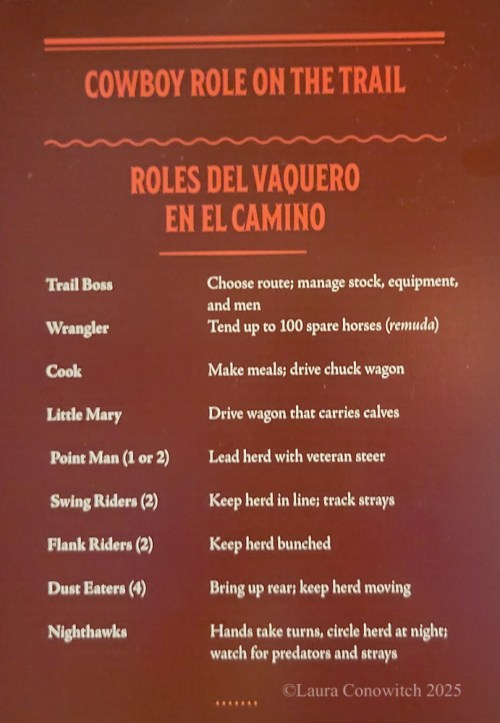
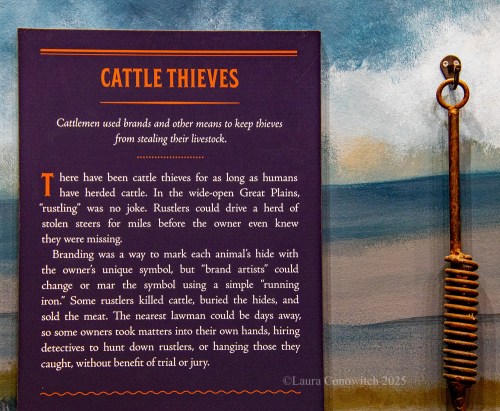
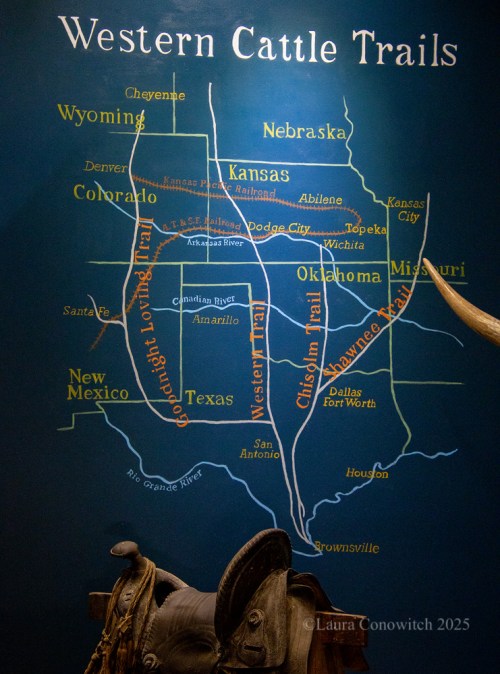
Cattle drives began in the spring, traveling 8 to 20 miles a day, for 2 to 5 months. A drive cost an owner $500 a month, but the cattle could not be driven in a hurry, or they would lose weight and sell for less at market.
The cowboys were poorly paid (about $25 to $40 a month) and worked around the clock, guarding against predators, rustlers, and Indians, as well as rounding up strays and stopping stampedes. They slept in their clothes on the ground and ate beans, biscuits, bacon, and drank coffee.
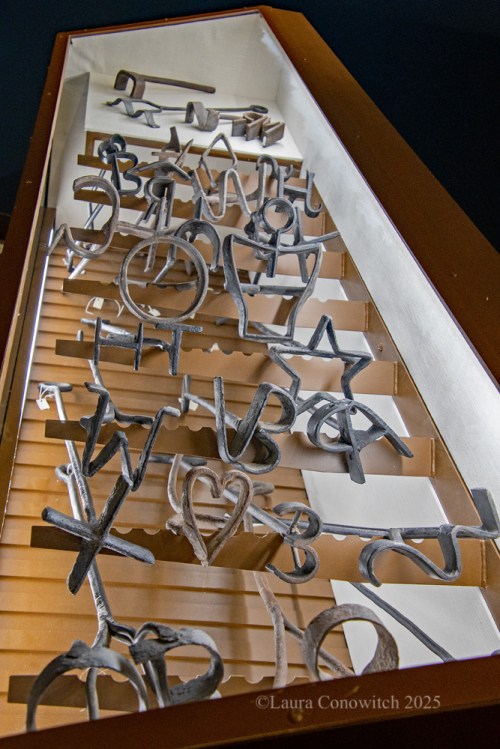
Branding irons:
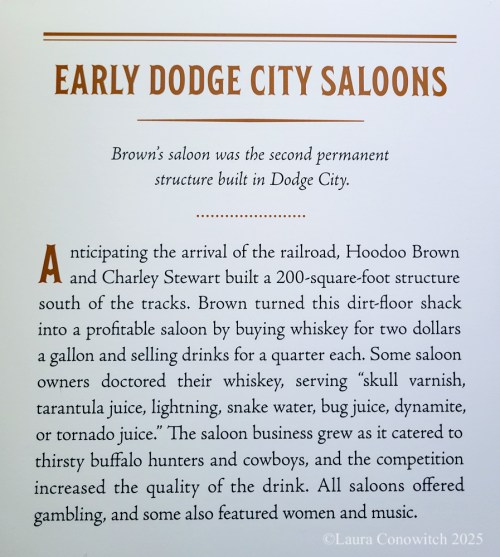
Saloon owner, Hoodoo Brown, also known as Hyman G. Neill, led the Dodge City Gang in Las Vegas, New Mexico, in 1879 and early 1880, a gang that participated in several stagecoach and train robberies and organized cattle rustling. It was said to have been responsible for multiple murders and lynchings.
Alonzo B. Webster, a Civil War veteran, moved to Dodge City in 1872. He ran a dry goods store on First Street and owned the Stock Exchange Saloon and later the Palace Drug Store with Orlando “Brick” Bond.
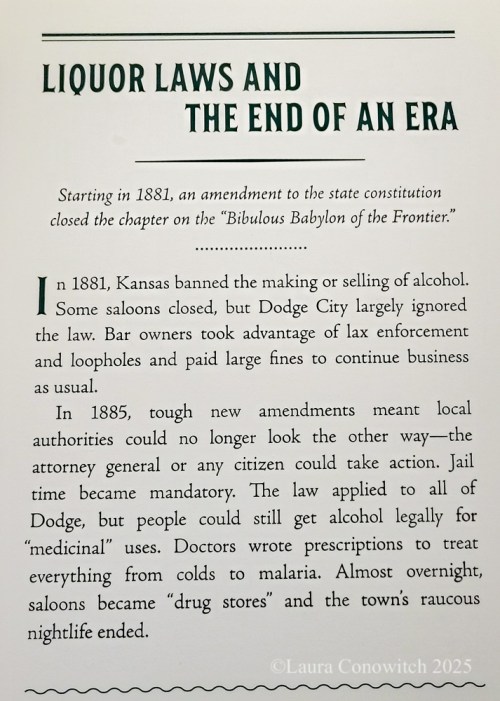
In 1881, Webster won his first of four elections for mayor. He issued rules for lawmen, city police had to wear a badge, stay sober, and not leave town without permission. Webster knew how to use a gun and once faced down Bat Masterson.
He secured a waterworks and sewer system for Dodge.
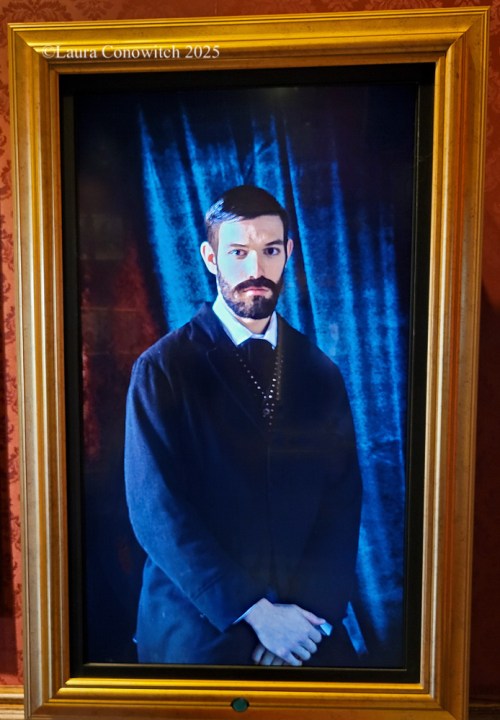
Wyatt Earp came to Dodge City in 1876. He served as deputy city marshal, and deputy sheriff with his brother Morgan and friend Bat Masterson, and assistant city marshal. Wyatt and Bat rode in the posse that chased down Dora Hand‘s killer.
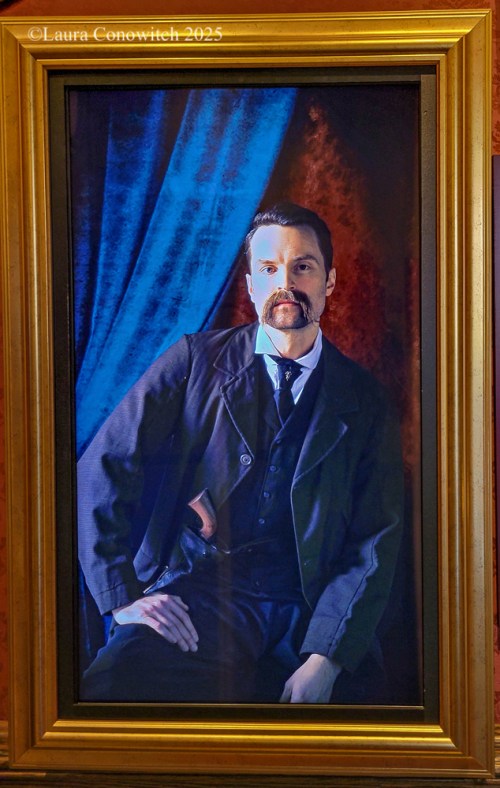
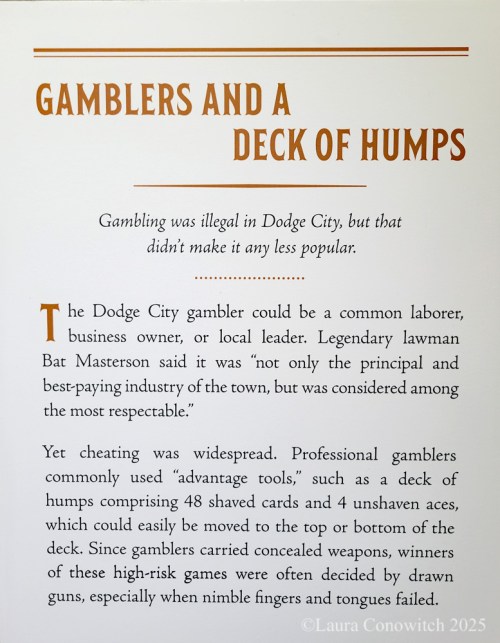
Lawman and gambler William “Bat” Masterson arrived in Kansas in 1872. He hunted buffalo with his brothers and fought at Adobe Walls in the Texas Panhandle during the famous 1874 Indian battle. Between 1876 and 1879, Bat served in several posts as a Dodge City lawman and deputy marshal. He was in and out of Dodge over the years, and returned during the “saloon war” of 1883.
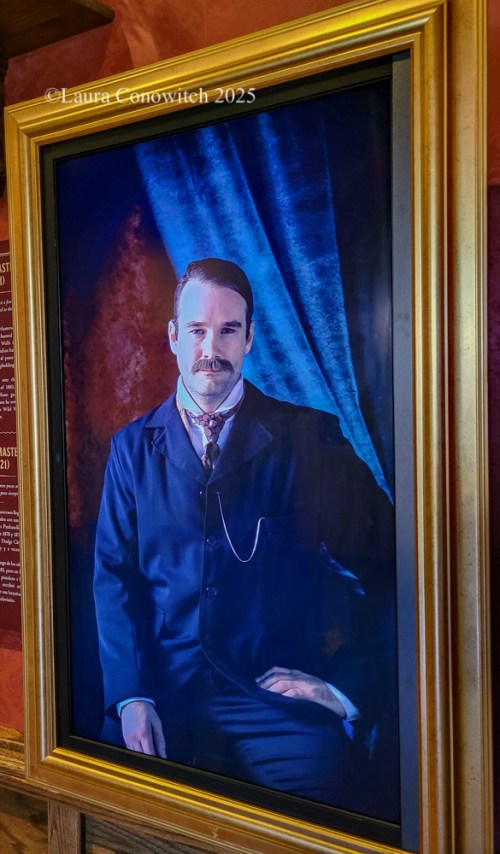
Chalkley “Chalk” Beeson moved to Dodge City in 1876. He was a cowboy, historian, and avid collector. He saw the value in remembering Dodge City through artifacts. Beeson was one of the early owners of the Long Branch Saloon and the Saratoga Saloon. He served as Ford County Sheriff from1892 to 1896, was a state legislator and ranched near Dodge City. Beeson was also the founder of Dodge City’s beloved Cowboy Band which performed at the inauguration of U.S. President Benjamin Harrison, in Washington, D.C. on March 4, 1889. He was well beloved, and the town shut down for his funeral.

See the world around you!
More Travel Posts:




 LC's Cottage
Interesting place. I can see why you spent a whole day there. A lot of unique displays and artifacts.
LikeLike
So many displays and artifacts that I am having trouble deciding how to write the blog posts, Donna. Lots of history here! 🙂
LikeLike
Could you imagine if you were related to any one of these famous men of this time. I am the 3x great granddaughter of Bat Masterson ~ some one has to be! I think this was one of my favorite posts and places that you visited Laura. The rules charts were interesting making note of no politics or religion chatter. Still stands today (chuckling) 🥰
LikeLike
That is so cool, Sharon! I am thrilled to learn that you are a granddaughter of Bat Masterson! This is why I love genealogy so much! Is this maternal or paternal?
I thought those rules charts were fun, too! 🙂
LikeLike